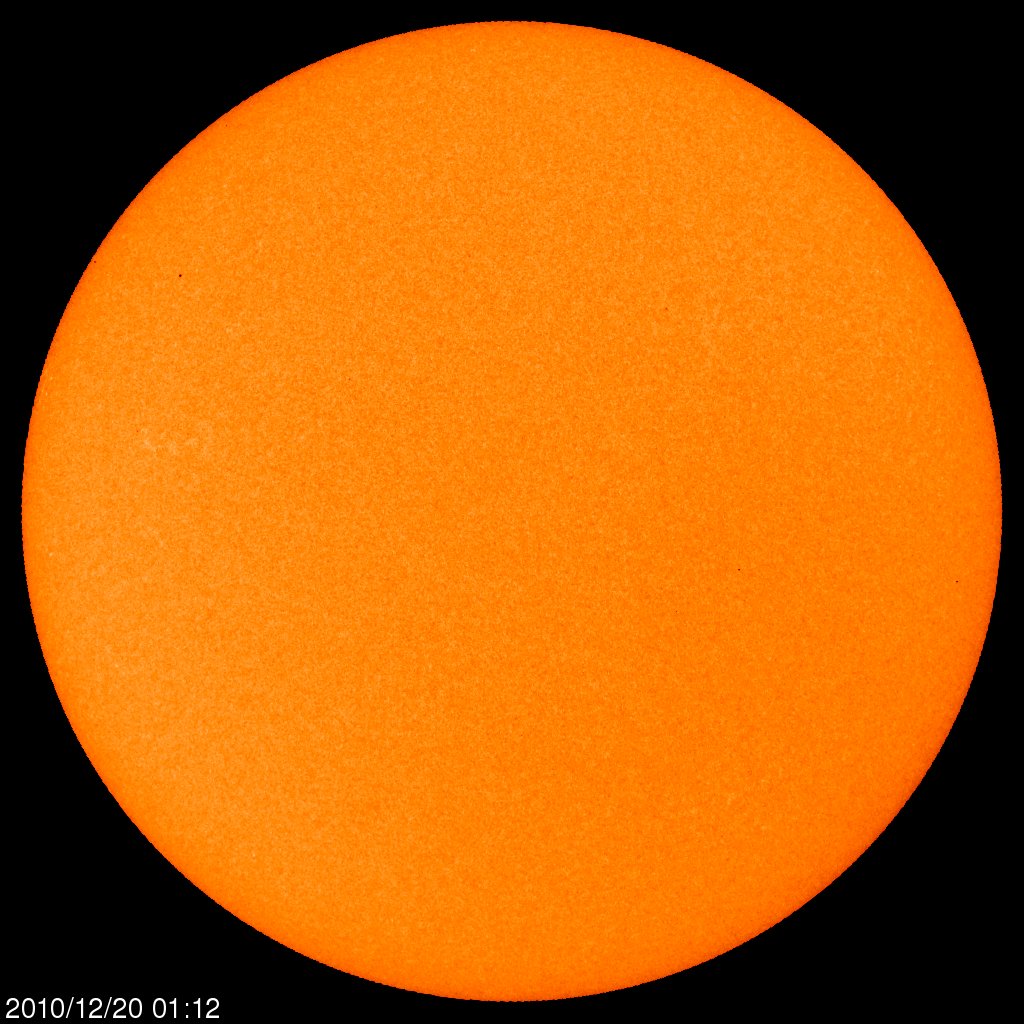
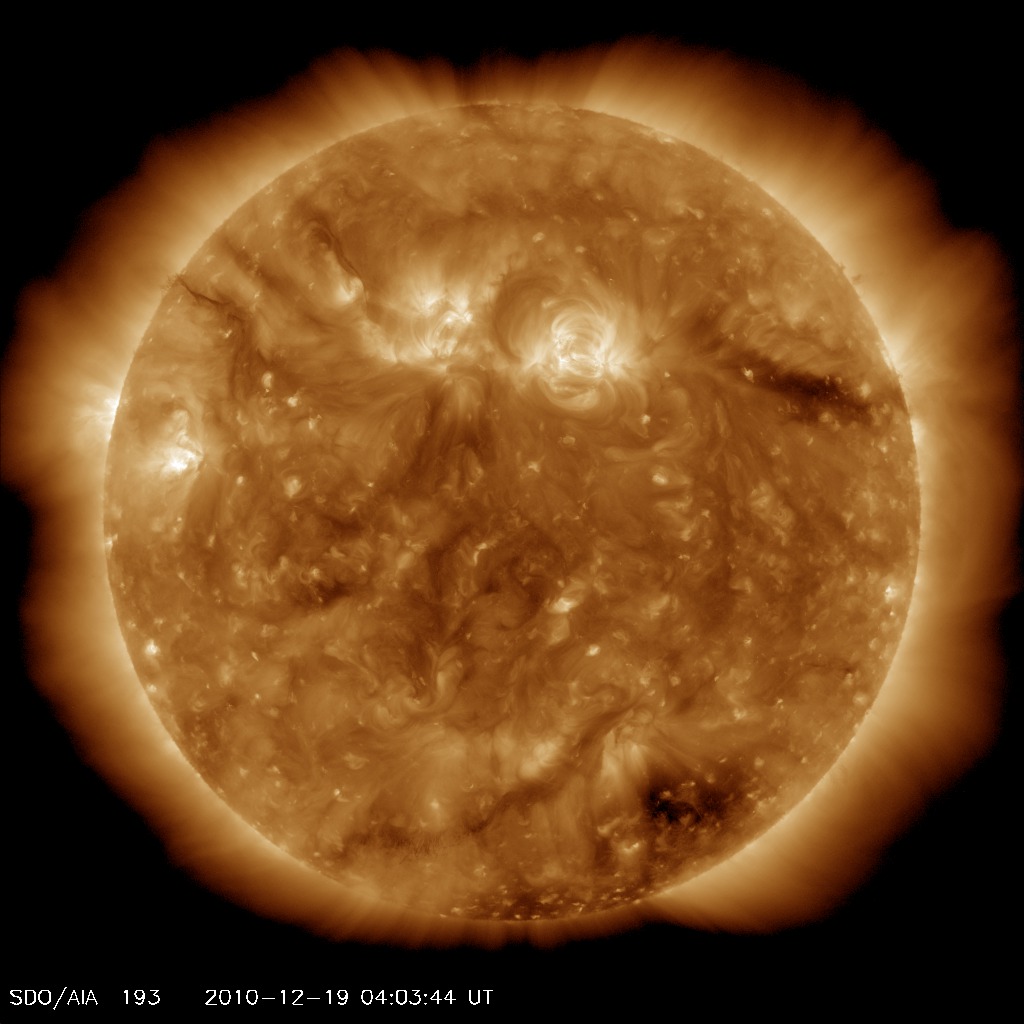
These pictures are almost too hot to touch. Metallic photos of the sun make great Christmas gifts. | | | RARE LUNAR ECLIPSE: The lunar eclipse of Dec. 21st falls on the same date as the northern winter solstice. Is this rare? It is indeed, according to Geoff Chester of the US Naval Observatory, who inspected a list of eclipses going back 2000 years. "Since Year 1, I can only find one previous instance of an eclipse matching the same calendar date as the solstice, and that is Dec. 21, 1638," says Chester. "Fortunately we won't have to wait 372 years for the next one...that will be on Dec. 21, 2094." WHEN TO LOOK: The total eclipse lasts more than an hour from 02:41 am to 03:53 am EST on Tuesday morning, Dec. 21st. Any time within that interval is a good time to look. For other time zones, consult Shadow & Substance's animated eclipse. ALL-CLEAR IN THE STRATOSPHERE: Earth's stratosphere is as clear as it's been in more than 50 years. University of Colorado climate scientist Richard Keen knows this because he's been watching lunar eclipses. "Since 1996, lunar eclipses have been bright, which means the stratosphere is relatively clear of volcanic aerosols. This is the longest period with a clear stratosphere since before 1960." Consider the following comparison of a lunar eclipse observed in 1992 after the Philippine volcano Pinatubo spewed millions of tons of gas and ash into the atmosphere vs. an "all-clear" eclipse in 2003: 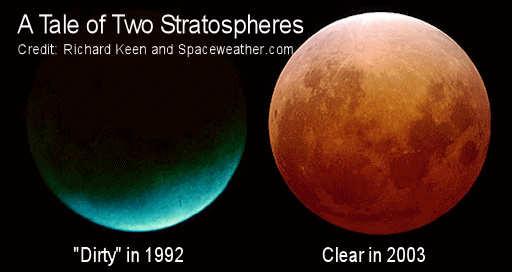
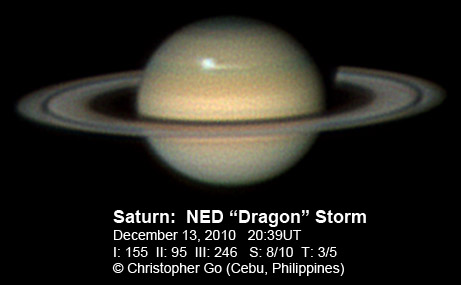
Keen explains why lunar eclipses can be used to probe the stratosphere: "At the distance of the Moon, most of the light refracted into the umbra (Earth's shadow) passes through the stratosphere, which lies 10 to 30 miles above the ground. When the stratosphere is clear, the umbra (and therefore, the eclipsed Moon) is relatively bright. On the other hand, if the atmospheric lens that illuminates the Moon becomes dirty enough, light will be blocked and the eclipse will appear dark." This is timely and important because the state of the stratosphere affects climate; a clear stratosphere "lets the sunshine in" to warm the Earth below. At a 2008 SORCE conference Keen reported that "The lunar eclipse record indicates a clear stratosphere over the past decade, and that this has contributed about 0.2 degrees to recent warming." What will the eclipse 21st eclipse look like? "The stratosphere is still fairly clear, and the December 2010 eclipse should be normally bright," predicts Keen. "I welcome any and all reports on the brightness of future lunar eclipses for use in my volcano-climate studies. While actual brightness measurements (in magnitudes) made near mid-totality are most useful, I can also make use of Danjon-scale ratings of the eclipse. Please be sure to note the time, method, and instruments used in your reports." Submit your observations here. more eclipse resources: DRAGON STORM: Saturn's great "Dragon Storm" has returned. The ferocious thunderstorm observed for years by NASA's Cassini spacecraft has recently been hiding under high clouds, but now it is showing itself again. Using an 11-inch Celestron telescope, Christopher Go of the Philippines photographed the white tempest on Dec. 13th: 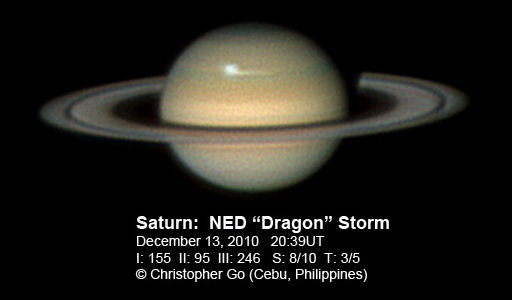
"The storm was so bright, I was even able to see it visually [through the eyepiece]," says Go. In years past, the storm was located in Saturn's southern hemisphere, "but images taken by me and other amateur astronomers show that it is now in the northern hemisphere." The shift is consistent with findings that the Dragon Storm is a long-lived disturbance deep within the gas giant's atmosphere that moves around and periodically flares-up to produce large, visible storm regions. Stay tuned for updates and more images.
2010 Geminid Meteor Photo Gallery
[NASA: "Geminids Defy Explanation"] [meteor alerts]
November 2010 Aurora Gallery
[previous Novembers: 2009, 2008, 2007, 2006, 2004, 2003, 2002, 2001, 2000] Potentially Hazardous Asteroids ( PHAs) are space rocks larger than approximately 100m that can come closer to Earth than 0.05 AU. None of the known PHAs is on a collision course with our planet, although astronomers are finding new ones all the time. On December 20, 2010 there were 1167 potentially hazardous asteroids. Notes: LD means "Lunar Distance." 1 LD = 384,401 km, the distance between Earth and the Moon. 1 LD also equals 0.00256 AU. MAG is the visual magnitude of the asteroid on the date of closest approach. | | The official U.S. government space weather bureau | | | The first place to look for information about sundogs, pillars, rainbows and related phenomena. | | | Researchers call it a "Hubble for the sun." SDO is the most advanced solar observatory ever. | | | 3D views of the sun from NASA's Solar and Terrestrial Relations Observatory | | | Realtime and archival images of the Sun from SOHO. | | | from the NOAA Space Environment Center | | | the underlying science of space weather | |