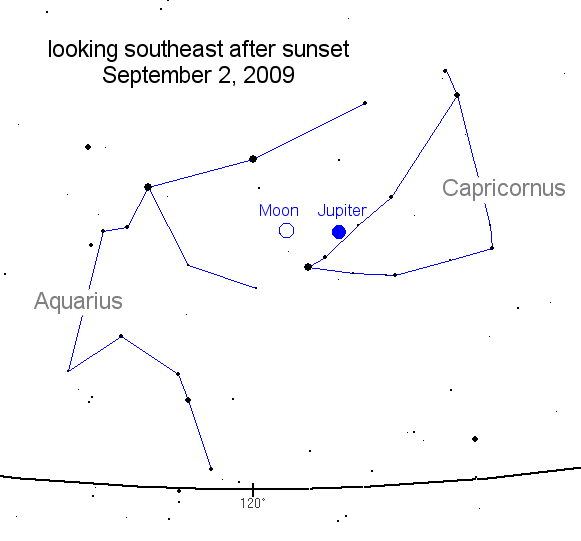
| VANISHING MOONS OF JUPITER: Tonight, Sept. 2nd-3rd, for the first time in many years, the moons of Jupiter are going to disappear. At least that's how it will seem when Io, Europa, Ganymede and Callisto line up in front of and behind the giant planet. A casual look through a backyard telescope will show no moons at all. The 2-hour vanishing act begins at 9:43 p.m PDT. Jupiter is easy to find right beside the nearly full Moon. [sky map] [animation] [full story] GEOMAGNETIC MEGA-STORM: On Sept. 2nd, a billion-ton coronal mass ejection (CME) slammed into Earth's magnetic field. Campers in the Rocky Mountains woke up in the middle of the night, thinking that the glow they saw was sunrise. No, it was the Northern Lights. People in Cuba read their morning paper by the red illumination of aurora borealis. Earth was peppered by particles so energetic, they altered the chemistry of polar ice. Hard to believe? It really happened--exactly 150 years ago. This map shows where auroras were sighted in the early hours of Sept. 2, 1859: 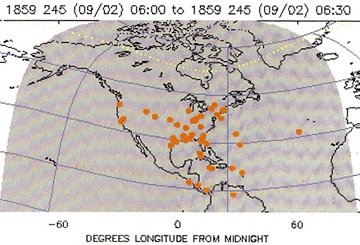
Above: Aurora sightings, Sept. 2, 1859. Image courtesy J.L. Green, NASA
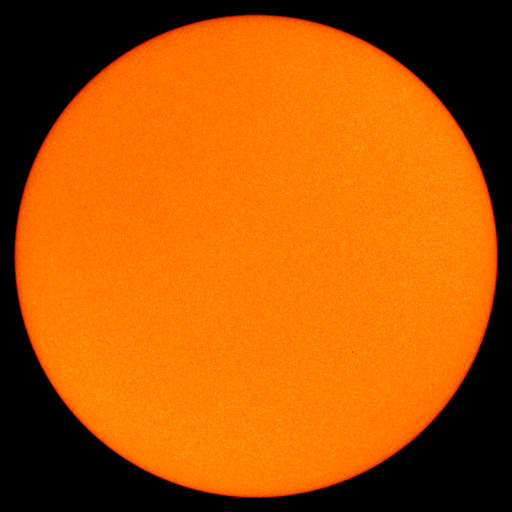
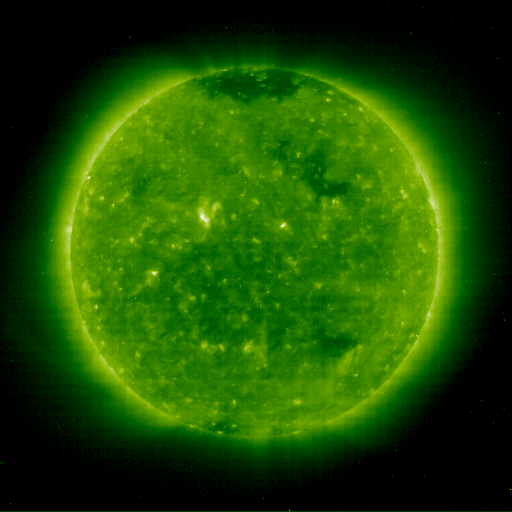
As the day unfolded, the gathering storm electrified telegraph lines, shocking technicians and setting their telegraph papers on fire. The "Victorian Internet" was knocked offline. Magnetometers around the world recorded strong disturbances in the planetary magnetic field for more than a week. The cause of all this was an extraordinary solar flare witnessed the day before by British astronomer Richard Carrington. His sighting marked the discovery of solar flares and foreshadowed a new field of study: space weather. According to the National Academy of Sciences, if a similar flare occurred today, it would cause $1 to 2 trillion in damage to society's high-tech infrastructure and require four to ten years for complete recovery. A repeat of the Carrington Event seems unlikely from our low vantage in a deep solar minimum--but don't let the quiet fool you. Strong flares can occur even during weak solar cycles. Indeed, the Carrington flare itself occured during a relatively weak cycle similar to the one expected to peak in 2012-2013. Could it happen again? Let's hope not. August 2009 Aurora Gallery
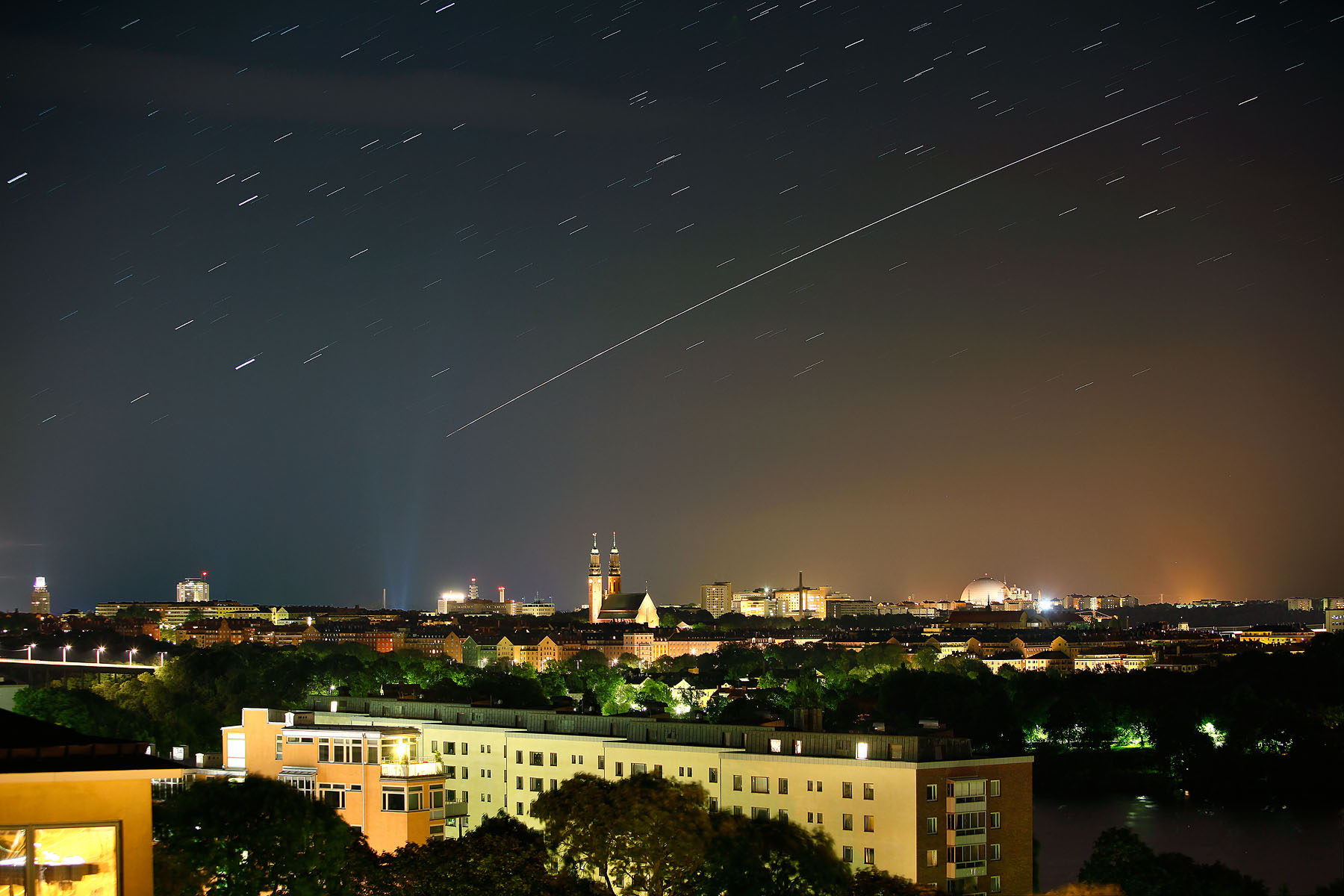
[previous Augusts: 2008, 2007, 2006, 2005, 2004, 2003, 2002, 2001] TWO SPACESHIPS: Space shuttle Discovery is docked to the International Space Station (ISS) and together the two spaceships are putting on a good show in the night sky. Peter Rosén caught them flying over Stockholm, Sweden, just before sunrise on August 31st: 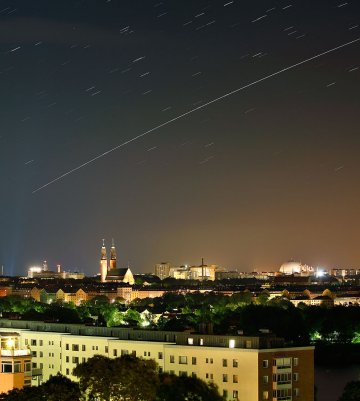
"The mission is getting a lot of media coverage here because of our Swedish astronaut Christer Fuglesang," says Rosén. On Monday,Fuglesang helped unload more than 15,000 lb (Earth weight) of supplies from Discovery's cargo bay. Much of that weight was laboratory equipment. Astronauts are outfitting the space station's science labs with a -80 degree research freezer; a rack of hardware to study crystals and semiconductors in low gravity; and a new set of tools for microgravity fluid physics experiments. NASA says this mission marks an important transition. The space station's "Under Construction" sign is coming down and its world-class science labs are ramping up. That's worth a look. Check the Simple Satellite Tracker for flybys.
Explore the Sunspot Cycle |