It's a once in a lifetime event: the June 5th Transit of Venus across the sun. Watch the world wide webcast sponsored by the Coca-Cola Science Center and NASA. | | |
THE MYSTERIOUS ARC OF VENUS: Astronomers hope to glimpse a "ring of fire" around Venus during its historic transit across the sun on June 5-6. The apparition, if it is seen, could help crack some of the deepest mysteries of the second planet. Get the full story from Science@NASA.
LUNAR ECLIPSE: This morning, June 4th, the Moon glided through the shadow of Earth, producing a 38% lunar eclipse visible across the Pacific from east Asia to North America. Coyote songs filled the air outside Borrego Springs, California, when Dennis Mammana took this picture of the full Moon cut almost in half:
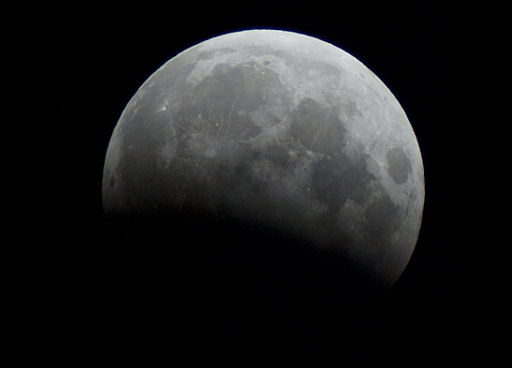
"The desert night air was cool, the moonlight glorious and the coyotes were yipping away merrily in the distance. What a great night for an eclipse! This shot of mid-eclipse was captured with a University Optics 80mm refractor telescope and a Nikon D700 digital camera."
Browse the real time photo gallery for more moonshots:
Space Weather Real Time Image Gallery
[Submit your photos] [NASA videos: Partial Eclipse of the Strawbery Moon]
Watch the eclipse unfold in SpaceWeather.com's Realtime Photo Gallery.
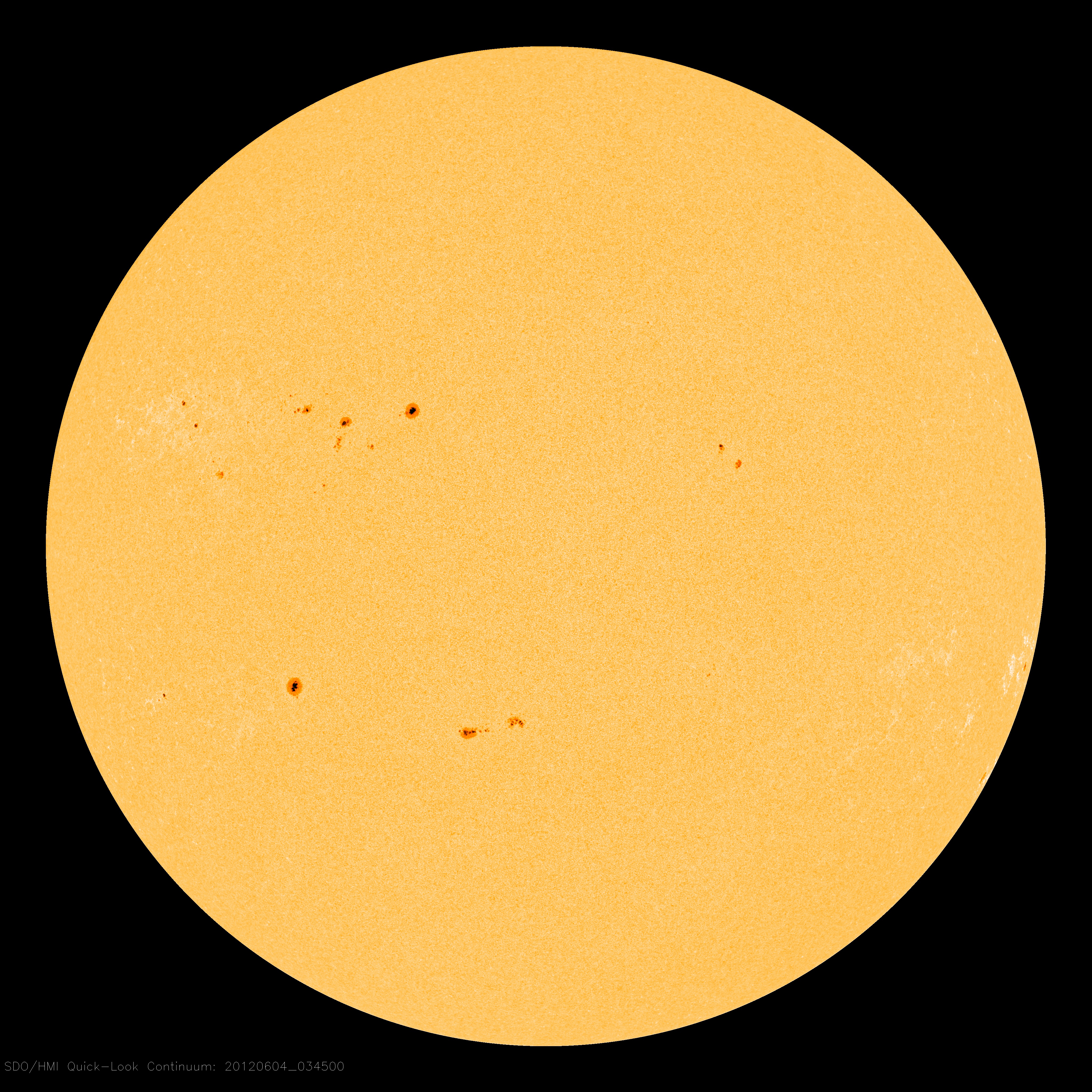
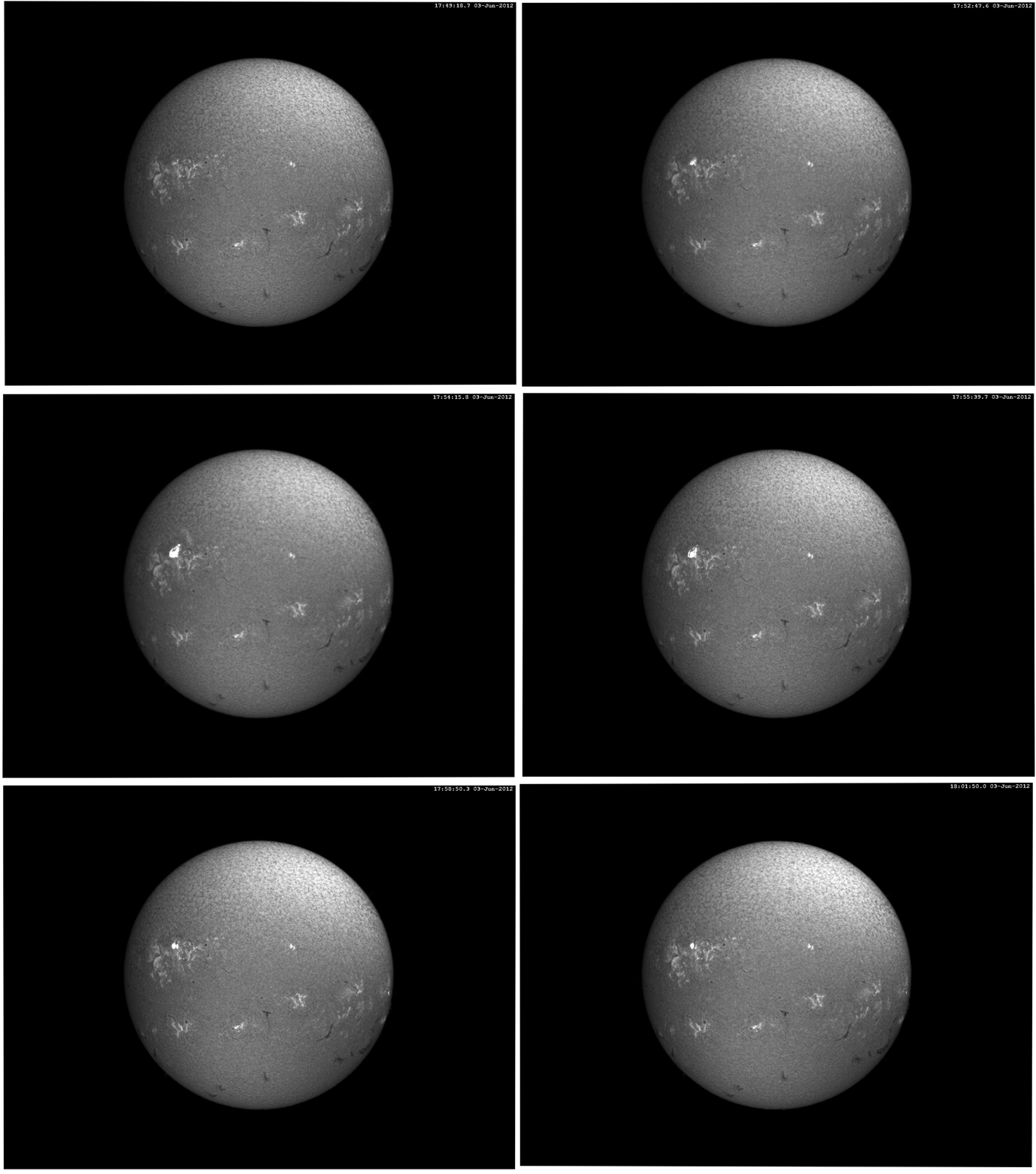
SOLAR TSUNAMI: New sunspot 1496 unleashed an impulsive M3-class solar flare on June 3rd at 1755 UT. In New Mexico, amateur astronomer Thomas Ashcraft was monitoring the sun when the explosion occurred, and he video-recorded a powerful solar tsunami issuing from the blast site:
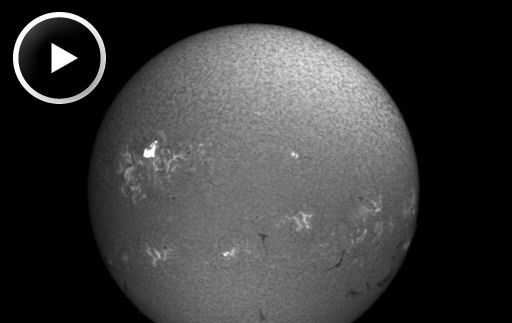
"This was a great solar event!" says Ashcraft. "The blast wave sparked powerful radio emissions as it plowed through the sun's atmosphere, and I recorded the sounds using my shortwave radio telescope."
The explosion also hurled a coronal mass ejection (CME) into space: SOHO movie. The cloud does not appear to be heading for Earth, although this conclusion could be revised by further analysis. Stay tuned. Solar Flare alerts: text, voice.
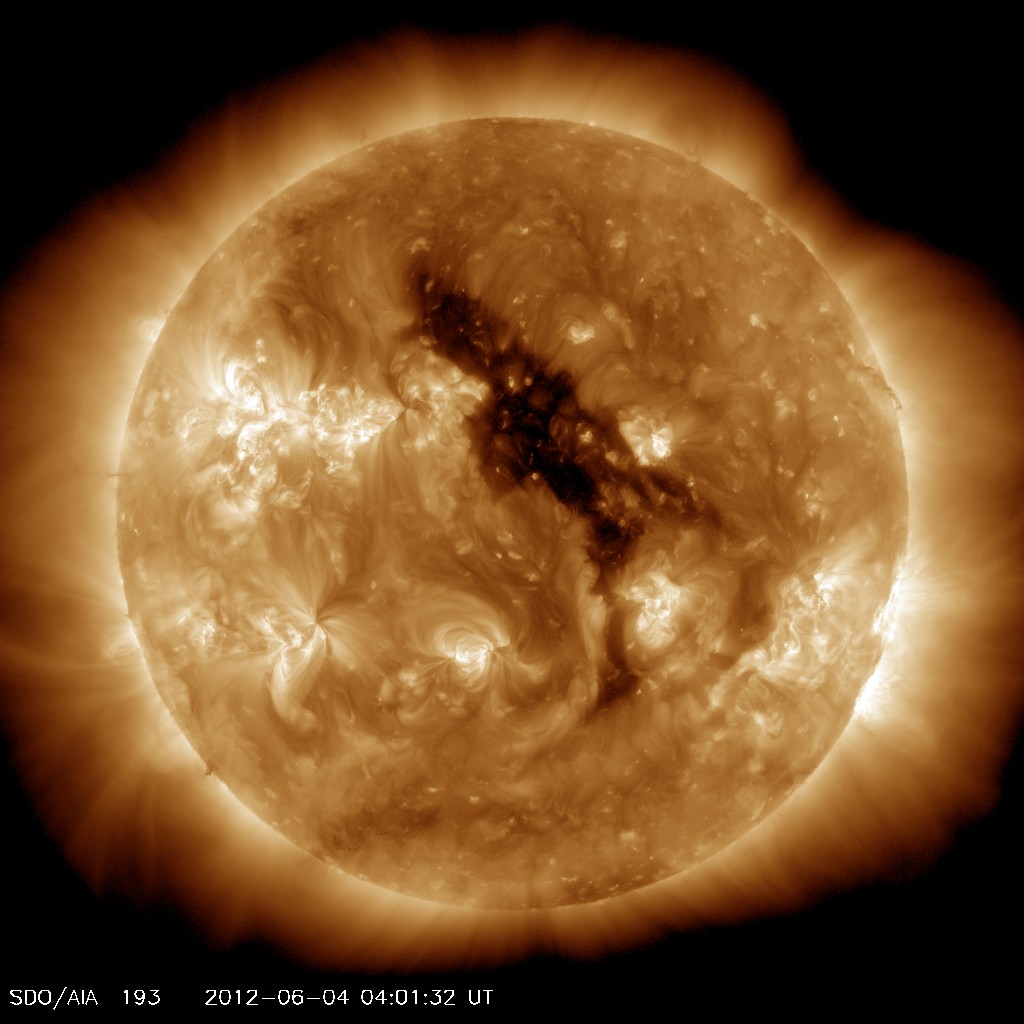
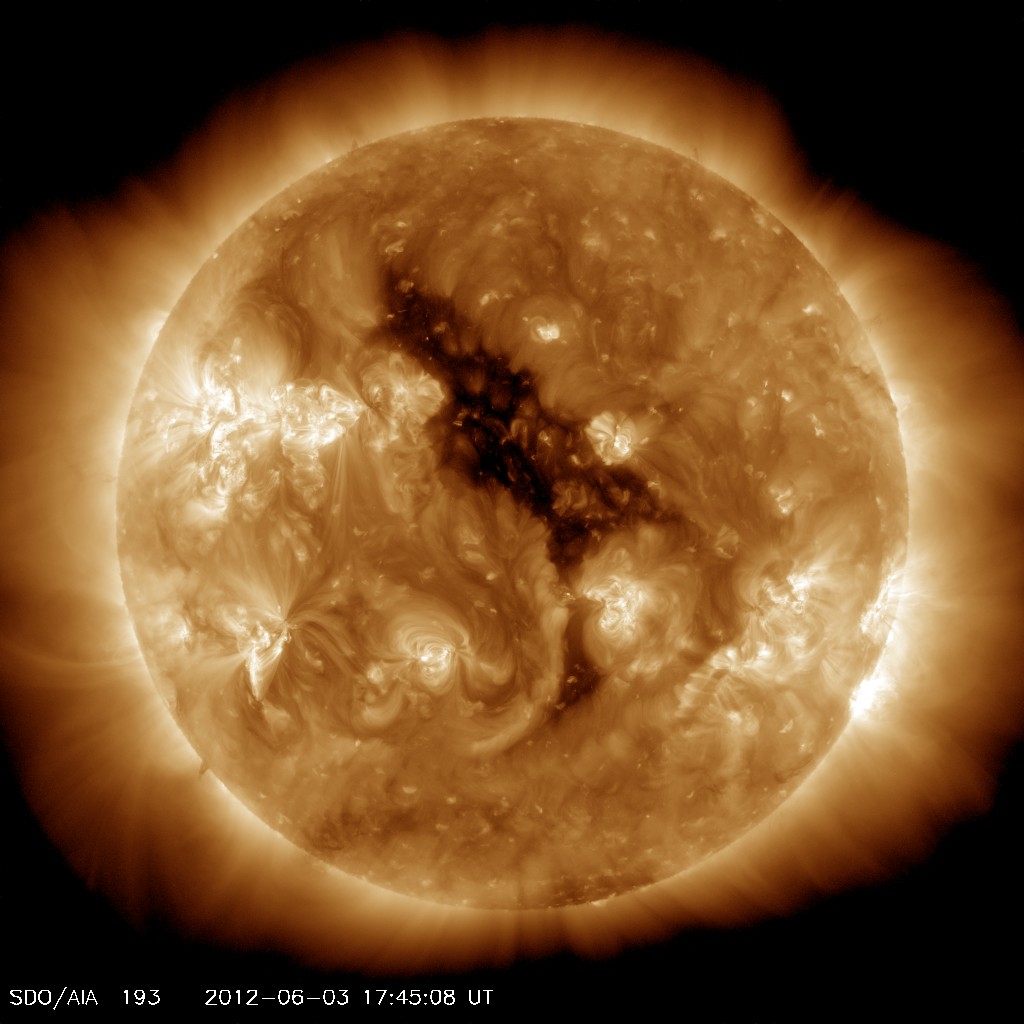
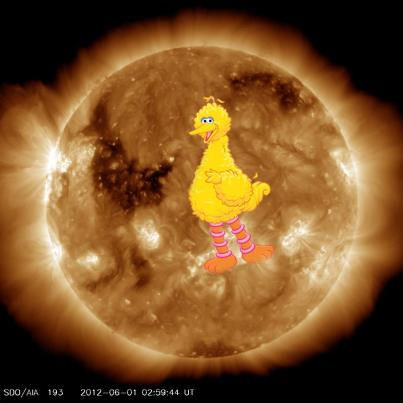
'CH' STANDS FOR ... CHICKEN? A big dark hole in the sun's atmosphere, a 'coronal hole', is turning toward Earth spewing solar wind. According to NASA's official rubber chicken, it looks an awful lot like a bird:
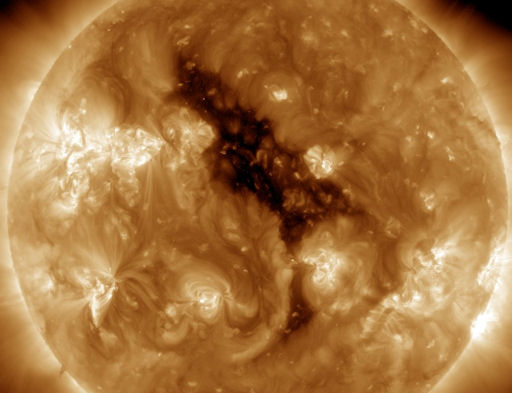
Coronal holes are places where the sun's magnetic field opens up and allows the solar wind to escape. A chicken-shaped stream of solar wind flowing from this coronal hole will reach Earth on June 5th - 7th, possibly stirring geomagnetic storms. High-latitude sky watchers should be alert for auroras. Aurora alerts: text, voice.
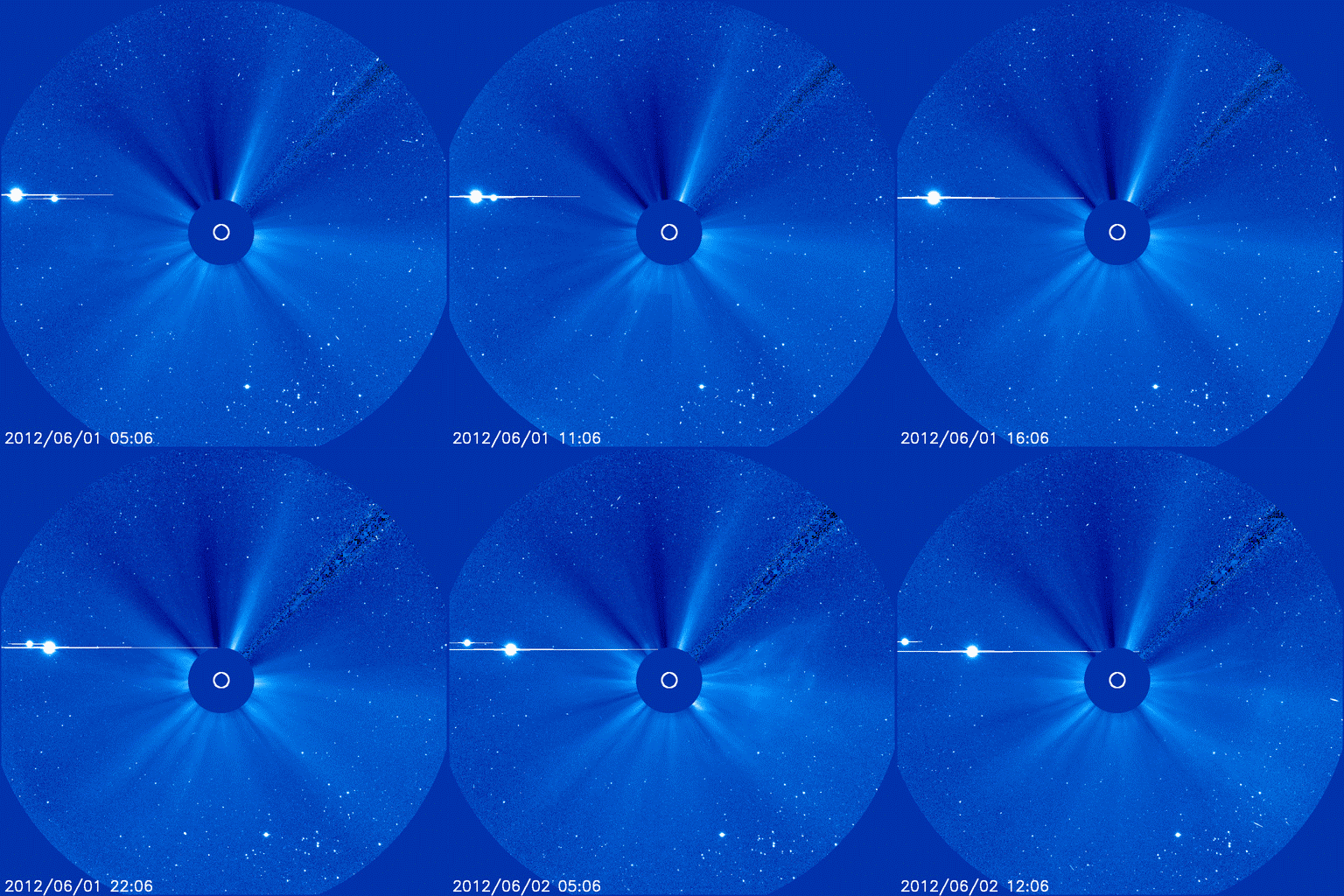
VENUS PASSES MERCURY, APPROACHES THE SUN: Venus is approaching the sun in advance of the June 5th Transit of Venus. From here on Earth, the second planet has become difficult to see wrapped in bright sunlight. The Solar and Heliospheric Observatory, however, has no such trouble. SOHO's onboard coronagrah blocks the glare to reveal planets otherwise invisible:
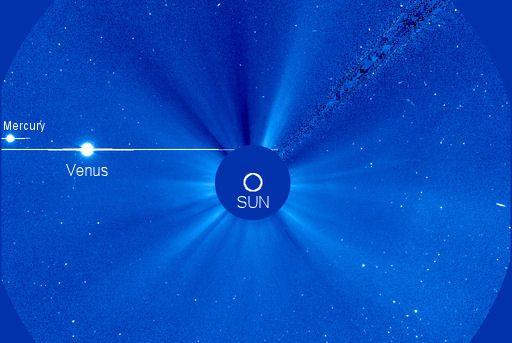
A 24-hour movie shows that Mercury is exiting stage left as Venus plunges deeper into sunlight. Updated images may be found here.
Amateur astronomers who manage to locate Venus in broad daylight will find that the planet has turned into a delightfully slender crescent. This is happening because Venus is turning its nightside to Earth, with only a sliver of reflected sunlight still shining over the planet's limb.
The crescent could soon become a ring. When Venus is less than few degrees away from the sun, the horns of the crescent sometimes reach around and touch, producing a complete annulus. The effect is caused by particles in upper layers of Venus's atmosphere which scatter sunlight around the circumference of the planet. The ring is very difficult to observe, and often only black-belt astrophotographers are able to record the phenomenon.
Keep an eye on SpaceWeather's realtime photo gallery to see how Venus shape-shifts in the days ahead:
Space Weather Real Time Image Gallery
[Submit your photos] [NASA videos: 2012 Transit of Venus, ISS Transit of Venus]