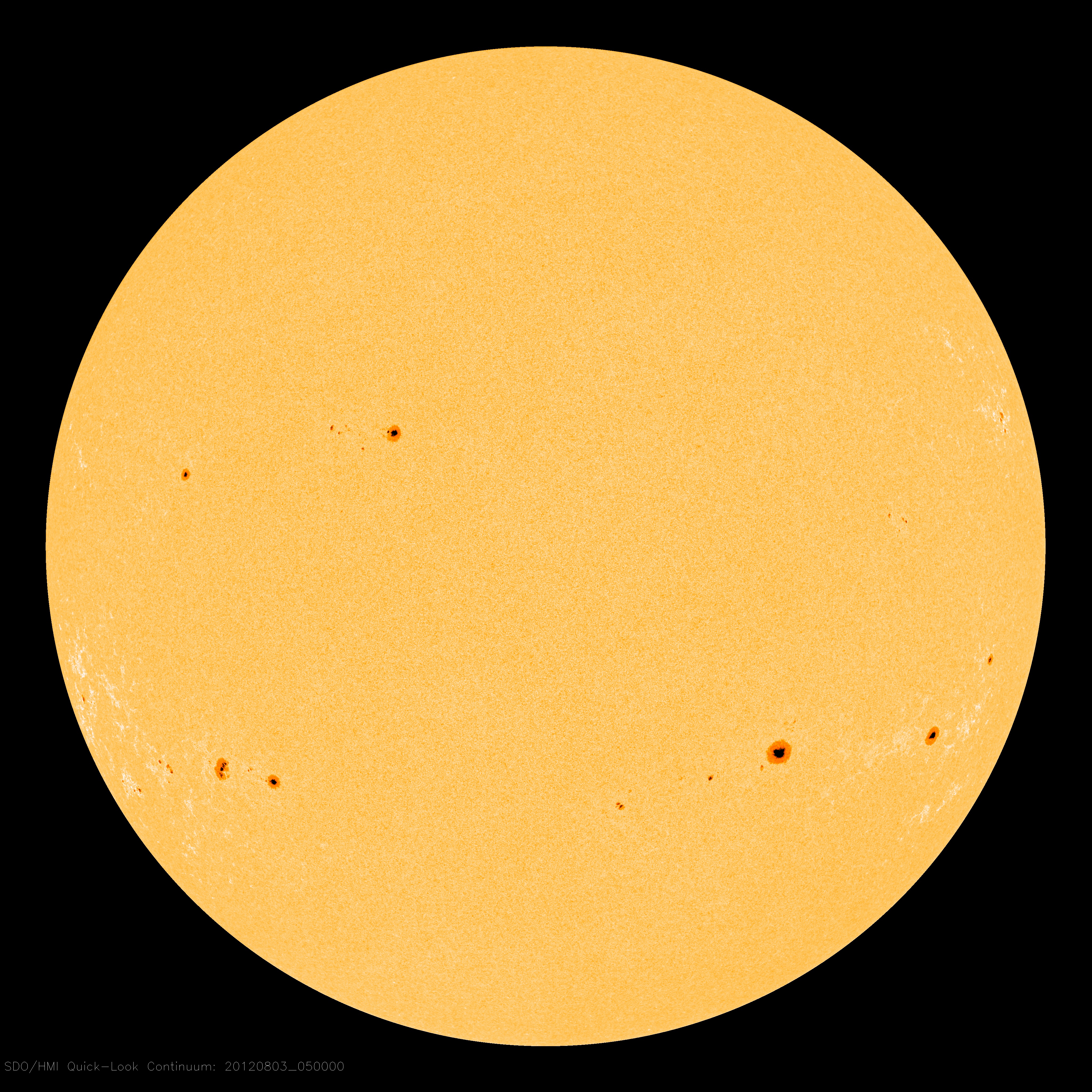
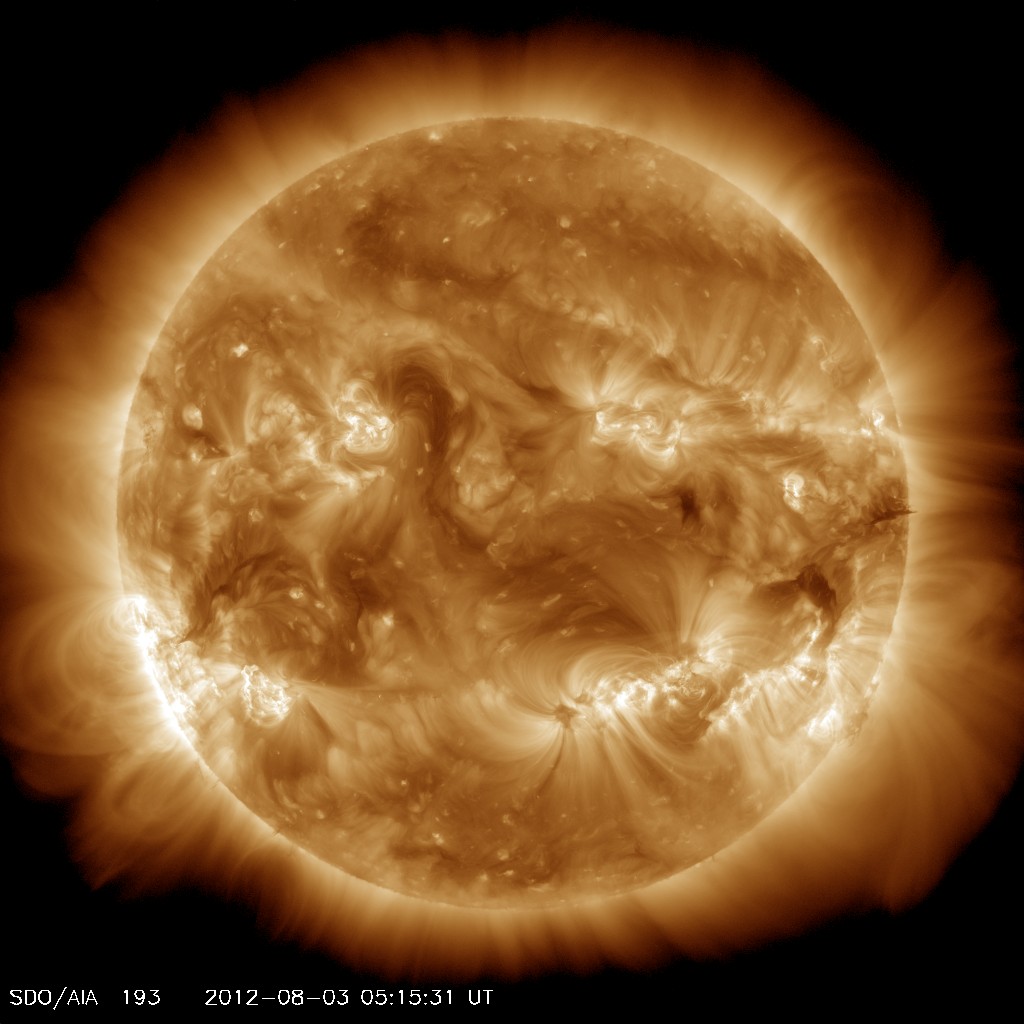
Metallic photos of the sun by renowned photographer Greg Piepol bring together the best of art and science. Buy one or a whole set. They make a stellar gift. | | |
WATCH OUT FOR THE MARTIAN TRIANGLE: When the sun goes down tonight, step outside and look southwest. Mars, Saturn and the blue-giant star Spica have converged to form a 1st-magnitude triangle not far above the horizon. The eye-catching arangement makes it easy to find the Red Planet on the eve of the Mars Landing. [full story] [video]
ERUPTING MAGNETIC FILAMENT: A filament of magnetism connecting sunspots AR1538 and AR1540 rose up and erupted on August 4th. Look for the extreme UV glow of hot plasma in this movie recorded by NASA's Solar Dynamics Observatory:
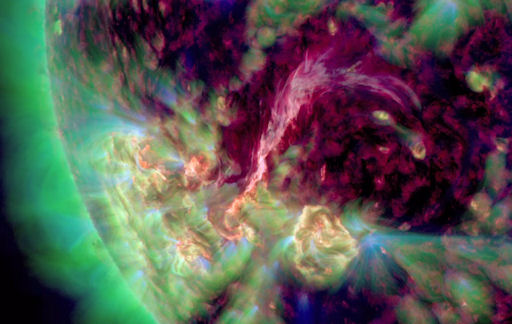
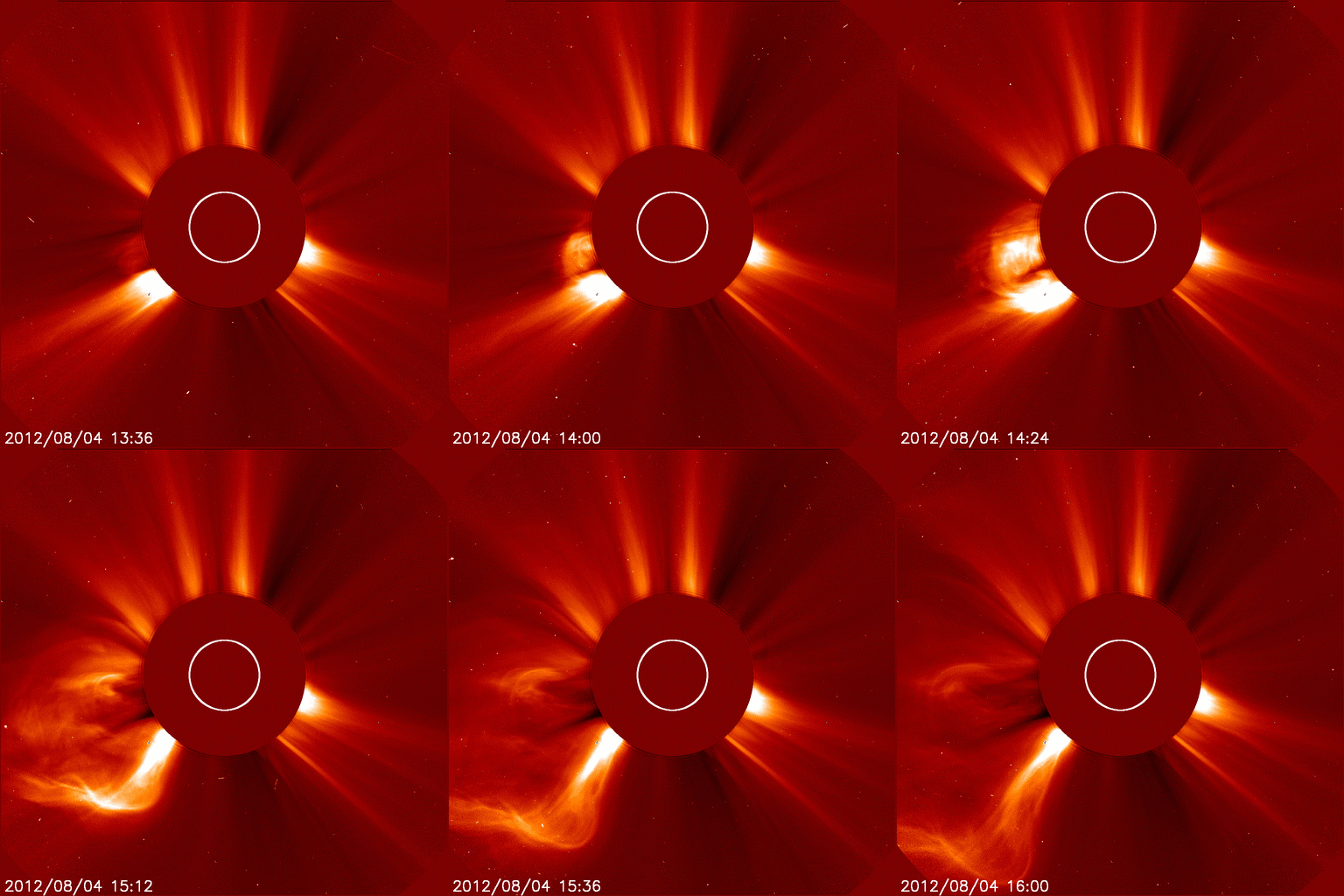
As the filament ripped through the sun's atmosphere, it propelled a massive CME into space: movie. The expanding cloud does not appear to be on a collision course with Earth, although a glancing blow might be possible 2 to 3 days hence. Stay tuned for further analysis.
FLYING SAUCERS: On August 1st, Ken Rotberg observed a pair of rainbow-colored saucers over Delray Beach, Florida --but they weren't UFOs. The technical term is pileus clouds:
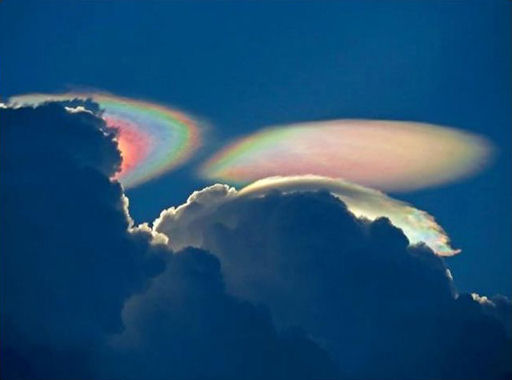
Atmospheric optics expert Les Cowley explains how they form: "On sunny afternoons, cumulus clouds boil upwards, pushing layers of moist air above them even higher where they cool and condense to form cloud caps or 'pileus' (Latin for cap). When pileus clouds form very quickly, their water droplets tend to be all the same size--the perfect condition for iridescent colors."
"I noticed the sun dropping behind a huge storm cloud in the west and ['the saucers' appeared]," says Rotberg. "I was just amazed at what I was witnessing, watching it slowly change. There was nobody near me at the time to share it with!" Consider it shared.
Realtime Space Weather Photo Gallery
RIPPING PERSEID: As Earth enters a broad stream of debris from Comet Swift-Tuttle, more and more Perseid meteors are appearing in the night sky. "Last night, I captured a Perseid fireball ripping through the ionosphere over New Mexico," reports amateur astronomer Thomas Ashcraft. "It was traveling pretty fast - 133,000 miles per hour!" Click to see and hear the meteoroid disintegrate:
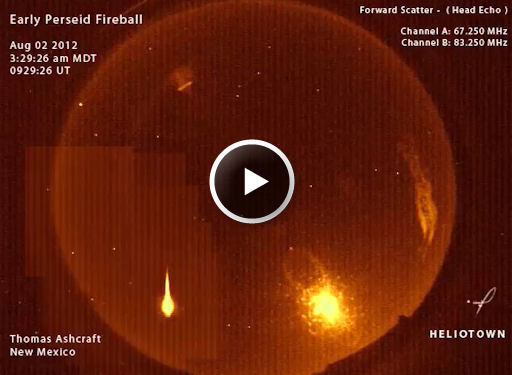
The movie's sound track comes from Ashcraft's dual-frequency meteor radar. It works like this: Radio signals from distant VHF transmitters bounce off the meteor's ion trail. Ashcraft's antennas can pick up those reflections, which sound like ghostly echoes in the loudspeaker of his VHF receiver.
At the moment, Perseid meteor rates are low--no more than about 10 per hour. In the days ahead, however, Earth will plunge deeper into the comet's debris stream, and meteor activity will increase accordingly. Forecasters expect the shower to peak on August 12-13 with as many as 100+ meteors per hour visible from dark-sky sites. Stay tuned for Perseids.
Realtime Meteor Photo Gallery
Realtime Noctilucent Cloud Photo Gallery
[previous years: 2003, 2004, 2005, 2006, 2007, 2008, 2009, 2011]