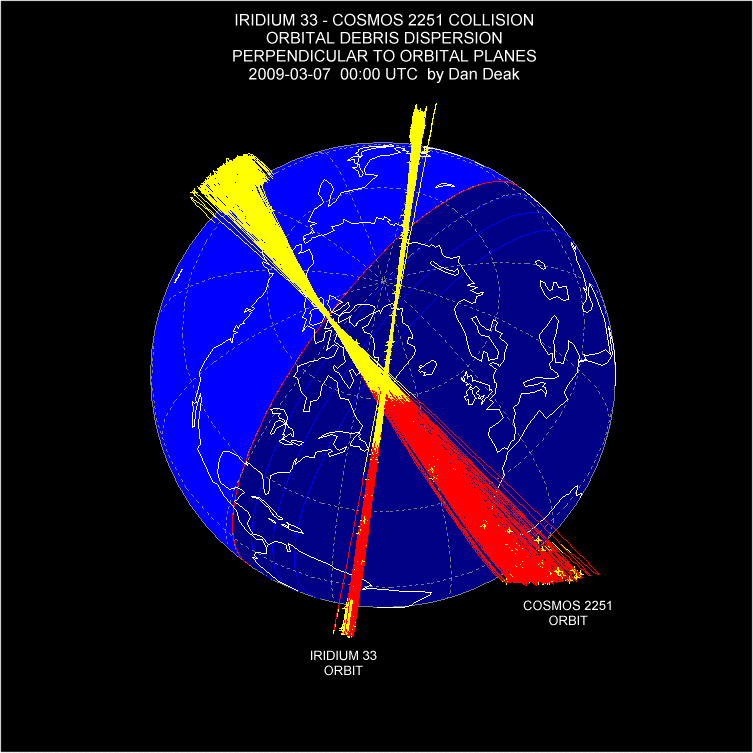
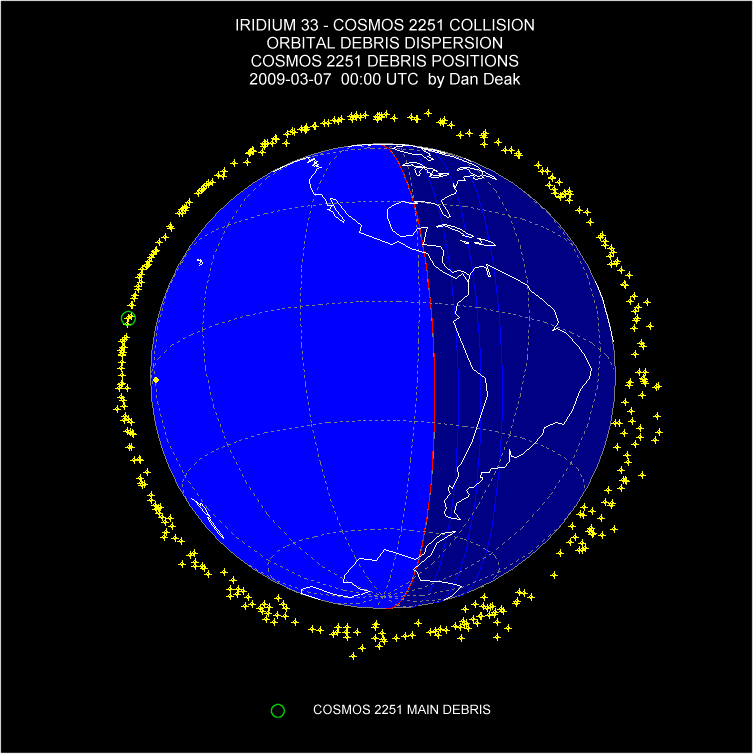
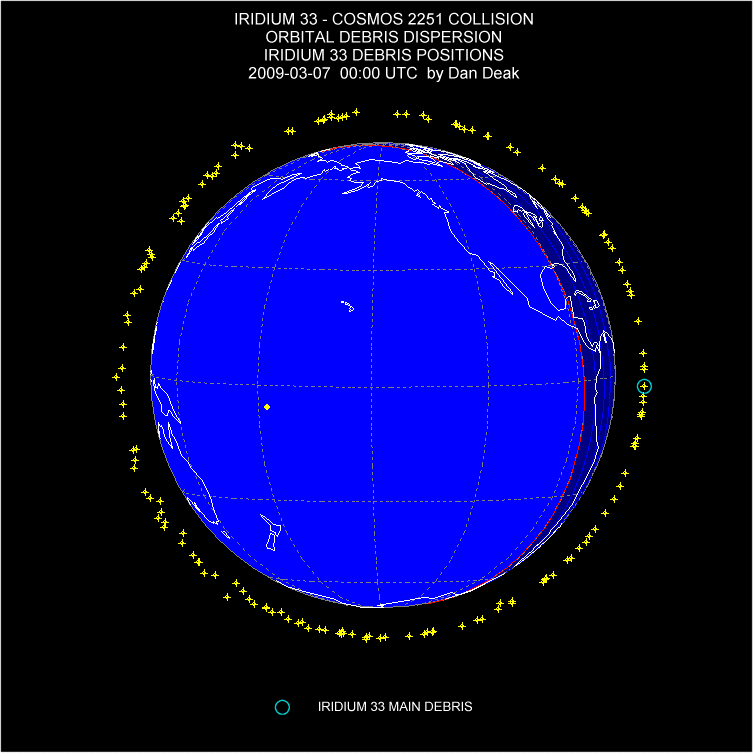
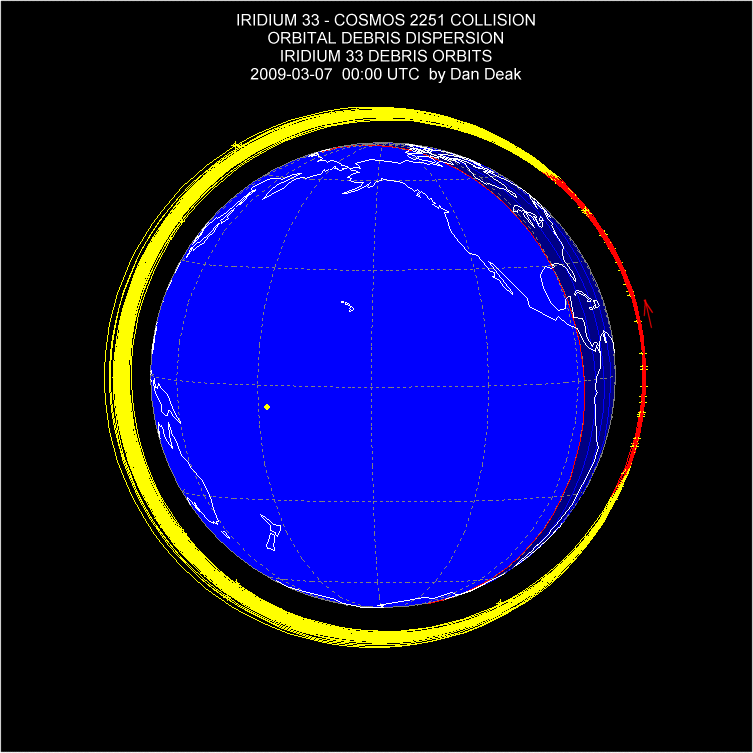
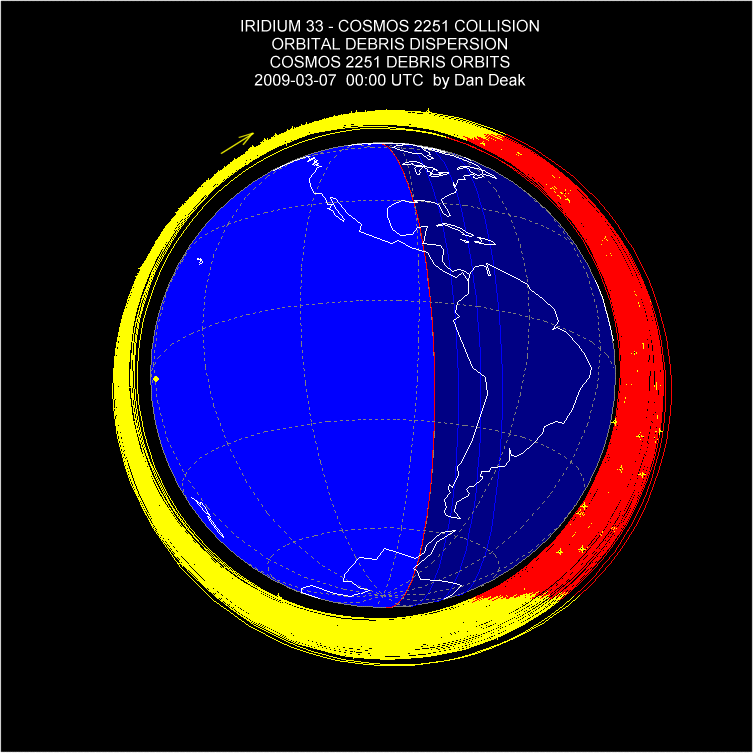
| WORM MOON: Tonight's full Moon has a special name--the Worm Moon. It signals the coming of northern spring, a thawing of the soil, and the first stirrings of earthworms in long-dormant gardens. Step outside tonight and behold the wakening landscape. "Worm moonlight" is prettier than it sounds. COSMOS IS FALLING: The first fragments of shattered satellite Cosmos 2251 are about to reenter Earth's atmosphere. According to US Strategic Command, fragment 1993-036PX will reenter on March 12th, followed by 1993-036KW on March 28th and 1993-036MC on March 30th. These are probably centimeter-sized pieces that will disintegrate in the atmosphere, posing no threat to people on the ground. Cosmos 2251 was shattered on Feb. 10th when it collided with another satellite, Iridium 33. Cosmos 2251 possessed about one and a half times more mass than Iridium 33 and to date appears to have produced more than twice the number of fragments. Click on the image to view a map of the debris orbits: 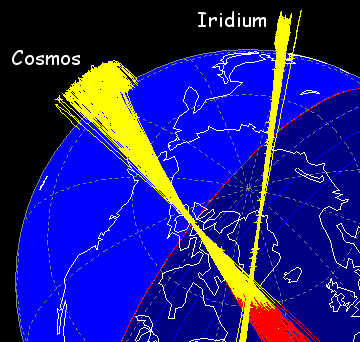
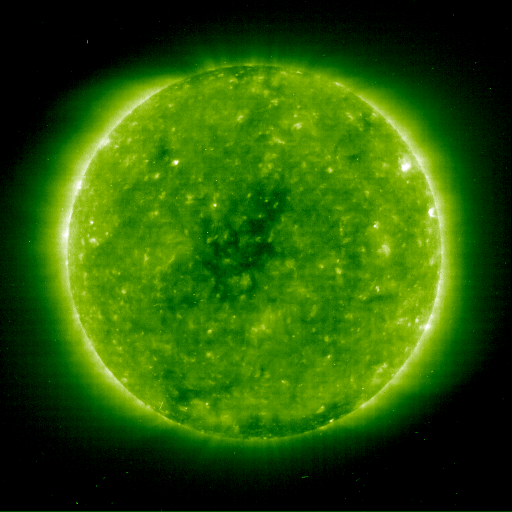
"As of March 7th, there were 355 catalogued fragments of Cosmos 2251 and 159 fragments of Iridium 33," says Daniel Deak who prepared the orbit-map for readers of spaceweather.com. "The Cosmos fragments are not only more numerous, but also more widely scattered, ranging in altitude from 198 km to 1689 km. For comparison, Iridium fragments are confined to altitudes between 582 km and 1262 km." The extra scatter of Cosmos debris is not fully understood. Impact geometry could explain the spread, but no one knows exactly how the two complex vehicles struck one another. A factor of possible importance: Cosmos 2251 was internally pressurized. Once ruptured, it may have blown itself apart. The International Space Station is in no immediate peril. "NASA has recognized from the first day [of the collision] that the risks to both ISS and STS-119 have increased," says Nick Johnson, Chief Scientist for Orbital Debris at the Johnson Space Center. "However, those increases have been relatively minor in comparison to the background environment." Updated debris maps: #1, #2, #3, #4, #5. CORONAL HOLE: Extreme UV telescopes onboard the Solar and Heliospheric Observatory (SOHO) are monitoring a dark hole in the sun's atmosphere--a coronal hole: 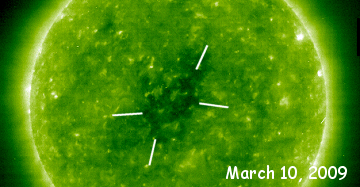
Coronal holes are vast regions where the sun's magnetic field opens up and allows the solar wind to escape. A stream of solar wind flowing from this hole is heading for Earth now. Arctic sky watchers should be alert for Northern Lights when it arrives late on March 12th or March 13th. March 2009 Aurora Gallery
[previous Marches: 2008, 2007, 2006, 2005, 2004, 2003, 2002]
Comet Lulin Photo Gallery
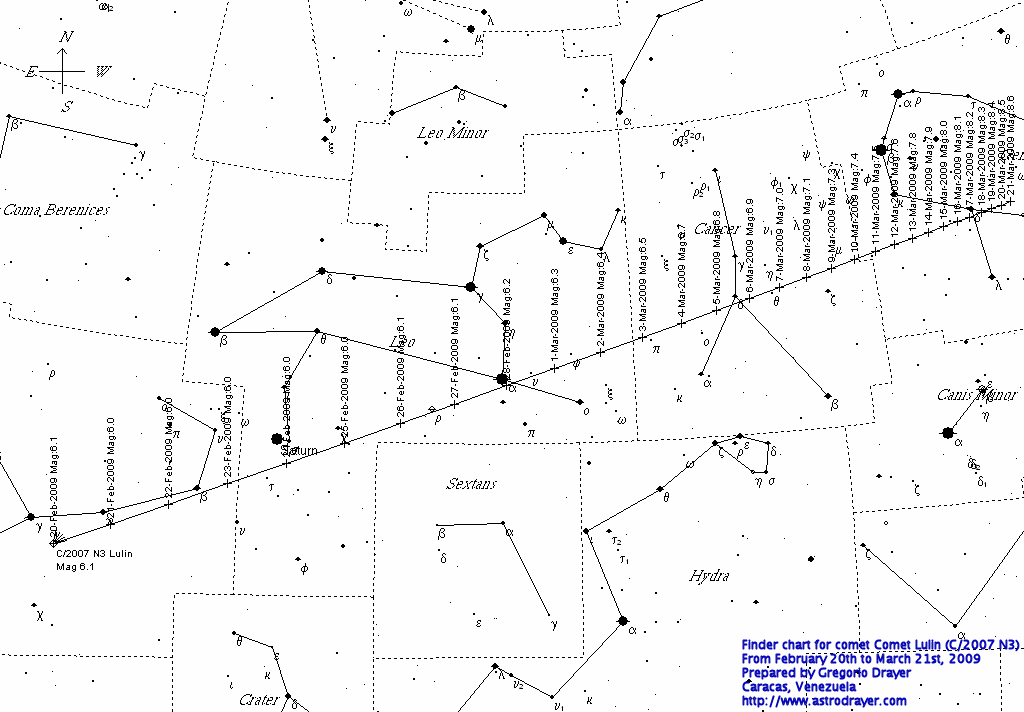
[Comet Hunter Telescope] [finder chart]
Explore the Sunspot Cycle |