They came from outer space--and you can have one! Genuine meteorites are now on sale in the Space Weather Store. | | |
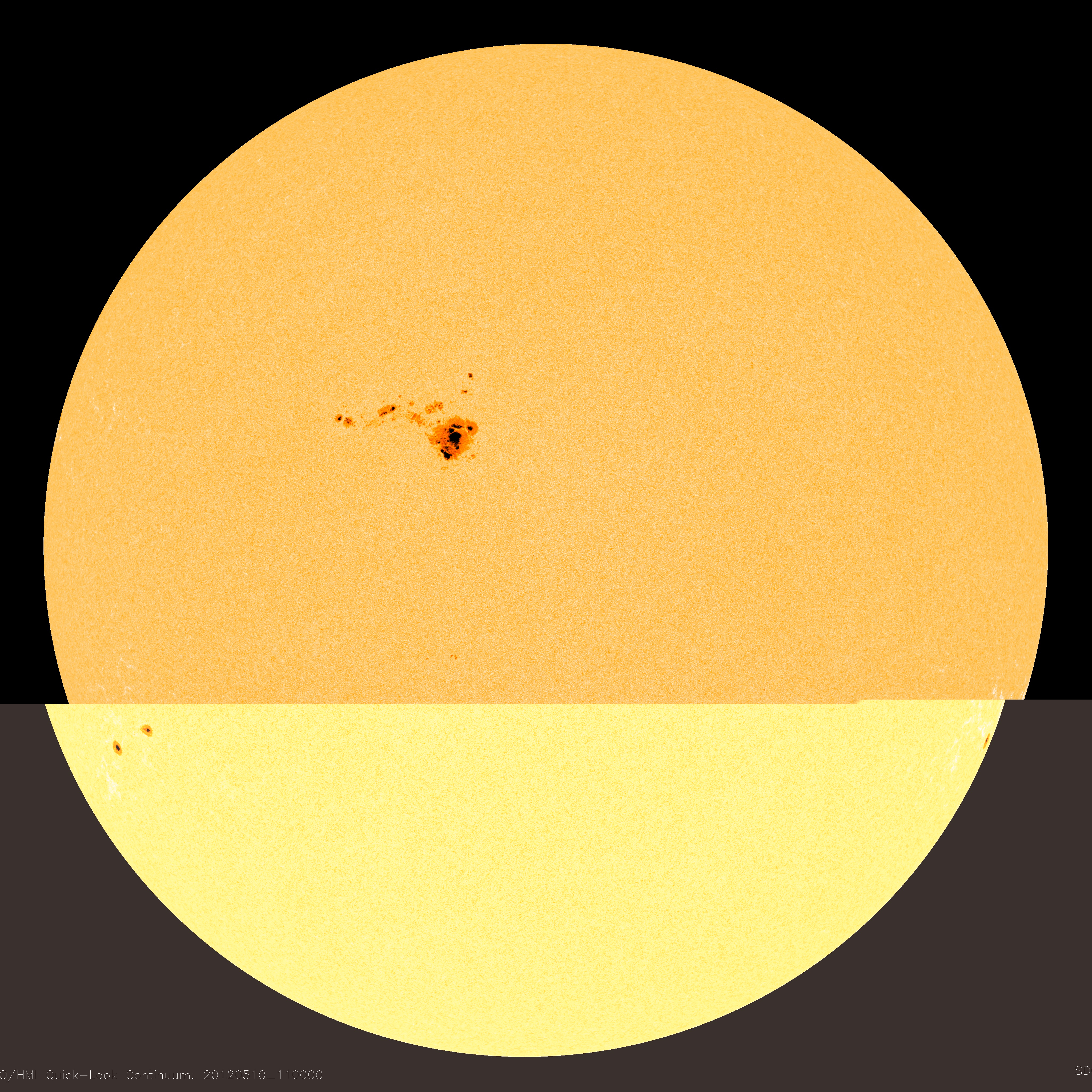
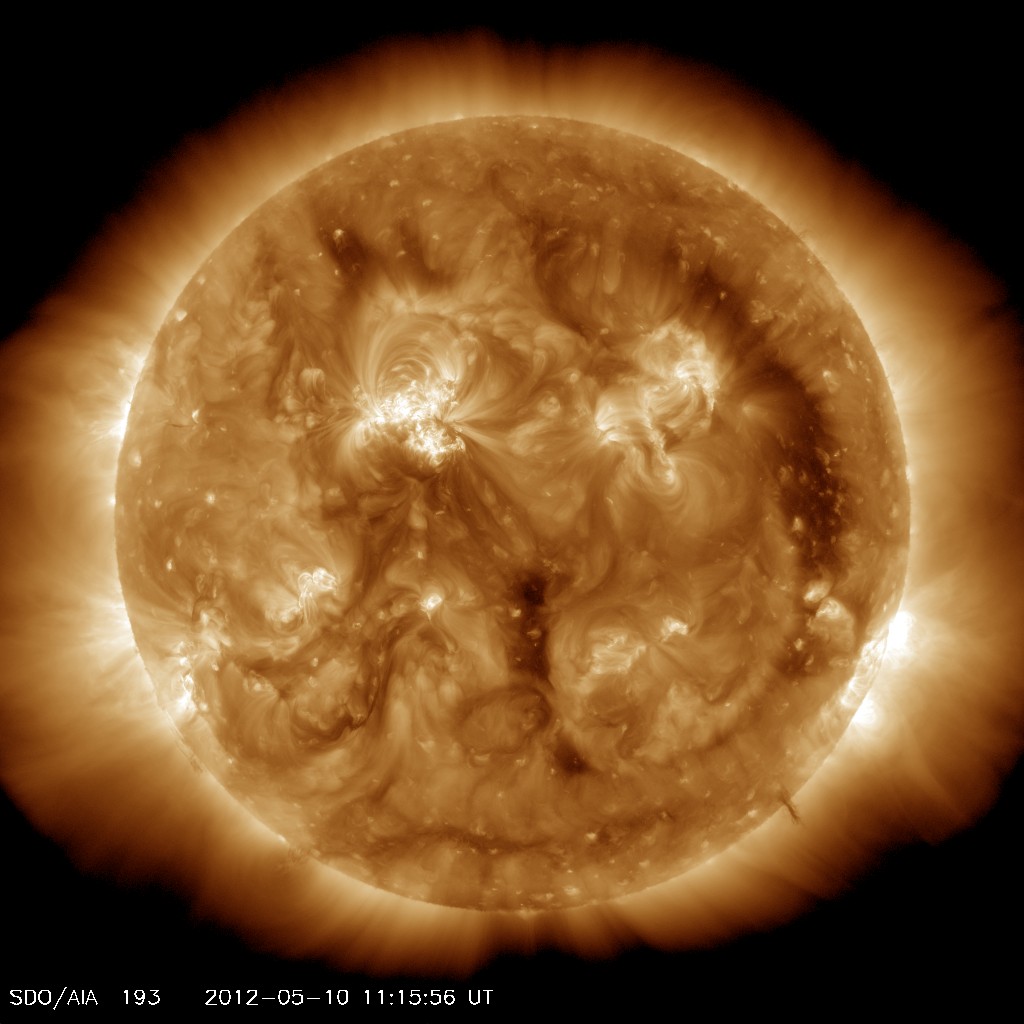
SOLAR ACTIVITY INTENSIFIES: Huge sunspot AR1476 is crackling with M-class solar flares and appears to be on the verge of producing something even stronger. The sunspot's 'beta-gamma-delta' magnetic field harbors energy for X-class flares, the most powerful kind. Earth is entering the line of fire as the sunspot rotates across the face of the sun.
This morning, May 10th around 0418 UT, sunspot 1476 unleashed an impulsive M5-class solar flare. NASA's Solar Dynamics Observatory recorded the extreme ultraviolet flash:

Apparently, the almost-X class explosion did not hurl a significant CME toward Earth. NOAA forecasters estimate a 65% chance of more M-class flares and a 10% chance of X-flares during the next 24 hours. X-flare alerts: text, phone.
WHAT DOES A SUNSPOT SOUND LIKE? On May 9th, amateur astronomer Thomas Ashcraft of New Mexico detected strong shortwave radio bursts coming from the sunspot. Click to hear the "solar static" that roared out of his loudspeaker:
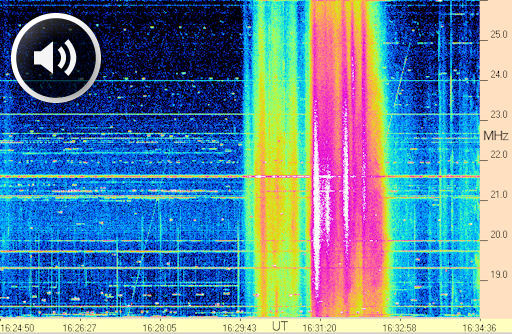
Dynamic spectrum courtesy of Wes Greenman, Alachua Radio Observatory
"The strongest burst so far occured around 1631 UT on May 9th," reports Ashcraft. "I am observing at 28 MHz and 21.1 MHz. As I send this note I am hearing more bursting, indicating powerful magnetic dynamism within active region 1476."
Solar radio bursts are caused by plasma instabilities that ripple through the sun's atmosphere in the aftermath of powerful flares. With AR1476 poised for more eruptions, this 'radio activity' is likely to continue for days. Stay tuned.
SUNSPOT SUNRISE: Sunspot AR1476 is so large, people are noticing it without the aide of a solar telescope. The behemoth appears at sunrise and sunset when the light of the low-hanging sun is occasionally dimmed to human visibility. Stefano De Rosa sends this picture from Turin, Italy:
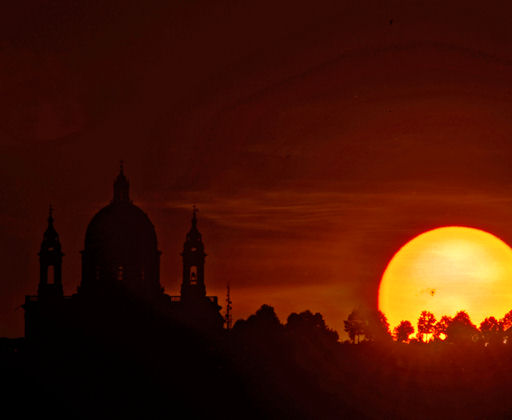
Photo details: Canon Eos 5D Mark II; Focal length:700mm; Exp: 1/8000 sec; F/40; ISO:50
"This morning the sight of the majestic sunspot AR 1476 was great as the sun was rising alongside the Basilica of Superga!" says De Rosa.
The sunspot looks a lot like Hawaii, but it is much bigger than any island on Earth. From end to end the sprawling active region stretches ~160,000 km, or a dozen times wider than our entire planet. If you have a sunspot telescope, take a look. The view is magnificent.
more images: from William Parker of Port Angeles, WA; from Alberto Lao of Binondo, Manila, Philippines; from Tom Murdic of Franklin, Tennessee; from Jett Aguilar of Quezon City, Philippines;
Caution: Even when the sun is dimmed by clouds and haze, looking into the glare can damage your eyes. Looking through unfiltered optics is even worse. If you chose to photograph the low sun with a digital camera, please use the camera's LCD screen for pointing. Do not peer through the optical viewfinder.