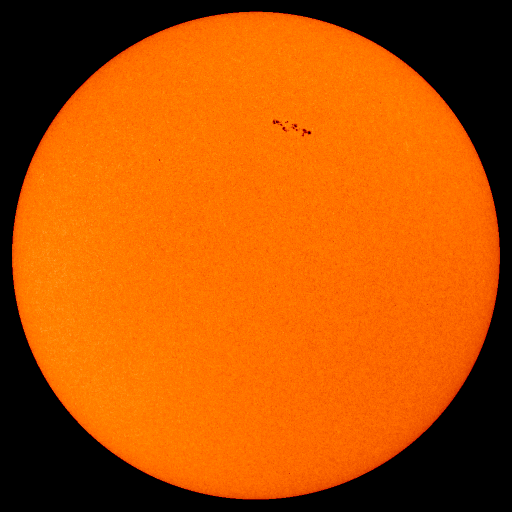
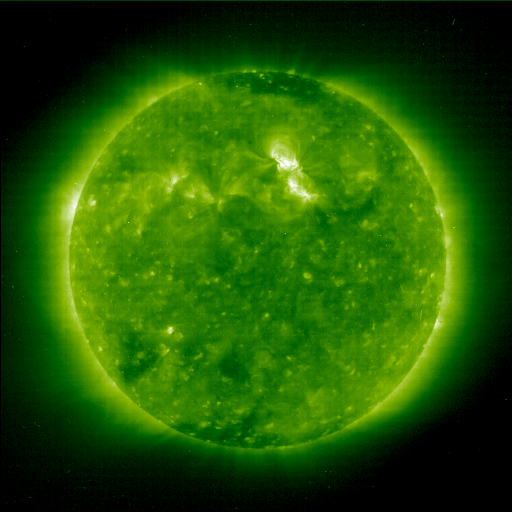
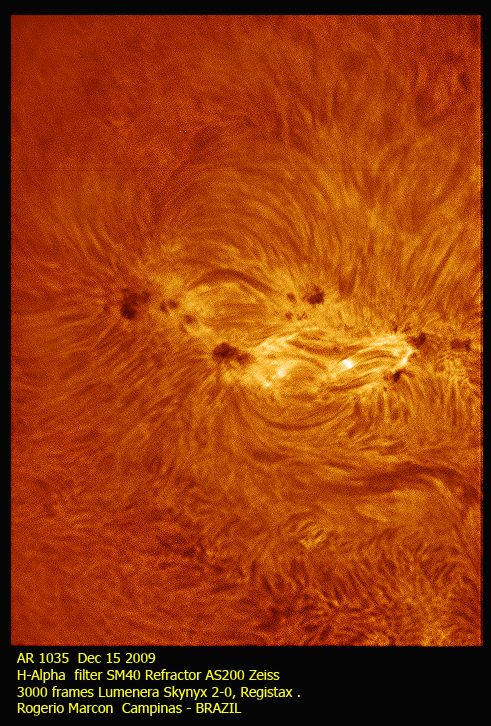
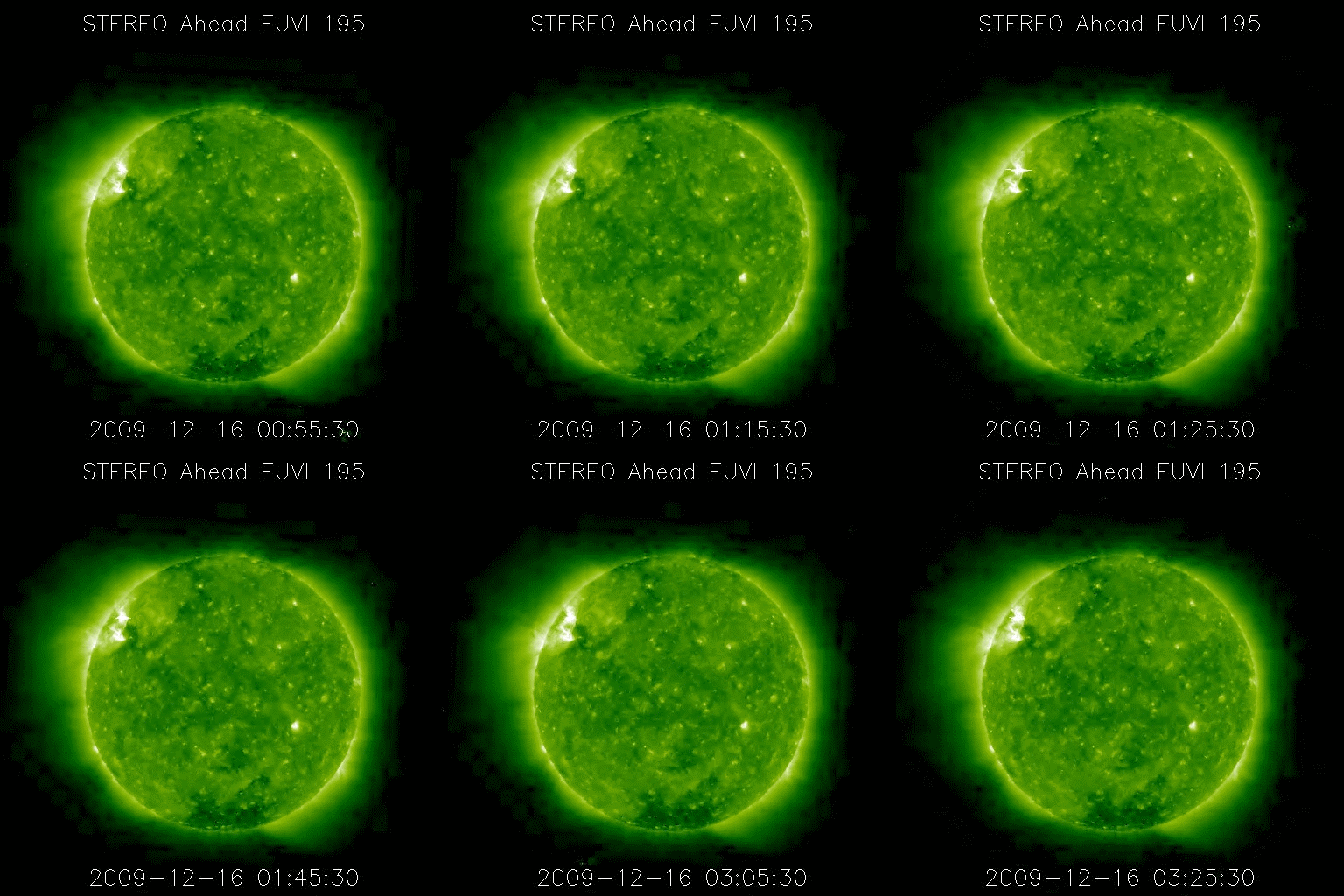
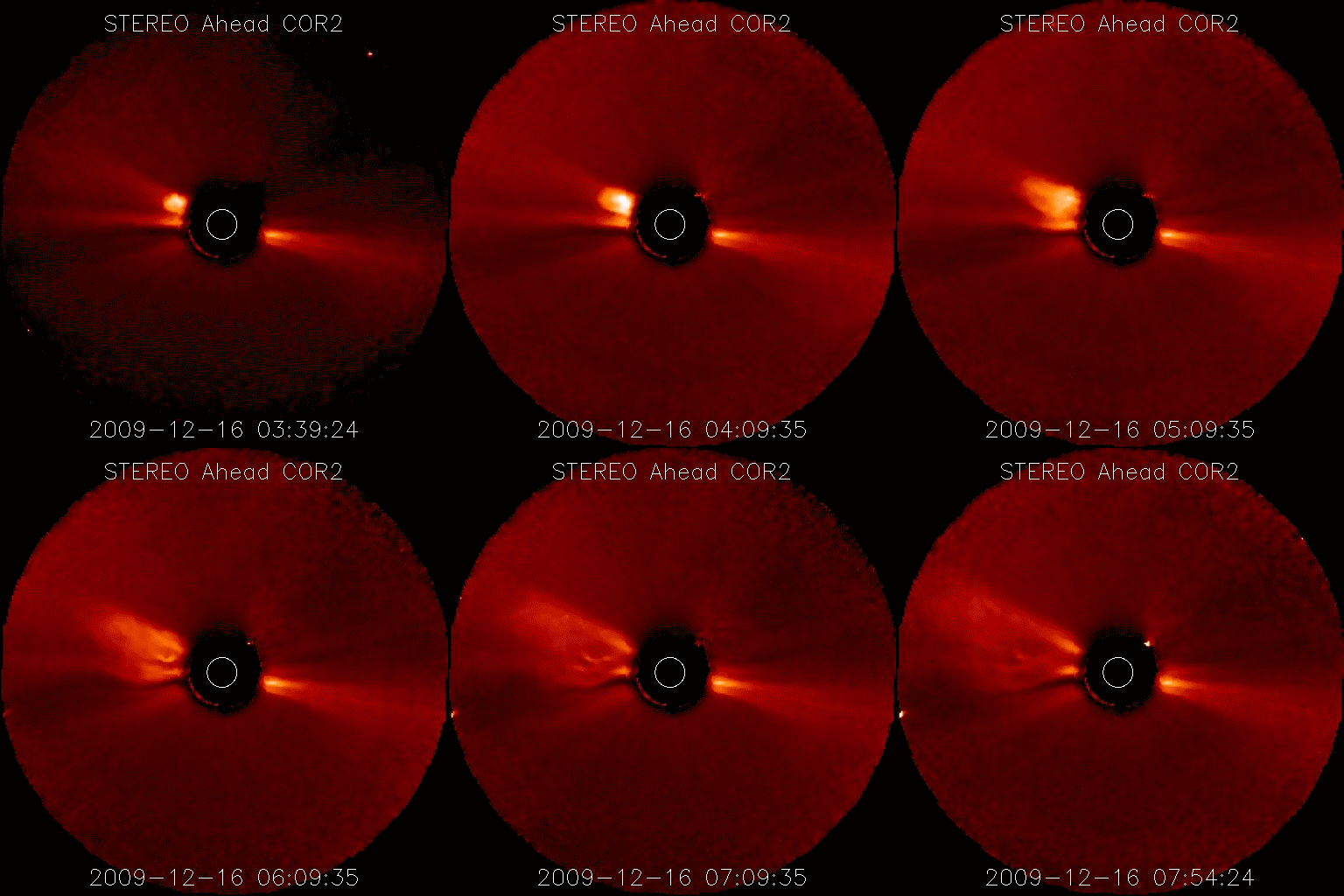
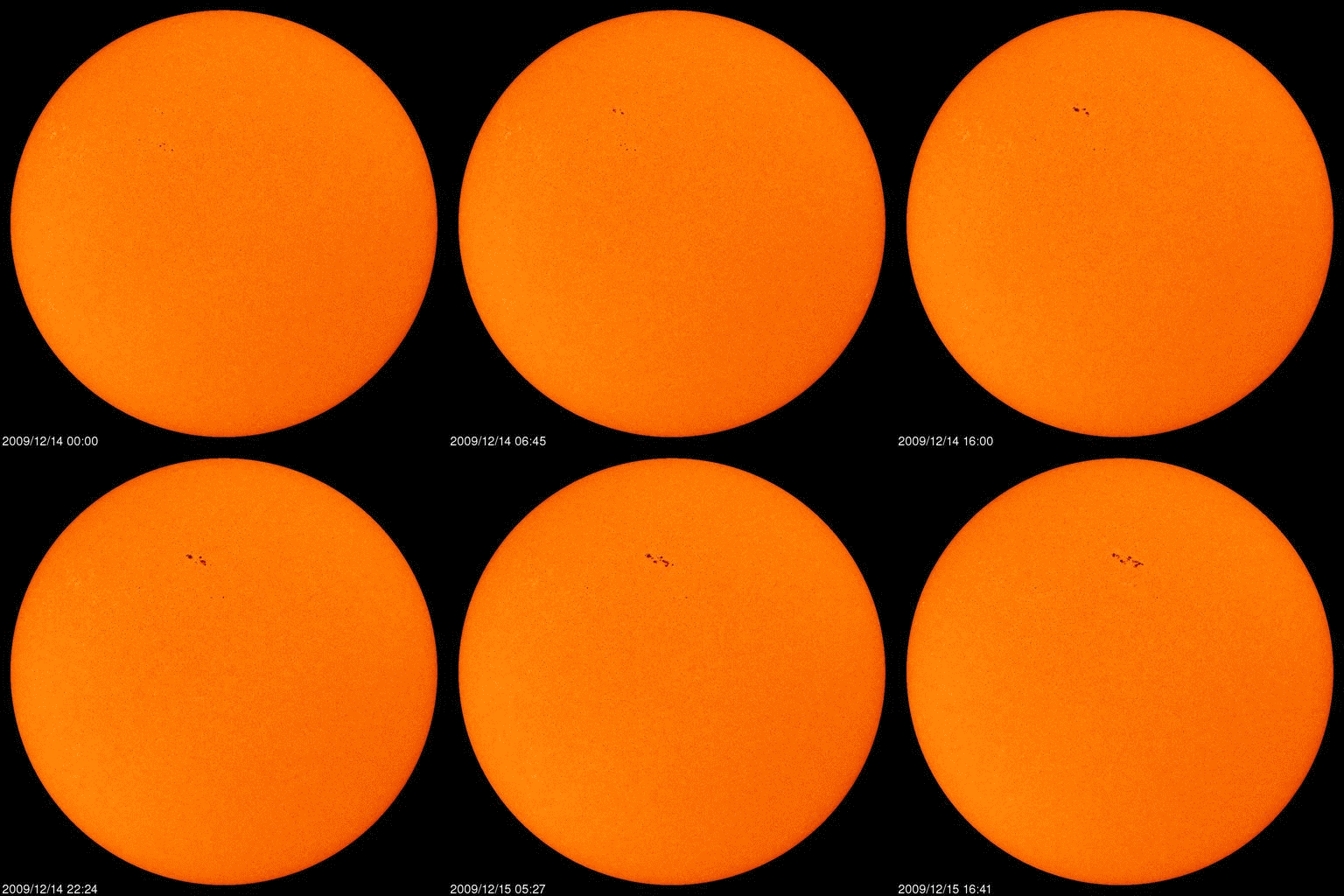
ASTRONOMY ALERTS: Looking for a unique and affordable gift? Give the heavens for Christmas at Spaceweather PHONE. | | | INCOMING CME: This morning at 0120 UT, an eruption of magnetic fields around sunspot 1035 produced a long-duration C4-class solar flare and hurled a coronal mass ejection (CME) in the general direction of Earth. High-latitude sky watchers should prepare for auroras when the CME arrives on or about Dec. 18th. STEREO movies: solar flare, CME. BIG NEW SUNSPOT: New sunspot 1035 is growing rapidly and it is now seven times wider than Earth. This makes it an easy target for backyard solar telescopes. Yesterday, Rogerio Marcon of Campinas, Brazil, photographed a maelstrom of hot plasma and magnetic filaments connecting the sunspot's dark cores: 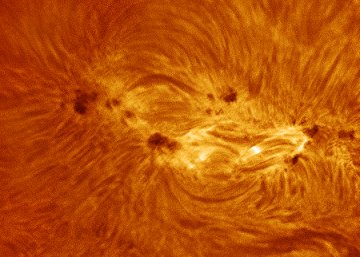
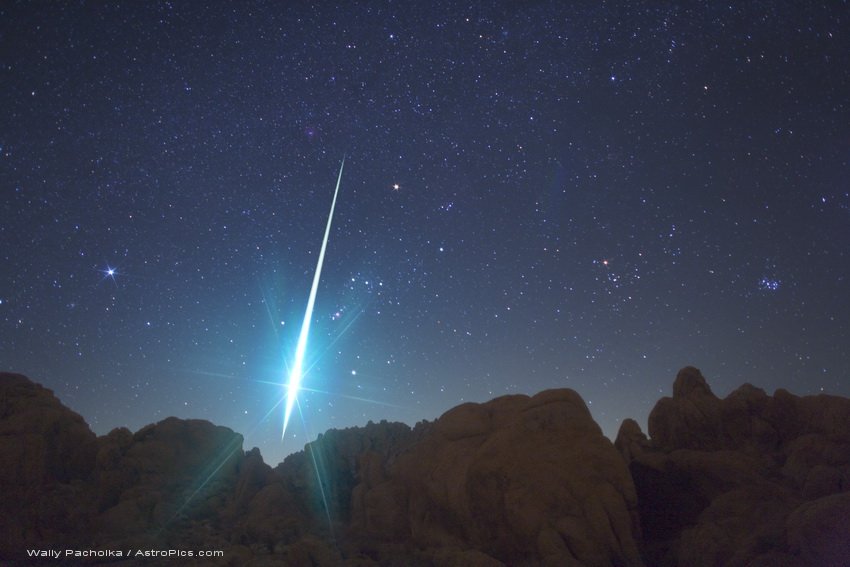
"Solar activity is picking up," he says. The magnetic polarity of the spot identifies it as a member of Solar Cycle 24--the cycle we've been waiting for to end the deepest solar minimum in nearly a century. One spot isn't enough to end the lull, but sunspot 1035 could herald bigger things to come. Stay tuned for updates. sunspot photos: from Etienne Lecoq of Normandy, France; from Jean-Paul Rroux at the Pic du Midi Observatory; from Vahan Yeterian of Lompoc, California; from G.Harmon et al of South Portland, Maine; from John C McConnell of Maghaberry Northern Ireland; from Tom King of Watauga, Texas; from John Nassr of Baguio, Philippines; from David Gradwell of Birr Ireland MONSTER FIREBALL: On Monday morning, Dec. 14th, at 3:59 am Pacific Standard Time, a piece of extinct comet 3200 Phaethon hit Earth's atmosphere over the Mojave desert in California. This was the result: 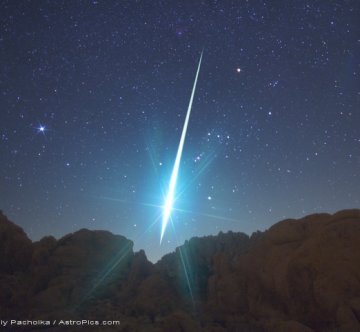
copyright: Wally Pacholka / AstroPics.com / TWAN
"It was a monster fireball," says photographer Wally Pacholka. "I caught it exploding over the Hercules Finger rock formation near Victorville, California, using a Canon 35 mm camera. This was one of 1522 photographs I took " The fireball occurred during the Geminid meteor shower, which peaked on Dec. 13th and 14th when Earth passed through a stream of debris from 3200 Phaethon. In some places, people saw 200+ Geminids per hour. In the Mojave desert, one was enough! Browse the gallery for more: UPDATED: 2009 Geminid Meteor Gallery
[sky map] [meteor radar] [Geminid counts]
December Northern Lights Gallery
[previous Decembers: 2008, 2007, 2006, 2005, 2001, 2000]
Explore the Sunspot Cycle |