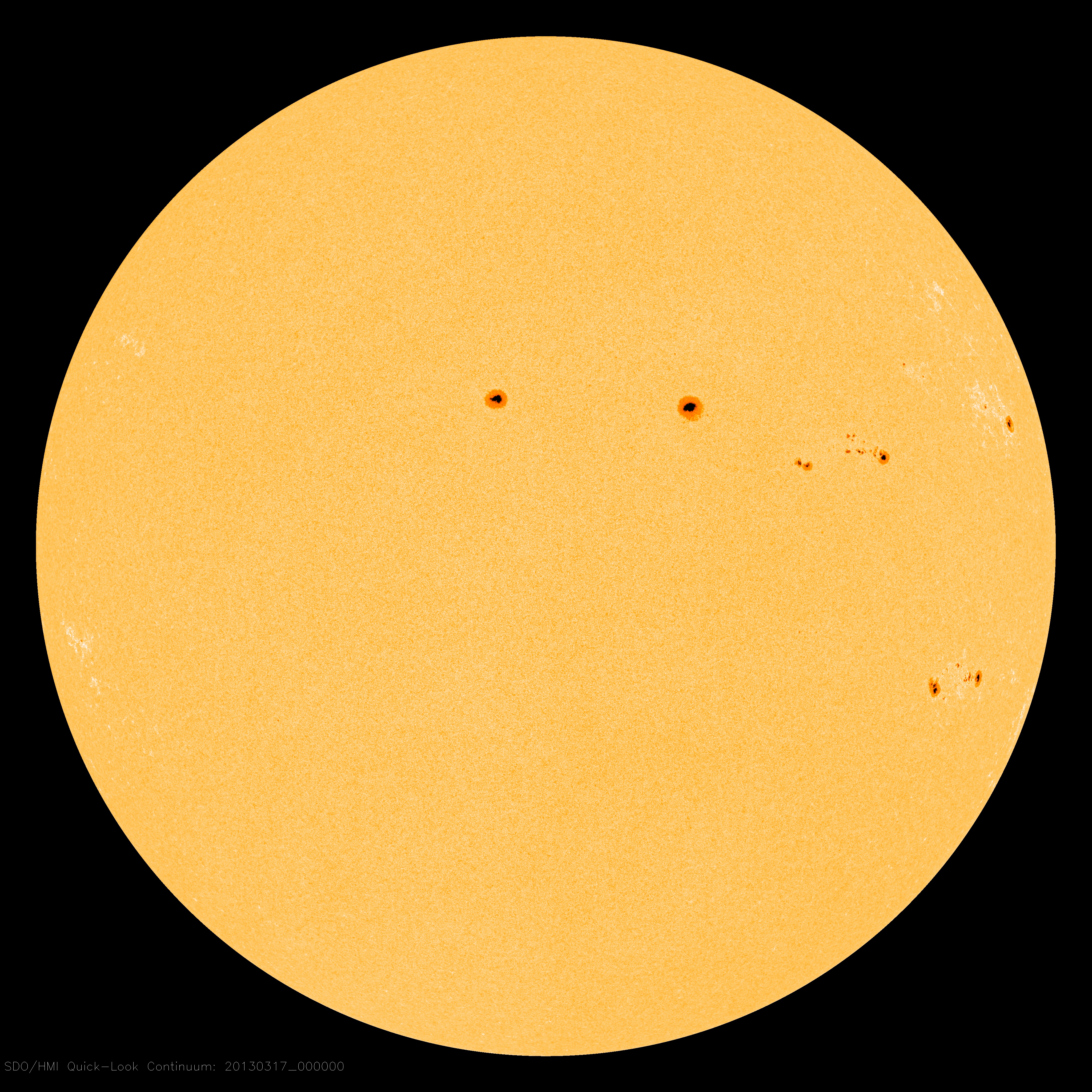
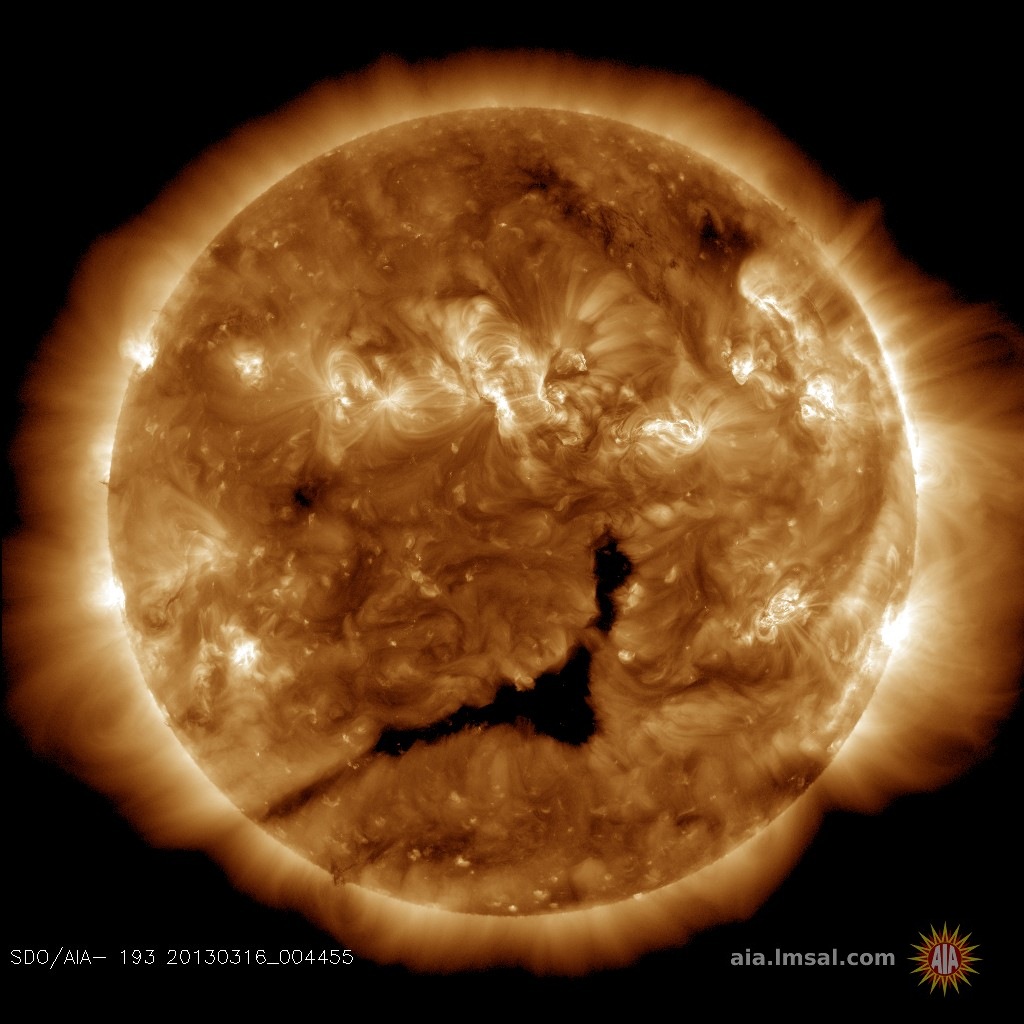
Metallic photos of the sun by renowned photographer Greg Piepol bring together the best of art and science. Buy one or a whole set. They make a stellar gift. | | |
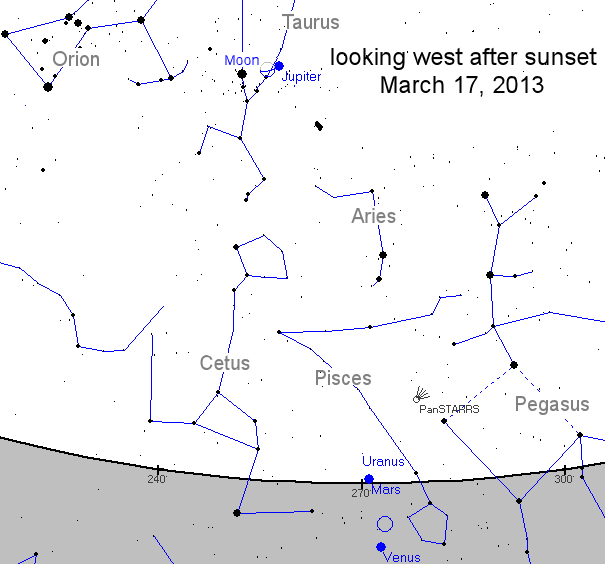
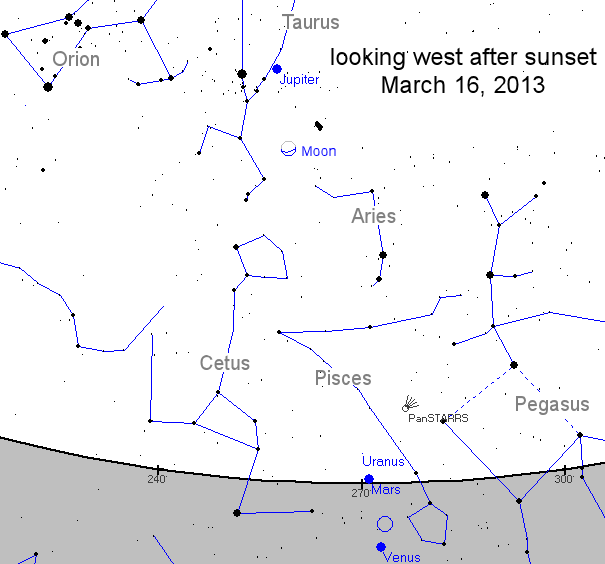
JUPITER-MOON CONJUNCTION: When the sun goes down tonight, step outside and look up. The crescent Moon and Jupiter are having a close encounter in the constellation Taurus--and don't forget Comet Pan-STARRS near the western horizon: sky map.
STRONG CME IMPACT: As predicted, a coronal mass ejection (CME) hit Earth's magnetic field at 0600 UT on March 17th. The impact lifted the solar wind speed from 300 km/s to 700 km/s and sparked a moderately strong (Kp=6) geomagnetic storm. Northern Lights spilled across the Canadian border into the United States as far south as Colorado:
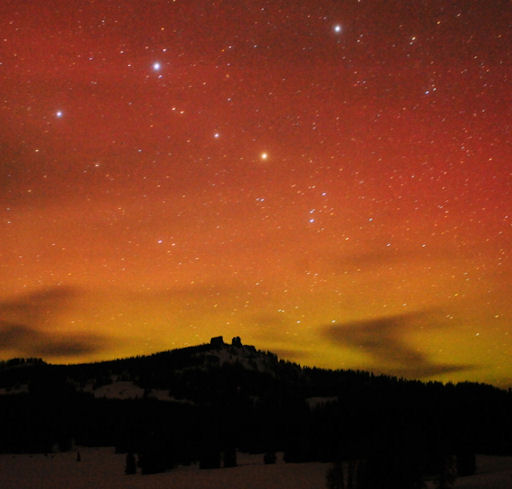
"Just after 4 am local time, the skies turned green and red behind the twin stone monoliths of Rabbit Ears Peak near Steamboat Springs, Colorado," reports photographer and astronomy professsor Jimmy Westlake.
In the contiguous United States, auroras also appeared above New York, Washington, Minnesota, Wisconsin, Wyoming, Michigan and the Dakotas. Scan the realtime photo gallery and count the states.
The show's not over. Geomagnetic storming is underway as Earth passes thrugh the wake of the CME. High-latitude sky watchers should remain alert for auroras. Aurora alerts: text, voice.
Realtime Aurora Photo Gallery
IS COMET PAN-STARRS FRAGMENTING? Veteran astrophotographer Peter Rosen has been monitoring Comet Pan-STARRS, and his latest images obtained on March 15th seem to show a fragment emerging from the nucleus. It is the speck just below and to the right of the comet's head:
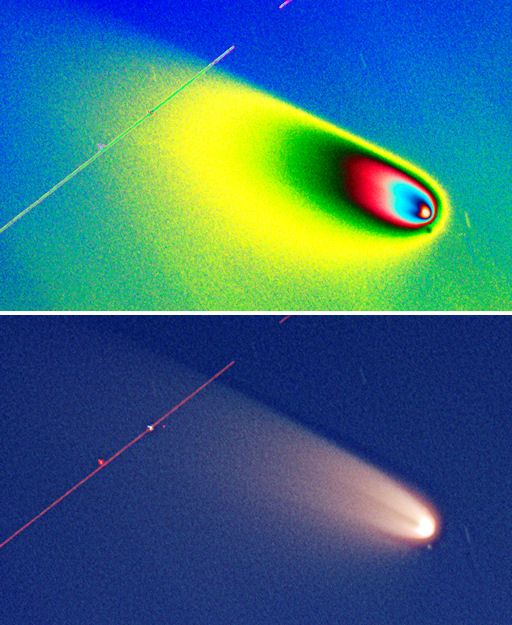
"It is visible also in two or three other image stacks," says Rosen. He notes how the stars in the image are trailed, but the apparent fragment is not. "It seems to follow the comet, not the stars. A plane passed through the field of view during the exposure, making a red streak through the comet's tail."
"The colorful image is a frequency modulation that increases the contrast and clearly shows the fragment as a dark dot below the nucleus," he continues. "I hope this splitting can be confirmed or refuted soon by other observers."
For casual sky watchers: A growing number of people are reporting that they can see Comet Pan-STARRS with the naked eye. Best estimates place the magnitude of the comet at +0.2, about twice as bright as a 1st magnitude star. As the comet moves away from the sun, its visibility is improving, which means you might be able to see it in the nights ahead. Step outside about an hour after sunset and look west: sky map.
More: NASA video, 3D orbit, ephemeris, light curves.
Realtime Comet Photo Gallery
Realtime Space Weather Photo Gallery
Realtime Noctilucent Cloud Photo Gallery
[previous years: 2003, 2004, 2005, 2006, 2007, 2008, 2009, 2011]