AURORA ALERTS: Did you miss the Northern Lights? Next time get a wake-up call from Space Weather PHONE | | |
METEOR ACTIVITY UPDATE: The annual Leonid meteor shower is peaking today, Nov. 17th, as Earth passes through a thicket of debris from Comet Tempel-Tuttle. So far the shower has been a modest one, with fewer than ~25 meteors per hour according to international counts. The reason: Earth is missing the densest swarms of comet dust. A better shower is coming. The Geminids of mid-December are expected to exceed today's Leonids four- or five-fold. Stay tuned for that!
images: from James Beauchamp of Oklahoma City, OK; from Martin Popek of Nýdek, Czech republic; from Ugur Ikizler of Mudanya - Bursa / Turkey
AURORA WATCH: A solar wind stream is buffeting Earth's magnetic field, sparking geomagnetic activity around the Arctic Circle. "I was driving through the countryside near Tromsø, Norway, on Nov. 14th when bright auroras burst through the clouds," reports Ole Christian Salomonsen. He quickly pulled over to take this picture:
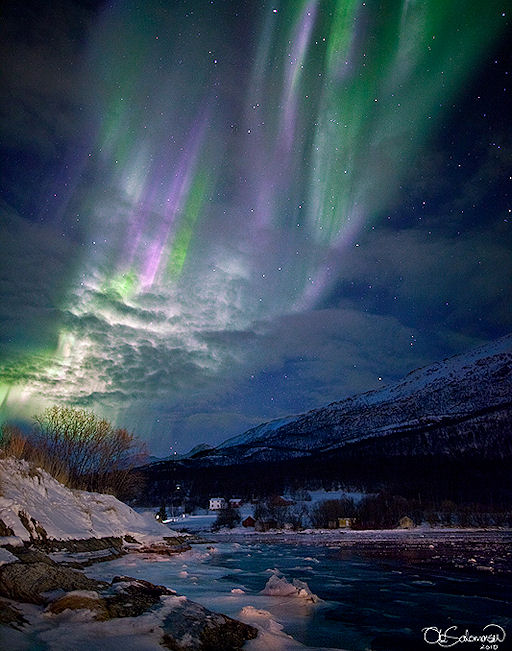
"The lights were amazing--green, white, purple, moving fast and strong," says Salomonsen. "I call the shot 'Colorful Clouds.'"
NOAA forecasters estimate a 40% chance of geomagnetic activity during the next 24 hours. High latitude sky watchers should remain alert for auroras.
NEW: November 2010 Aurora Gallery
[previous Novembers: 2009, 2008, 2007, 2006, 2004, 2003, 2002, 2001, 2000]
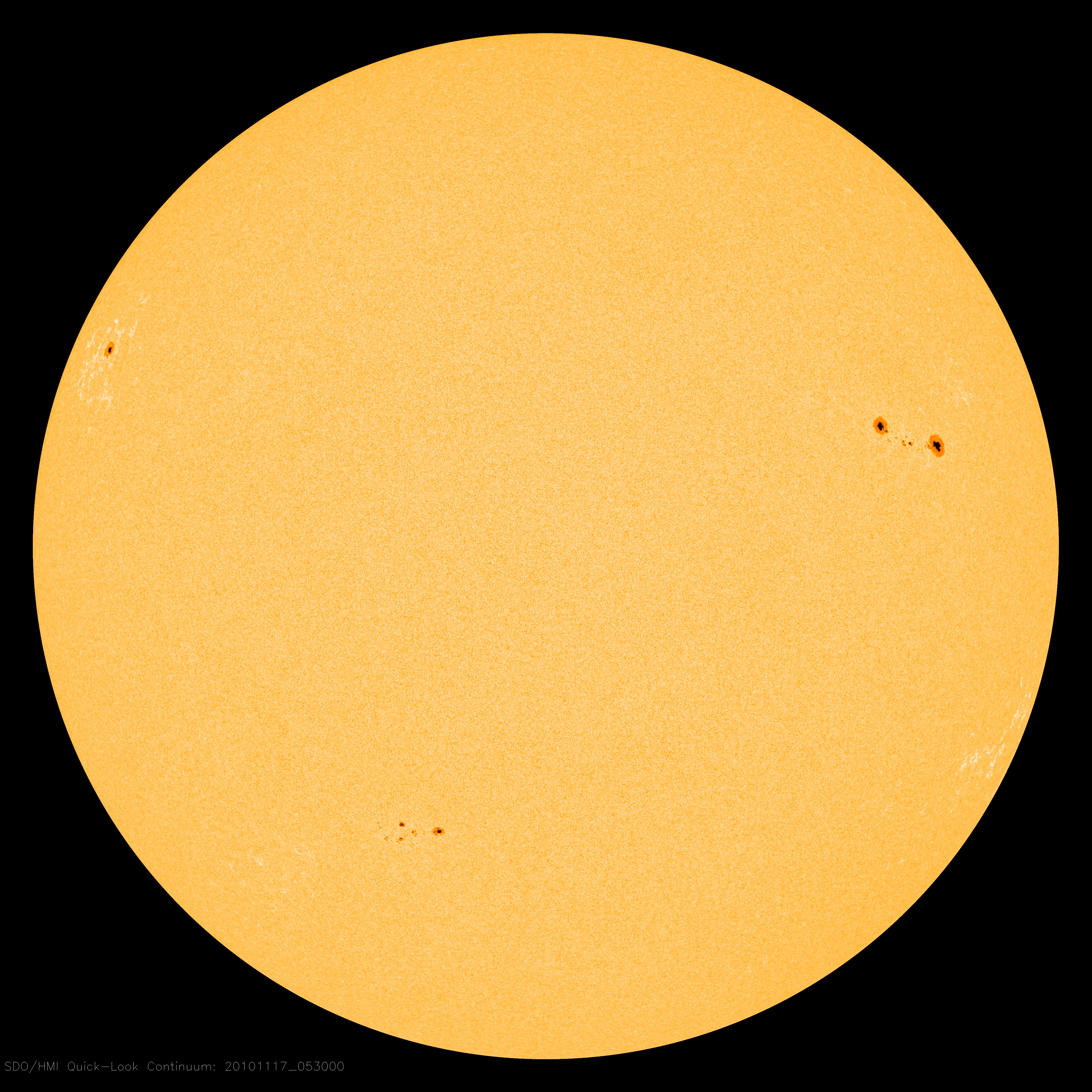
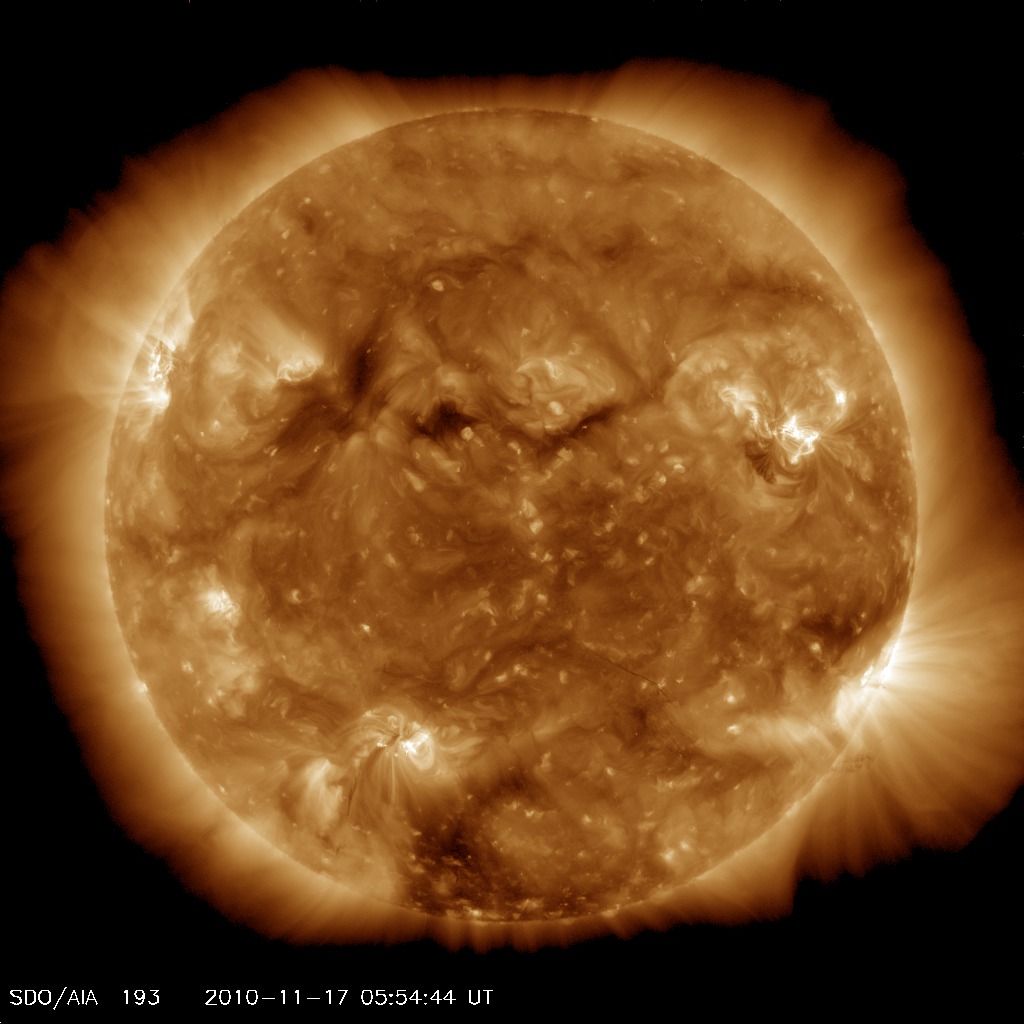
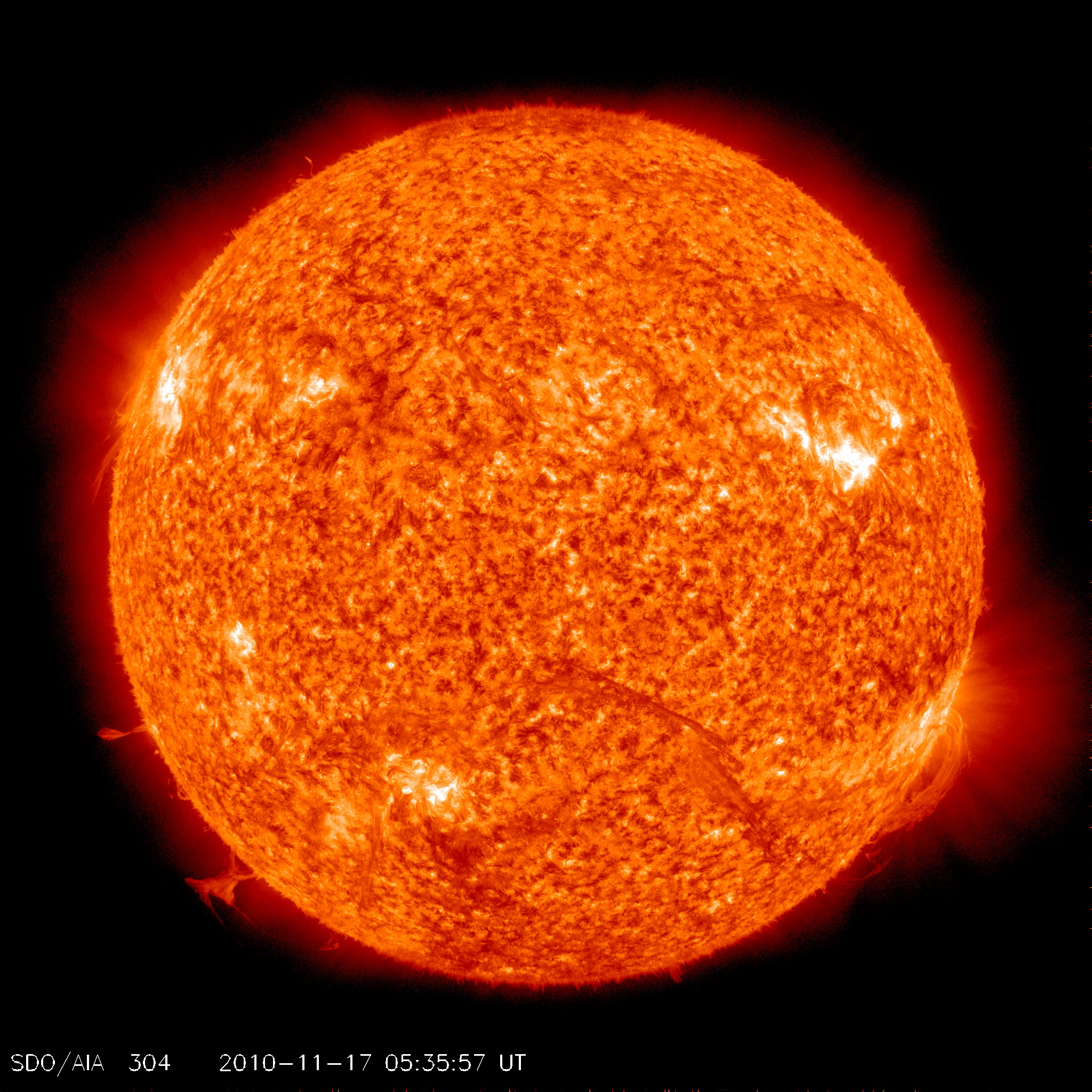
ACTIVE FILAMENT: A dark filament of magnetism is snaking around the sun's southwestern horizon, and it could be poised to erupt. The 600,000 km-long structure has shown considerable instability since it began lifting up from the stellar surface yesterday: SDO movie. (continued below)
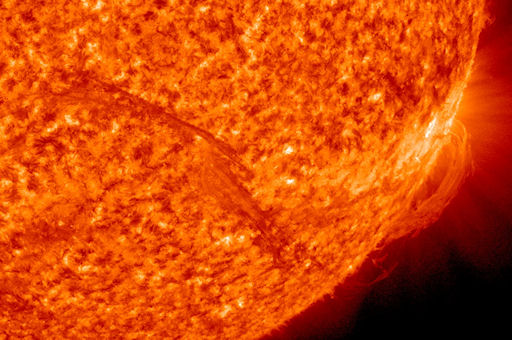
What happens next? The filament has several options: relaxing gently back into the sun, snapping explosively, or crashing down upon the stellar surface. Although an eruption from the area would likely not be Earth-directed, it could be very photogenic as tendrils of hot plasma fly into the black space above the edge of the sun. Readers with solar telescopes are encouraged to monitor the region for developments.
Potentially Hazardous Asteroids (
PHAs) are space rocks larger than approximately 100m that can come closer to Earth than 0.05 AU. None of the known PHAs is on a collision course with our planet, although astronomers are finding
new ones all the time.
On November 17, 2010 there were 1164 potentially hazardous asteroids.
Notes: LD means "Lunar Distance." 1 LD = 384,401 km, the distance between Earth and the Moon. 1 LD also equals 0.00256 AU. MAG is the visual magnitude of the asteroid on the date of closest approach. | | The official U.S. government space weather bureau |
| | The first place to look for information about sundogs, pillars, rainbows and related phenomena. |
| | Researchers call it a "Hubble for the sun." SDO is the most advanced solar observatory ever. |
| | 3D views of the sun from NASA's Solar and Terrestrial Relations Observatory |
| | Realtime and archival images of the Sun from SOHO. |
| | from the NOAA Space Environment Center |
| | the underlying science of space weather |