Thirty-five new items have just been added to our Meteorite Jewelry collection. Browse the Space Weather Store for something out of this world. | | |
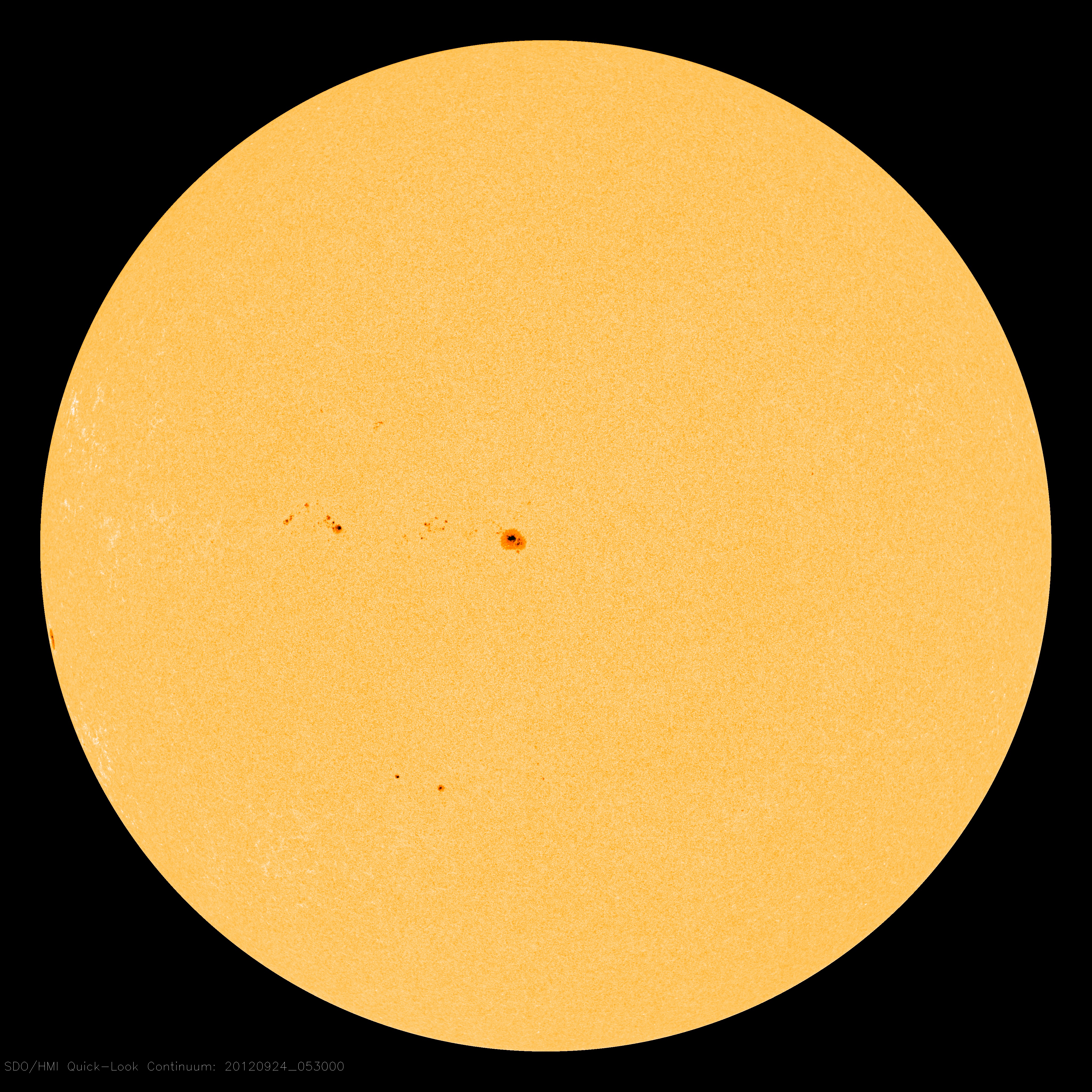
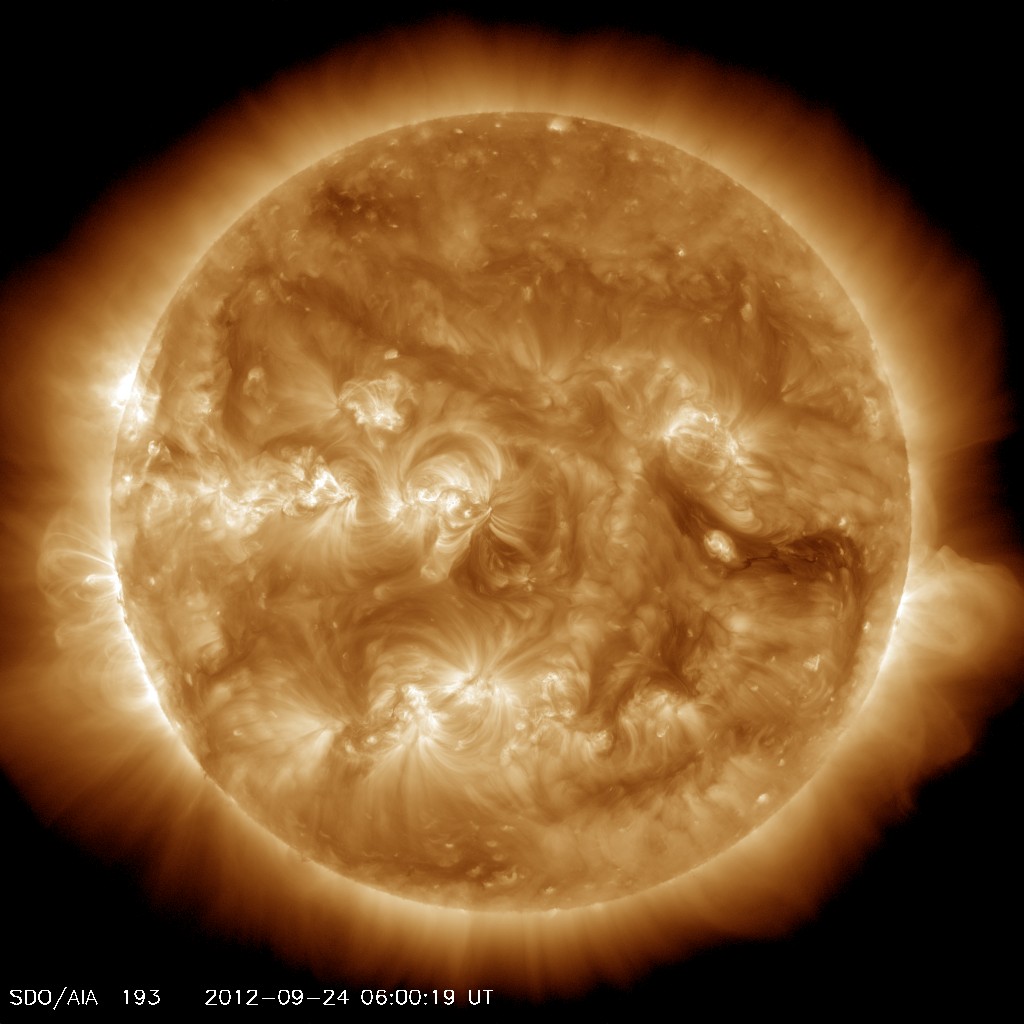
SLIGHT CHANCE OF FLARES: NOAA forecasters estimate a 10% to 15% chance of M-class solar flares during the next 24 hours. The likely source would be sunspot AR1575, near the center of the solar disk. The odds are low, but if a flare occurs in AR1575, it will be Earth-directed. Solar flare alerts: text, voice.
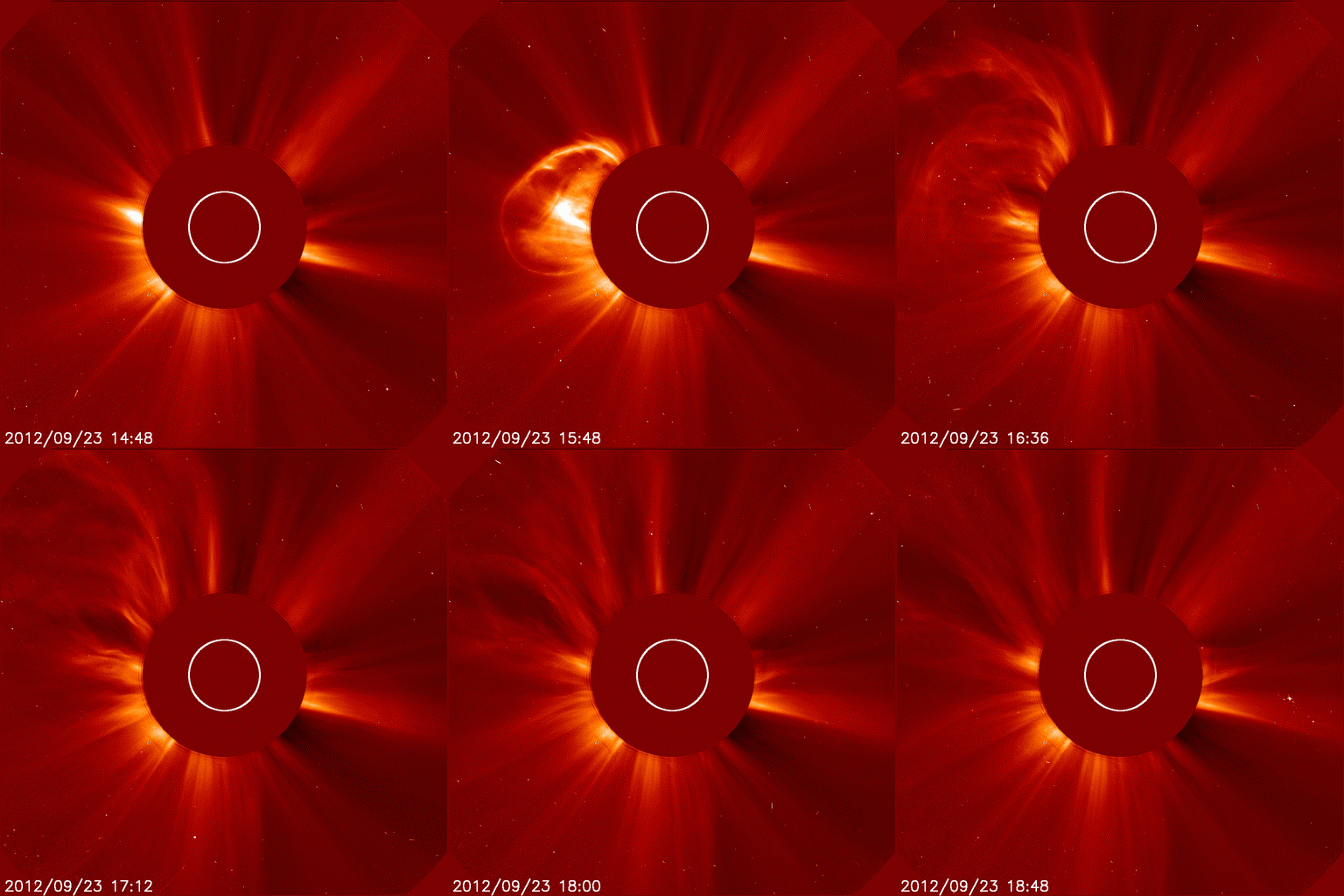
FARSIDE EXPLOSION: An active region on the farside of the sun exploded on Sept. 23rd, hurling a bright coronal mass ejection over the sun's eastern limb. Orbiting at the L1 Lagrange Point, the Solar and Heliospheric Observatory (SOHO) recorded the expanding cloud:
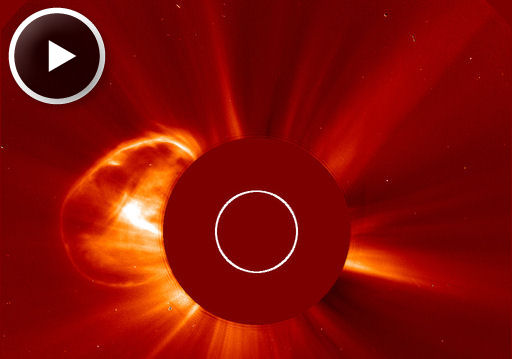
The cloud is not heading for Earth. Nor is any other planet in the line of fire. In a few days, however, the sun's rotation will turn the blast site toward Earth. After that, eruptions could become geoeffective.
You can monitor farside explosions and track this active region on your smartphone or iPad: Download the 3D Sun, courtesy of NASA's Heliophysics Division.
Realtime Space Weather Photo Gallery
AUTUMN LIGHTS: The onset of northern autumn means it's aurora season. For reasons researchers don't fully understand, equinoxes are the best times to see Northern Lights. And, right on cue, the Arctic Circle is glowing. Marianne Bergli sends this picture of auroras shimmering directly above Storfjord, Norway:
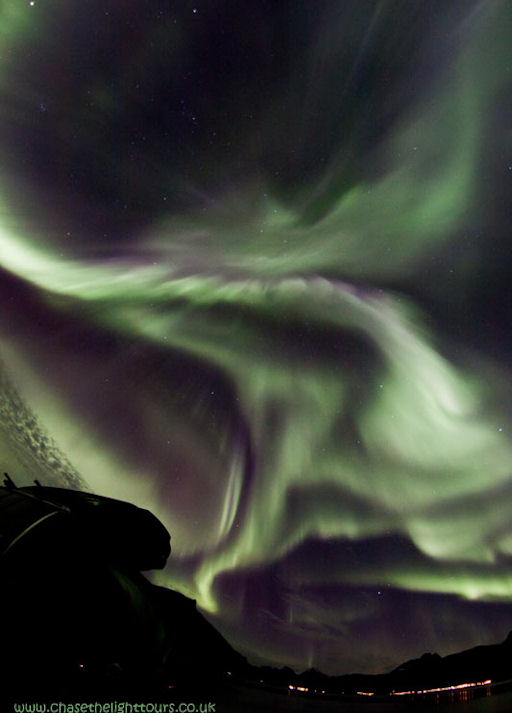
"Last night it was difficult to select [which part of the sky to photograph]. The auroras were dancing everywhere," says Bergli. "Eventually I was just lying on my back looking up. It was absolutely, unbelievable wonderful."
As the week begins, the solar wind velocity is low (~350 km/s), but at this time of year it only takes a gentle gust to ignite bright auroras around the Arctic Circle. High-latitude sky watchers should remain alert for auroras. Aurora alerts: text, voice.
Realtime Aurora Photo Gallery
Realtime Noctilucent Cloud Photo Gallery
[previous years: 2003, 2004, 2005, 2006, 2007, 2008, 2009, 2011]
Potentially Hazardous Asteroids (
PHAs) are space rocks larger than approximately 100m that can come closer to Earth than 0.05 AU. None of the known PHAs is on a collision course with our planet, although astronomers are finding
new ones all the time.
On September 24, 2012 there were 1331 potentially hazardous asteroids.
Notes: LD means "Lunar Distance." 1 LD = 384,401 km, the distance between Earth and the Moon. 1 LD also equals 0.00256 AU. MAG is the visual magnitude of the asteroid on the date of closest approach. | | The official U.S. government space weather bureau |
| | The first place to look for information about sundogs, pillars, rainbows and related phenomena. |
| | Researchers call it a "Hubble for the sun." SDO is the most advanced solar observatory ever. |
| | 3D views of the sun from NASA's Solar and Terrestrial Relations Observatory |
| | Realtime and archival images of the Sun from SOHO. |
| | from the NOAA Space Environment Center |
| | the underlying science of space weather |