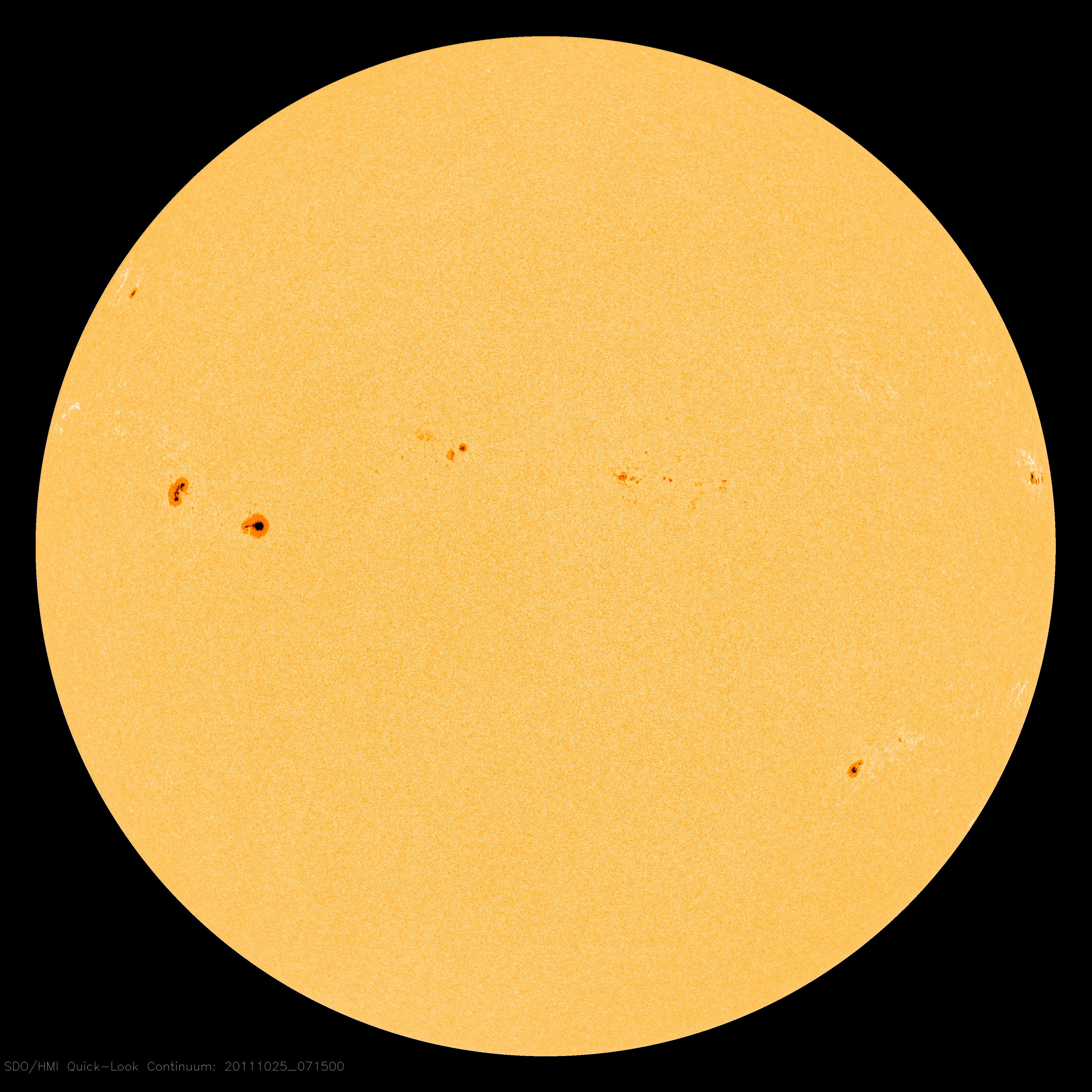
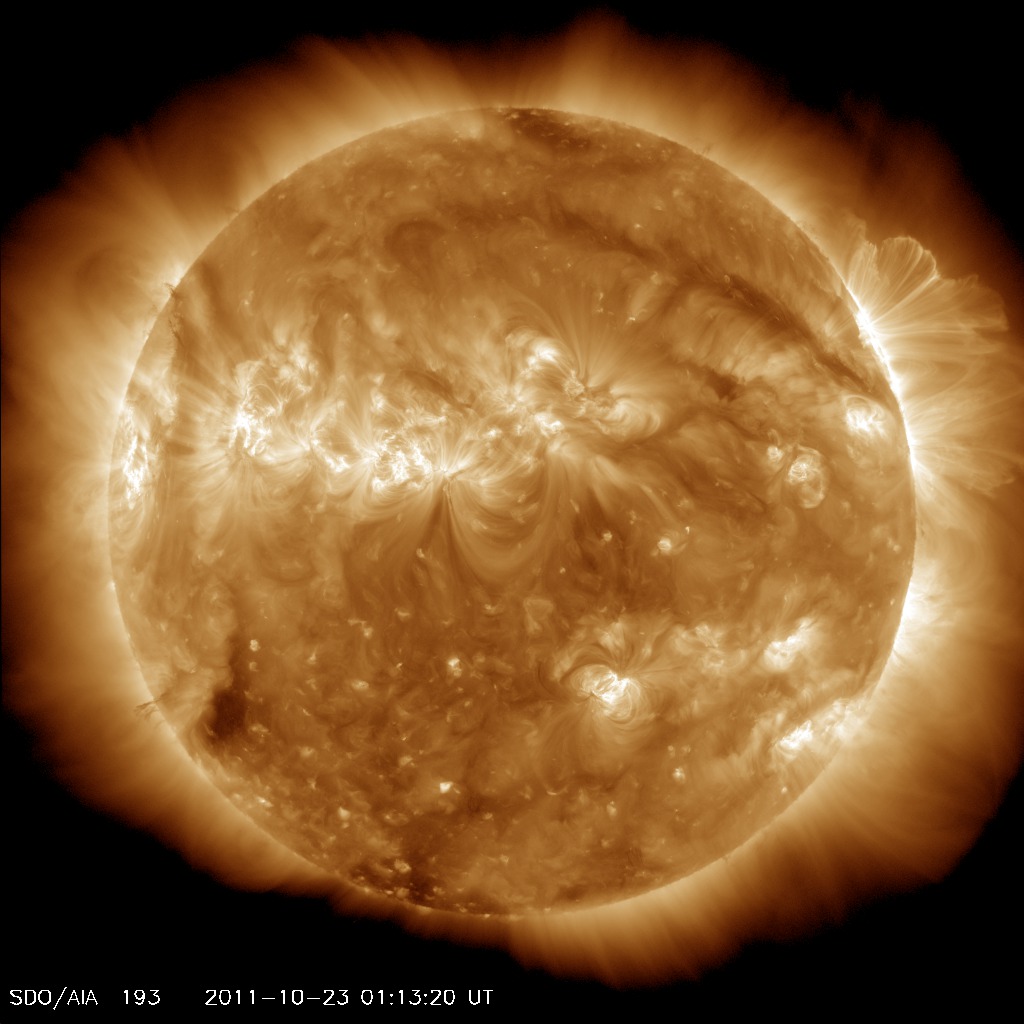
Metallic photos of the sun by renowned photographer Greg Piepol bring together the best of art and science. Buy one or a whole set. They make a stellar gift. | | |
AURORAS IN THE USA: A coronal mass ejection (CME) hit Earth on Oct. 24th at approximately 1800 UT (2:00 pm EDT). The impact strongly compressed Earth's magnetic field, directly exposing geosynchronous satellites to solar wind plasma, and sparked an intense geomagnetic storm. As night fell over North America, auroras spilled across the Canadian border into the contiguous United States.
"Wow, wow, wow! These were the best Northern Lights I've seen since 2004," says Shawn Malone, who took this picture from the shores of Lake Superior in Michigan:
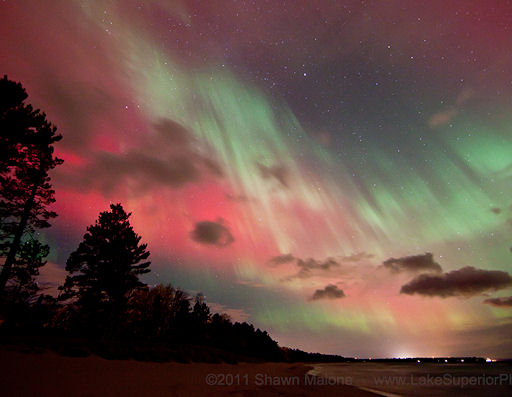
"The auroras filled the sky in every direction--even to the south," he says.
Indeed, the display spread all the way down to Arkansas. "When I saw the alert, I ran outside and immediately saw red auroras," reports Brian Emfinger from the city of Ozark. "Within a few minutes the auroras went crazy! It was unbelievable." Update: Emfinger has assembled a 2h 22m time-lapse movie of the display: 29 MB wmv.
Auroras were seen or photographed in more than half of all US states including Alabama, Wisconsin, New Mexico, Tennessee, Missouri, Illinois, Nebraska, Kentucky, North Carolina, Indiana, Oklahoma, Kansas, Iowa, Maryland, New York, Montana, Ohio, Colorado, Pennsylvania, Washington, Virginia, Texas, Arizona, Minnesota, Maine, Michigan, Oregon, Arkansas and California. Many observers, especially in the deep south, commented on the pure red color of the lights they saw. These rare all-red auroras sometimes appear during intense geomagnetic storms. They occur some 300 to 500 km above Earth's surface and are not yet fully understood.
The storm is subsiding now. Nevertheless, high-latitude sky watchers should remain alert for auroras as Earth's magnetic field continues to reverberate from the CME impact. Aurora alerts: text, voice.
NEW: October 2011 Aurora Gallery
[previous Octobers: 2010, 2009, 2008, 2007, 2006, 2004, 2003, 2002]
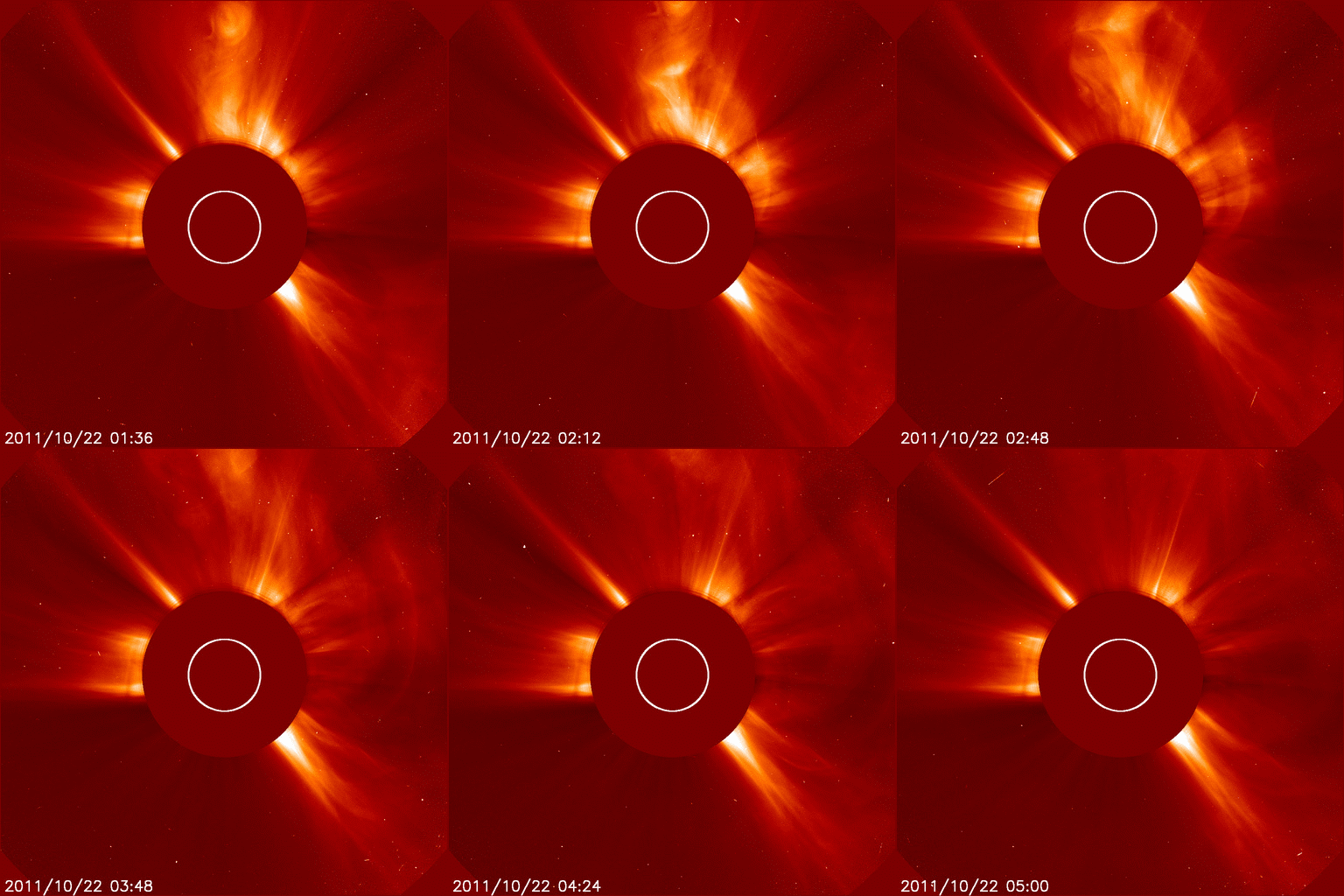
THE INSTIGATING EXPLOSION: The CME that hit Earth's magnetic field on Oct. 24th left the sun almost two days earlier. It was propelled in our direction by an unstable magnetic filament, which erupted around 0100 UT on Oct. 22nd. This movie from the Solar and Heliospheric Observatory shows the cloud expanding toward Earth in the first hours after the explosion:
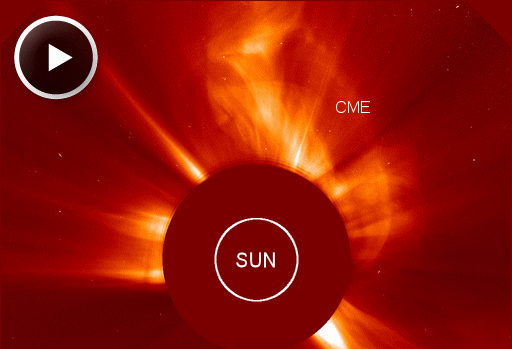
Traveling faster than two million mph, the cloud took about 41 hours to cross the sun-Earth divide. The CME was so geoeffective because it contained a knot of south-pointing magnetic fields. These fields partially cancelled Earth's north-pointing magnetic field at the equator, allowing solar wind plasma to penetrate deeply into Earth's magnetosphere. The rest, as they say in Alabama, is history.