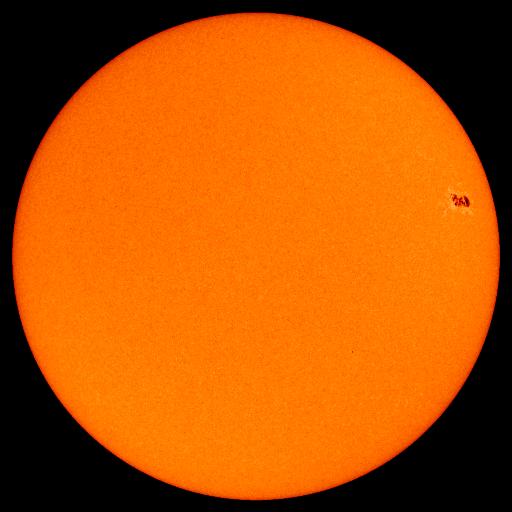
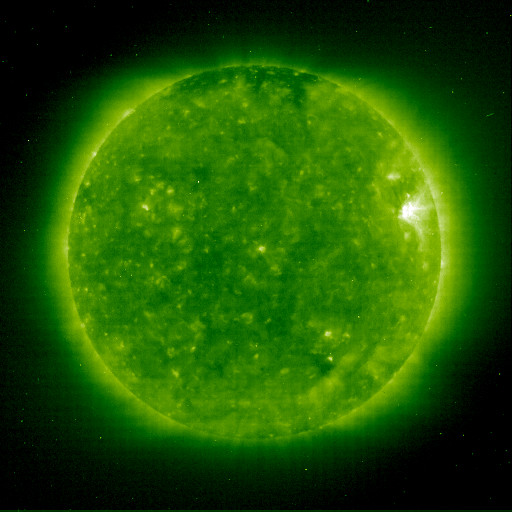
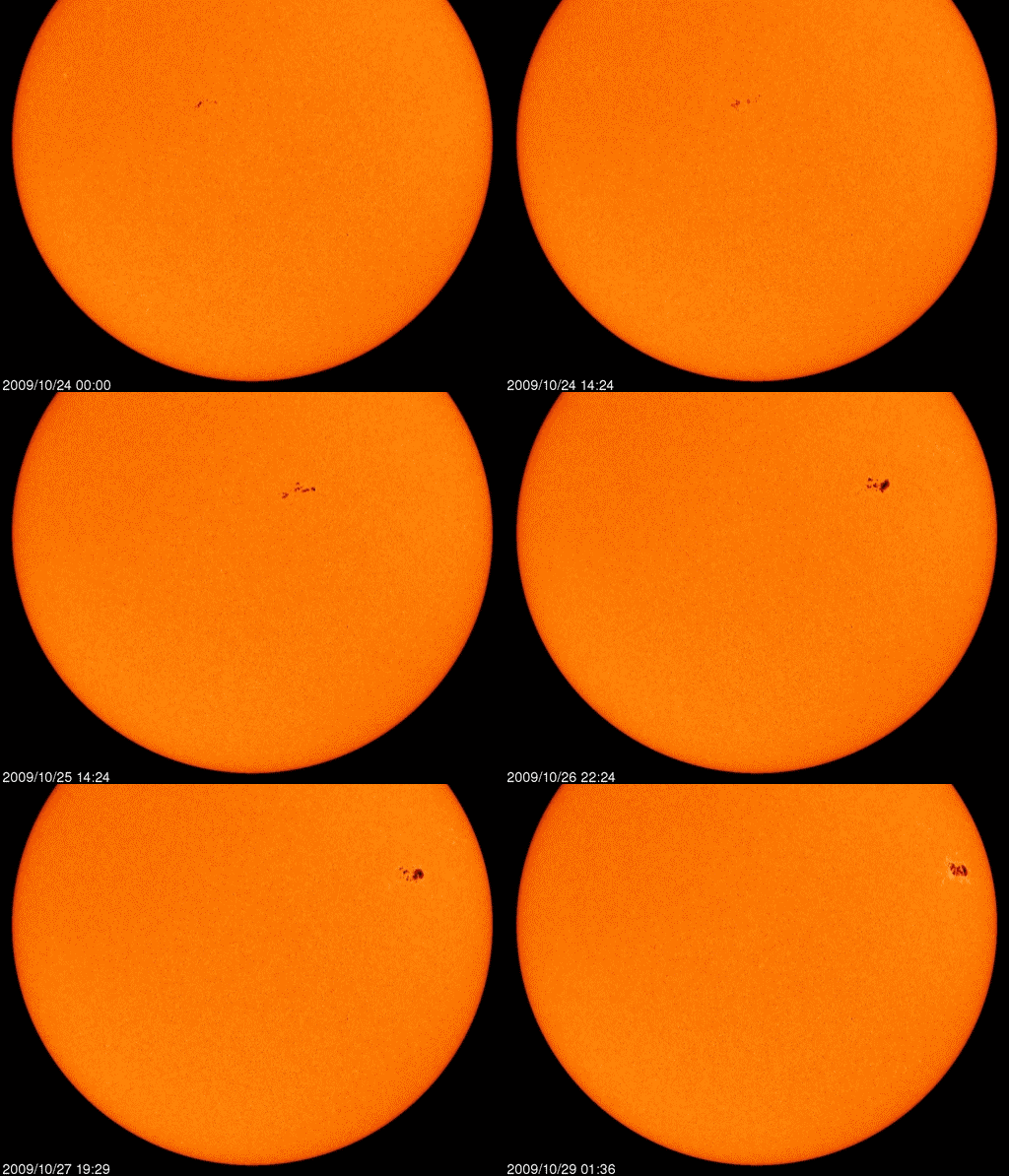
| THE SUN'S SNEAKY VARIABILITY: It might not be obvious to the naked eye, but the sun is a variable star. A sensor slated for launch onboard the Solar Dynamics Observatory will probe the sun's "sneaky variability" with better time and spectral resolution than ever before. Get the full story from Science@NASA. BIG SUNSPOT: After five days of non-stop growth (movie), sunspot 1029 has become the biggest active region of the year and a beautiful target for backyard solar telescopes. Amateur astronomer Lecoq Etienne sends this picture from Mesnil-Panneville, France: 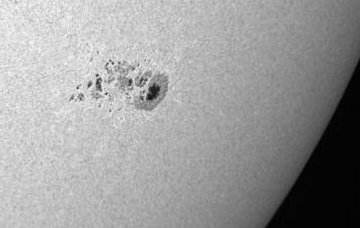
The sunspot's large dark core is about the size of Earth, while the entire sunspot group stretches about 50,000 km from end to end. The behemoth has been crackling with magnetic activity, producing 10 C-class solar flares in the past few days. That more than triples the number of C-flares (3) previously detected in all of 2009. According to NOAA forecasters, there is a 5% chance of an even stronger M-class flare during the next 24 hours. Stay tuned for solar activity! more images: from Dave Gradwell of Near Birr Ireland; from Jimmy Eubanks of Boiling Springs, South Carolina; from Gianluca Valentini of Rimini, Italy; from Peter Paice of Belfast, Northern Ireland; from John C McConnell of Maghaberry, Northern Ireland. INDONESIAN ASTEROID: Picture this: A 10-meter wide asteroid hits Earth and explodes in the atmosphere with the energy of a small atomic bomb. Frightened by thunderous sounds and shaking walls, people rush out of their homes, thinking that an earthquake is in progress. All they see is a twisting trail of debris in the mid-day sky: 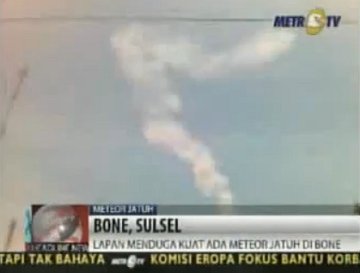
Click to view an Indonesian news report
This really happened on Oct. 8th around 11 am local time in the coastal town of Bone, Indonesia. The Earth-shaking blast received remarkably little coverage in Western press, but meteor scientists have given it their full attention. "The explosion triggered infrasound sensors of the Comprehensive Nuclear-Test-Ban Treaty Organization (CTBTO) more than 10,000 km away," report researchers Elizabeth Silber and Peter Brown of the Univ. of Western Ontario in an Oct. 19th press release. Their analysis of the infrasound data revealed an explosion at coordinates 4.5S, 120E (close to Bone) with a yield of about 50 kton of TNT. That's two to three times more powerful than World War II-era atomic bombs. The asteroid that caused the blast was not known before it hit and took astronomers completely by surprise. According to statistical studies of the near-Earth asteroid population, such objects are expected to collide with Earth on average every 2 to 12 years. "Follow-on observations from other instruments or ground recovery efforts would be very valuable in further refining this unique event," say Silber and Brown.
October Northern Lights Gallery
[previous Octobers: 2008, 2007, 2006, 2004, 2003, 2002, 2001]
Explore the Sunspot Cycle |