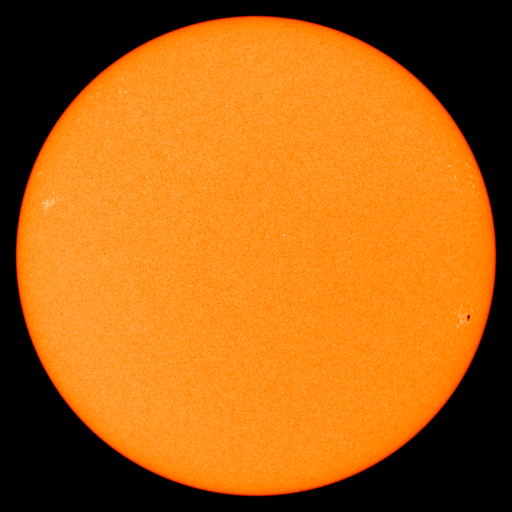
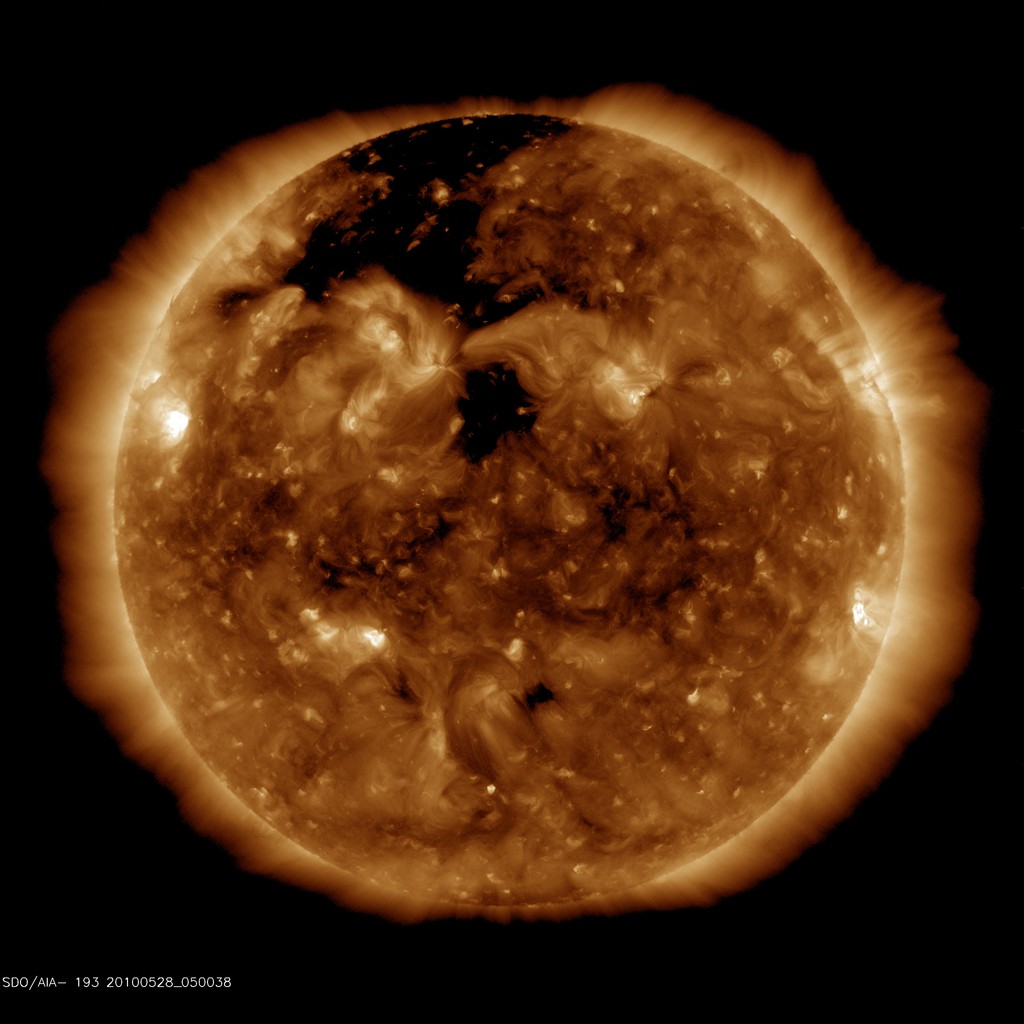
NEW AND IMPROVED: Turn your iPhone or iPod Touch into a field-tested global satellite tracker. The Satellite Flybys app now works in all countries. | | | X-37B FLARE: On May 25th, amateur astronomer Scott Ferguson witnessed an "X-37B flare." As the US Air Force space plane glided across the night sky of Bradenton, Florida, "it brightened to magnitude -0.8, about twice the brightness of Arcturis," he reports. Sunlight must be glinting from a flat surface, perhaps the space plane's solar panels or the interior of the payload bay. Readers, turn your cell phone into a space plane tracker and be alert for flares. X-37B images: from Gary of Fort Davis, Texas; from Val Germann of Jefferson City, Missouri; from Brent of Orlando, Florida; WEAK IMPACT: A coronal mass ejection (CME) hit Earth's magnetic field during the early hours of May 28th, but the impact was weak and did not trigger strong geomagnetic activity. The chances for auroras tonight are subsiding. RARE VOLCANIC SMOKE RING: On May 1st, volcano photographers Steve and Donna O'Meara were stunned when they photographed a perfectly shaped volcanic smoke ring blown out by Eyjafjallajokull volcano in southern Iceland: 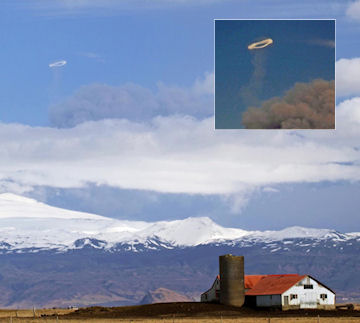
©Steve & Donna O'Mears, http://VolcanoHeaven.tumblr.com
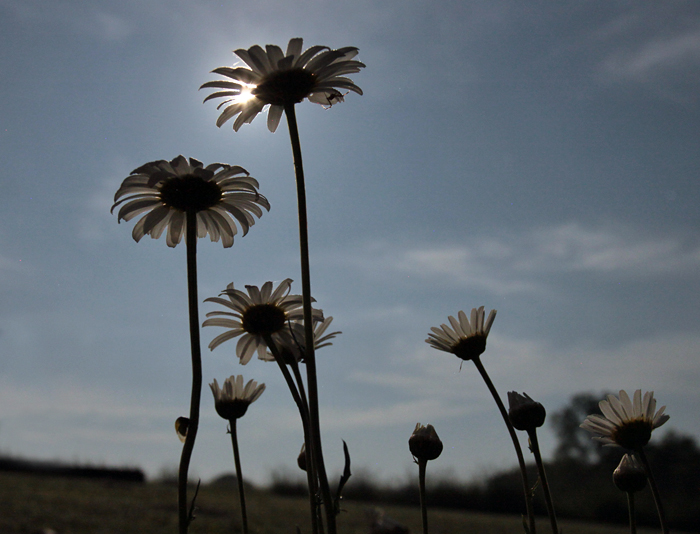
"This is a rare phenomenon," say Steve and Donna. "We've only seen it one other time at Italy's Stromboli volcano in 2001." Joseph Licciardi, an earth sciences professor from Oregon State University, was there to see it, too. "The ring was visible for five minutes and then fell apart," he told the UK Dail Mail. "I am thrilled that I was present at the event." In addition to Eyjafjallajokull and Stromboli, volcanic smoke rings have also been observed at Mt Etna. Just how the rings form remains a mystery. It's possible that bursts of gas through narrow vents would do the job, much like cigar or cigarette smokers blow rings with their mouths. Smoke rings could soon become more common over Iceland. Eruptions of Eyjafjallajokull are usually followed by even bigger eruptions from the nearby Katla volcano. Indeed, experts are warning that an eruption of Katla may be close at hand. Check the odds! FULL FLOWER MOON: According to folklore, last night's full Moon was the "Flower Moon." It gets its name from the spring flowers which are abundant in the month of May. Consider these moonlit daisies in Wintersville, Ohio: 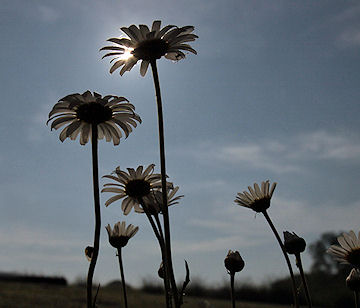
"I took the picture in my backyard using a Canon 50D," says Don Roberts. "The Flower Moon was so bright, the sky actually looked blue in this 21 second exposure." more Flower Moonshots: from Stefano De Rosa of Turin, Italy; from Nel Ton of Serooskerke, The Netherlands; from Doug Zubenel of Lenexa, Kansas; from Konstantinos Christodoulopoulos of Kineta, Greece; from Miguel Claro of Sesimbra, Portugal; from Tony Wilder of Chippewa Falls, WI; from Marc Provencher of Portland, OR; from Catalin Ionescu of Sapanta, Romania; from Tamás Ábrahám of Zsámbék, Hungary;
May 2010 Aurora Gallery
[previous Mays: 2008, 2005, 2004, 2003, 2002] [aurora alerts] |