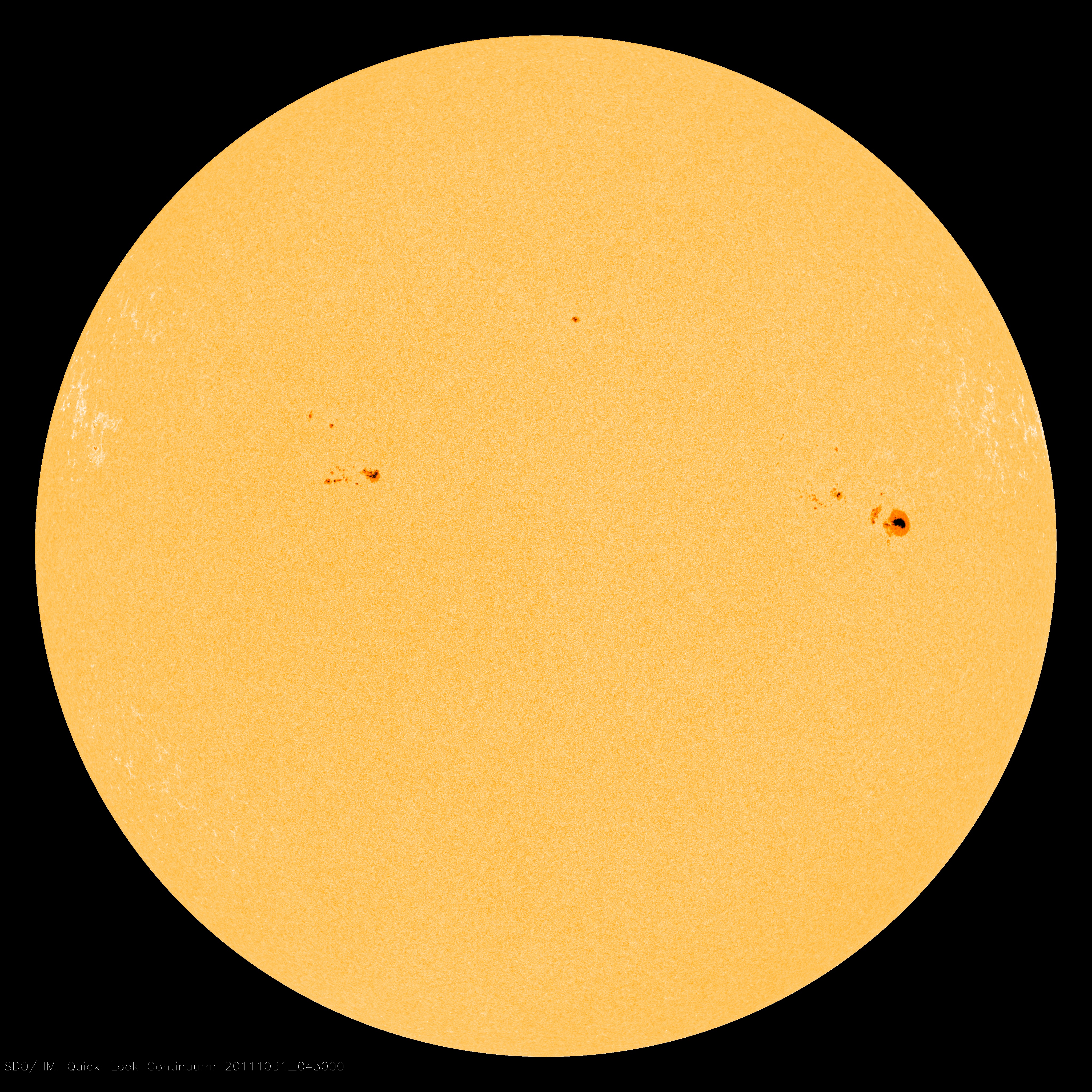
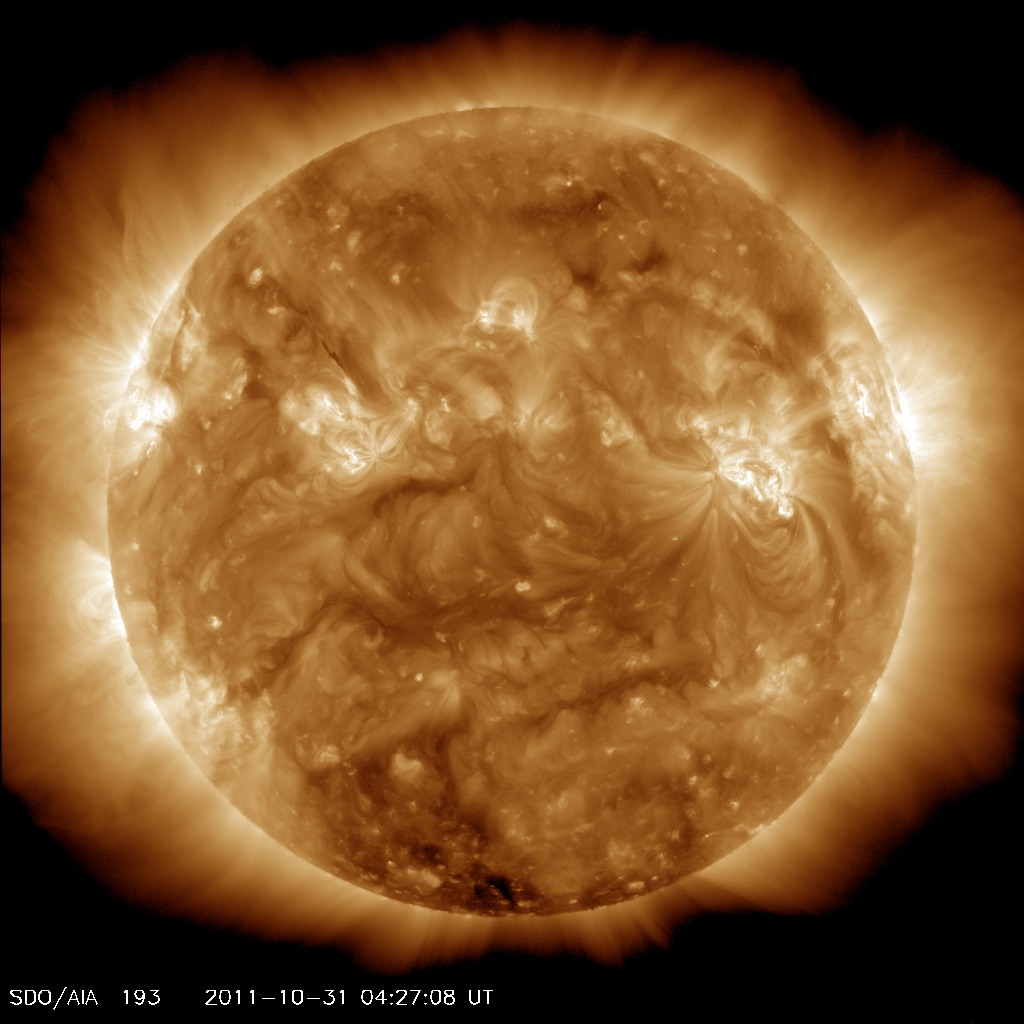
Metallic photos of the sun by renowned photographer Greg Piepol bring together the best of art and science. Buy one or a whole set. They make a stellar gift. | | |
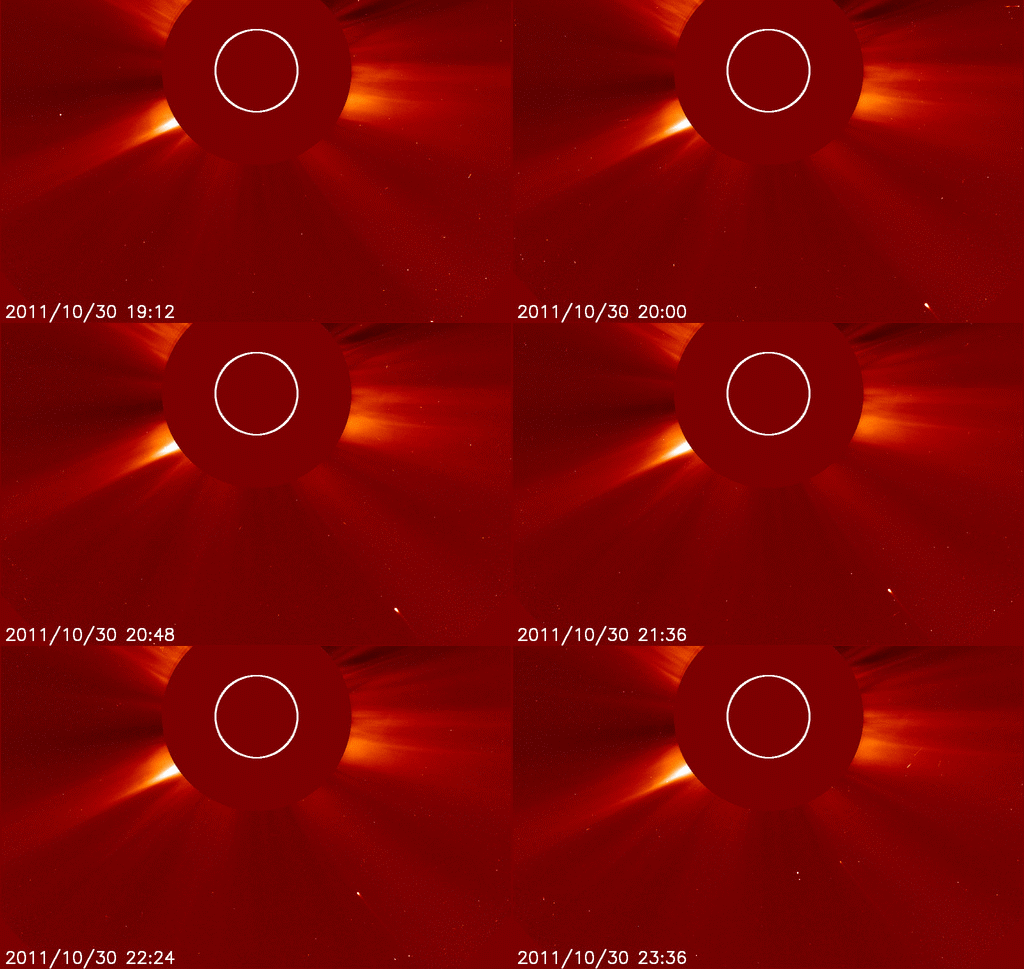
DISINTEGRATING COMET: A small comet dove into the sun during the late hours of Oct. 30th. Blasted by intense solar heat, the 'dirty snowball' disintegrated in plain view of the Solar and Heliospheric Observatory (SOHO). Watch the movie and note how the comet shrinks to a pinprick just before it vanishes.
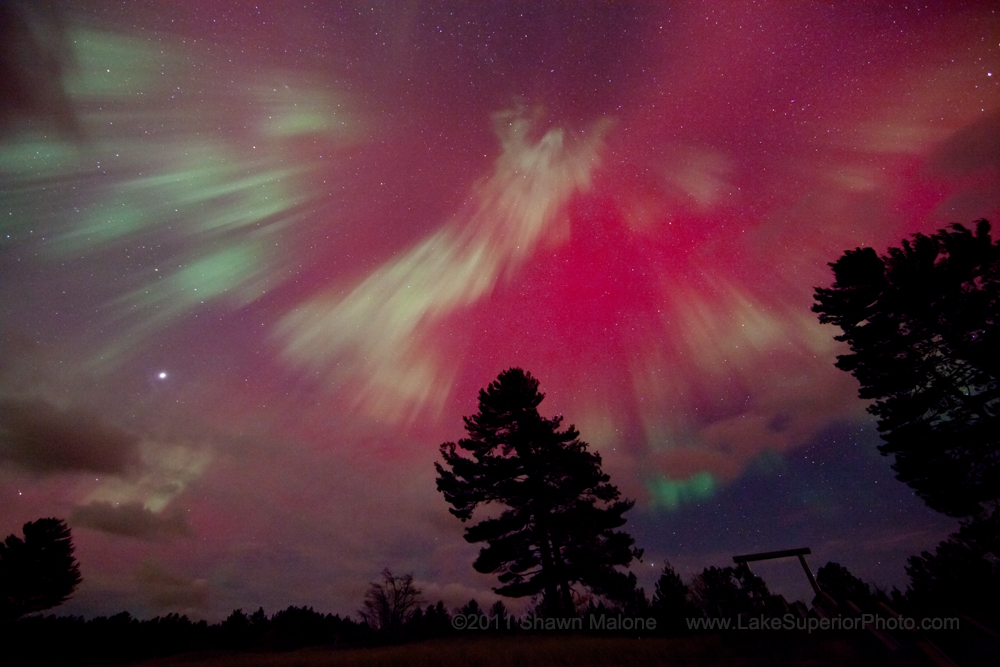
SPOOKY AURORAS: Some observers are calling it the "almost-Halloween storm." Blood red auroras that filled the skies over parts of the United States and Europe on Oct. 24-25 were certainly spooky. Indeed, veteran photographer Mike Hollingshead of Blair, Nebraska, felt the best place to capture the display was from a graveyard:
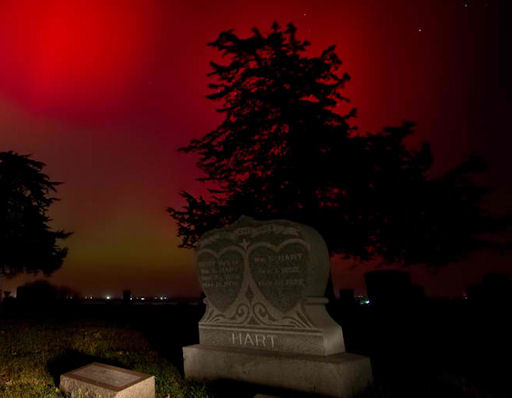
"At first the auroras seemed ordinary--that is, until the 'red surge madness' began," says Hollingshead. "Crazy bright shrouds of red light danced behind the head stones for 15 minutes." Other observers saw ghostly forms, moody trees, green phantasms, and more disturbing shades of red. Could Halloween itself be any more frightening?
Trick or treaters in Alaska, Canada and Scandinavia are about to find out. NOAA forecasters estimate a 15% to 25% chance of polar geomagnetic storms on Oct. 31st in response to a solar wind stream gently buffeting Earth's magnetic field. High-latitude sky watchers should be alert for spooky lights. Aurora alerts: text, voice.
October 2011 Aurora Gallery
[previous Octobers: 2010, 2009, 2008, 2007, 2006, 2004, 2003, 2002]
DOUBLE SATELLITE FLYBY: To catch one satellite having a close encounter with a distant star requires careful timing and a degree of luck.On Oct. 28th, Kevin Fetter of Brockville, Ontario, did it twice. Play the movie to watch two spacecraft criss-cross Regulus in the constellation Leo:
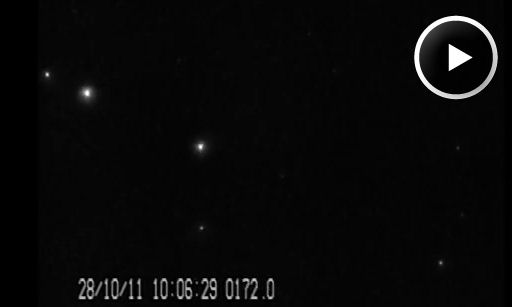
The first satellite was SkyMed-2, part of a constellation of Earth observing satellites deployed by the Italian Space Agency. SkyMed satellites are remarkable because they sometimes flare like Iridiums.
The second, brighter satellite in the video is Tiangong 1, China's new space station. The 8.5-ton module was launched on Sept. 29th on a two-year training mission. Chinese spacecraft and taikonauts will be visiting Tiangong 1 in the months ahead to practice rendezvous and docking maneuvers, to exercise space construction techniques, and to learn to live onboard an orbiting outpost. An unmanned probe, the Shenzhou 8, is due to launch on Nov 1st for China's first remote docking exercise.
This means more double flybys are in the offing. Sighting times for Tiangong 1 and companions are available from Spaceweather.com's Satellite Tracker. Your smartphone can tell you when to look, too.