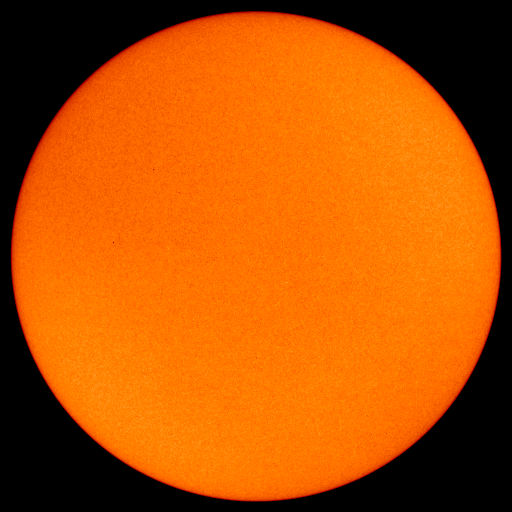
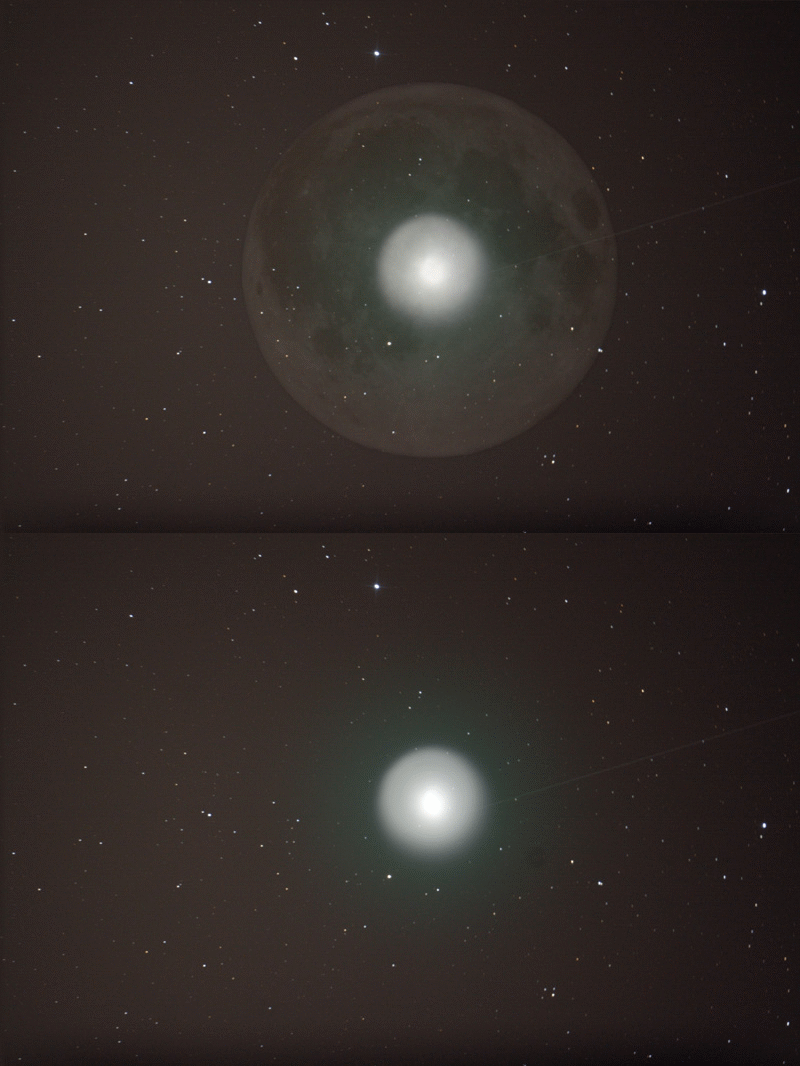
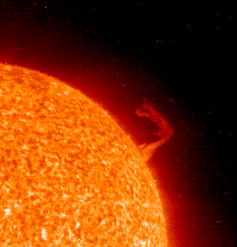
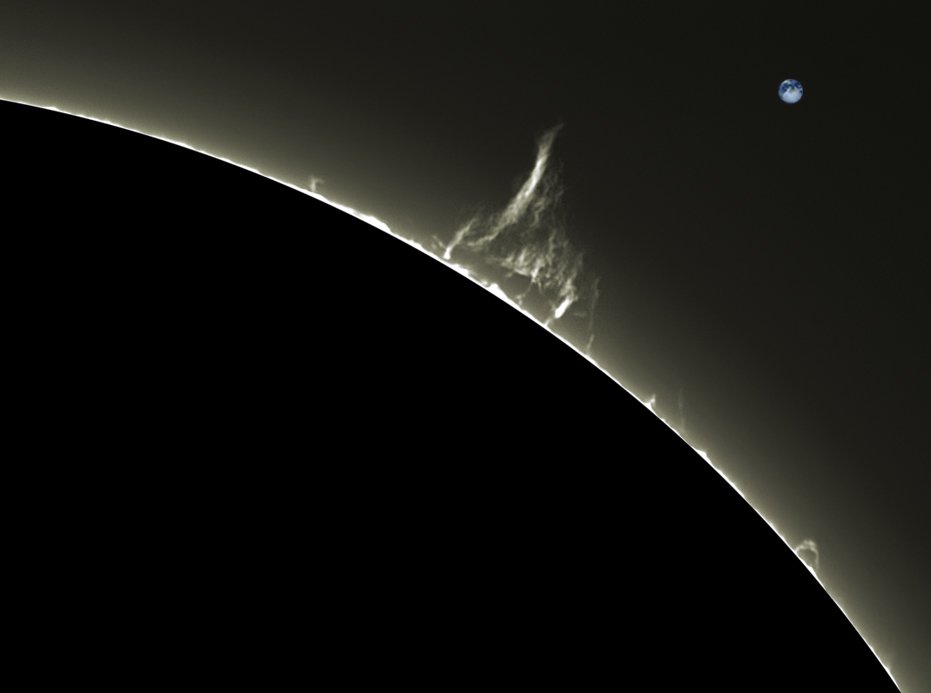
 Where's Saturn? Is that a UFO--or the ISS? What's the name of that star? Get the answers from mySKY--a fun new astronomy helper from Meade. Where's Saturn? Is that a UFO--or the ISS? What's the name of that star? Get the answers from mySKY--a fun new astronomy helper from Meade. SOLAR ACTIVITY: A large prominence is dancing over the sun's northwestern limb: image. If you have a solar telescope, take a look! more images: from Alan Friedman of Buffalo, New York GIANT COMET: Comet 17P/Holmes has been relentlessly expanding since its explosion on Oct 23rd and now it spans an angle in the sky almost half as wide as the full Moon. Using a picture of the comet he took on Oct. 30th, Helmut Groell of Moers, Germany, created this animation for comparison: 
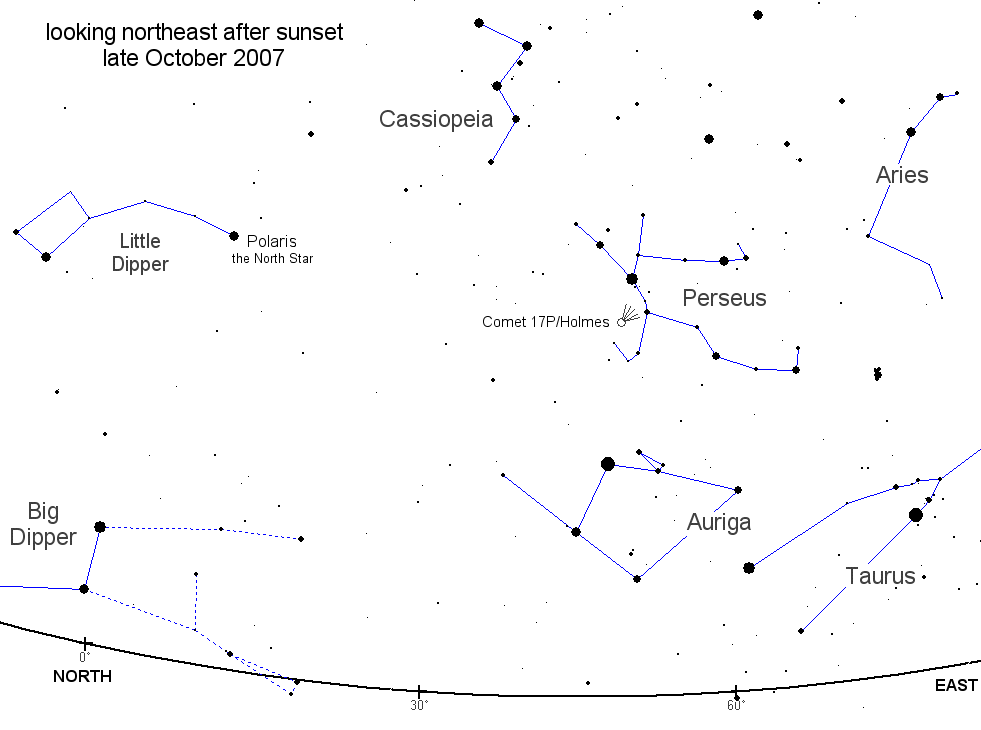
Actually, the comet is even bigger than it looks. While the Moon is a mere 240 thousand miles away, Comet Holmes is 150 million miles from Earth. The comet's physical diameter is thus seven times wider than the planet Jupiter--and it is still expanding. Anyone with a backyard telescope can watch it grow. After sunset, point your 'scope at the 3rd-magnitude fuzzball in the constellation Perseus: sky map. Finding the comet is no problem. The only question is, will it fit in the eyepiece? Comet 17P/Holmes Photo Gallery
[Interactive World Map of Comet Photos]
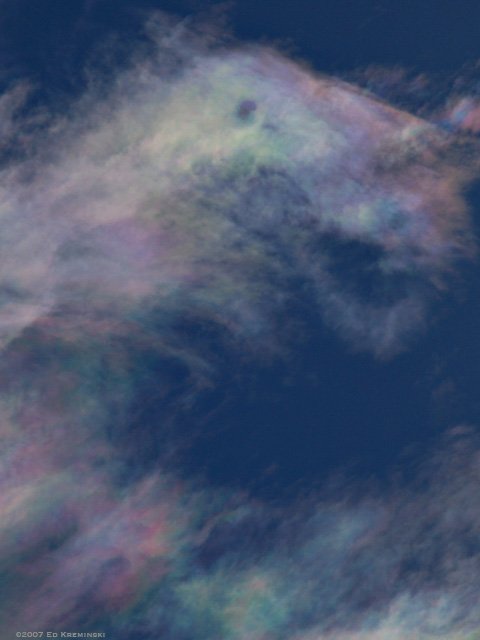
[sky map] [ephemeris] [3D orbit] [Night Sky Cameras] FEED THE DINOSAUR: Just before nightfall on Oct. 31st, Ed Kreminski of Westerville, Ohio, dashed to the store for emergency candy. Why? To feed the dinosaur: 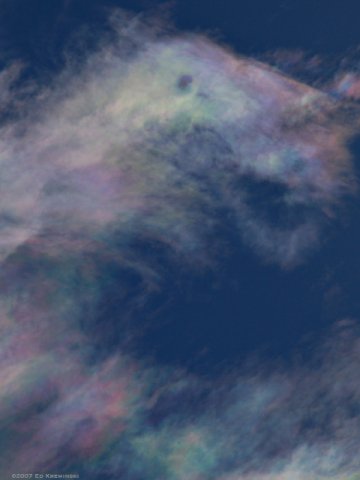
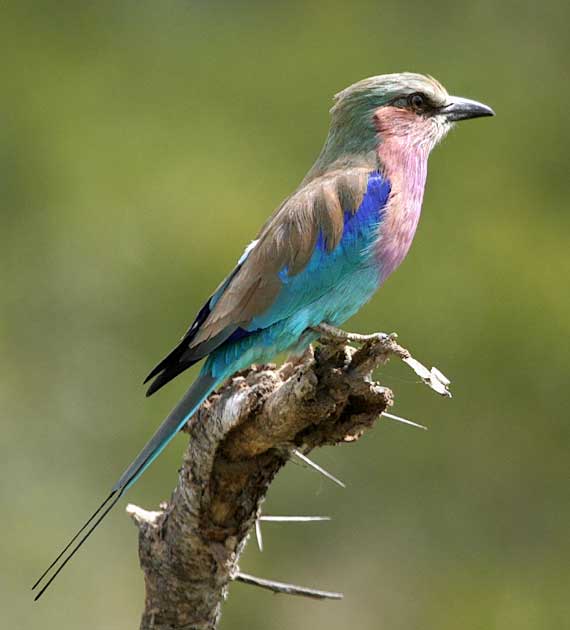
"I spotted this dinosaur in the sky while I was getting ready for Trick-or-Treaters," he says. It was a great way to kick off Halloween. The iridescent colors are caused by tiny water droplets in the cloud diffracting sunlight. And if you think a pastel dinosaur looks funny, think again. While the fossil record does not tell us the color of dinosaur skin, it does show that many dinosaurs are related to modern birds. (Some paleontologists say birds are dinosaurs.) This means dinosaurs may have been as colorful as a peacock, a Lilacbreasted Roller--or even an iridescent cloud. Keep looking up! |