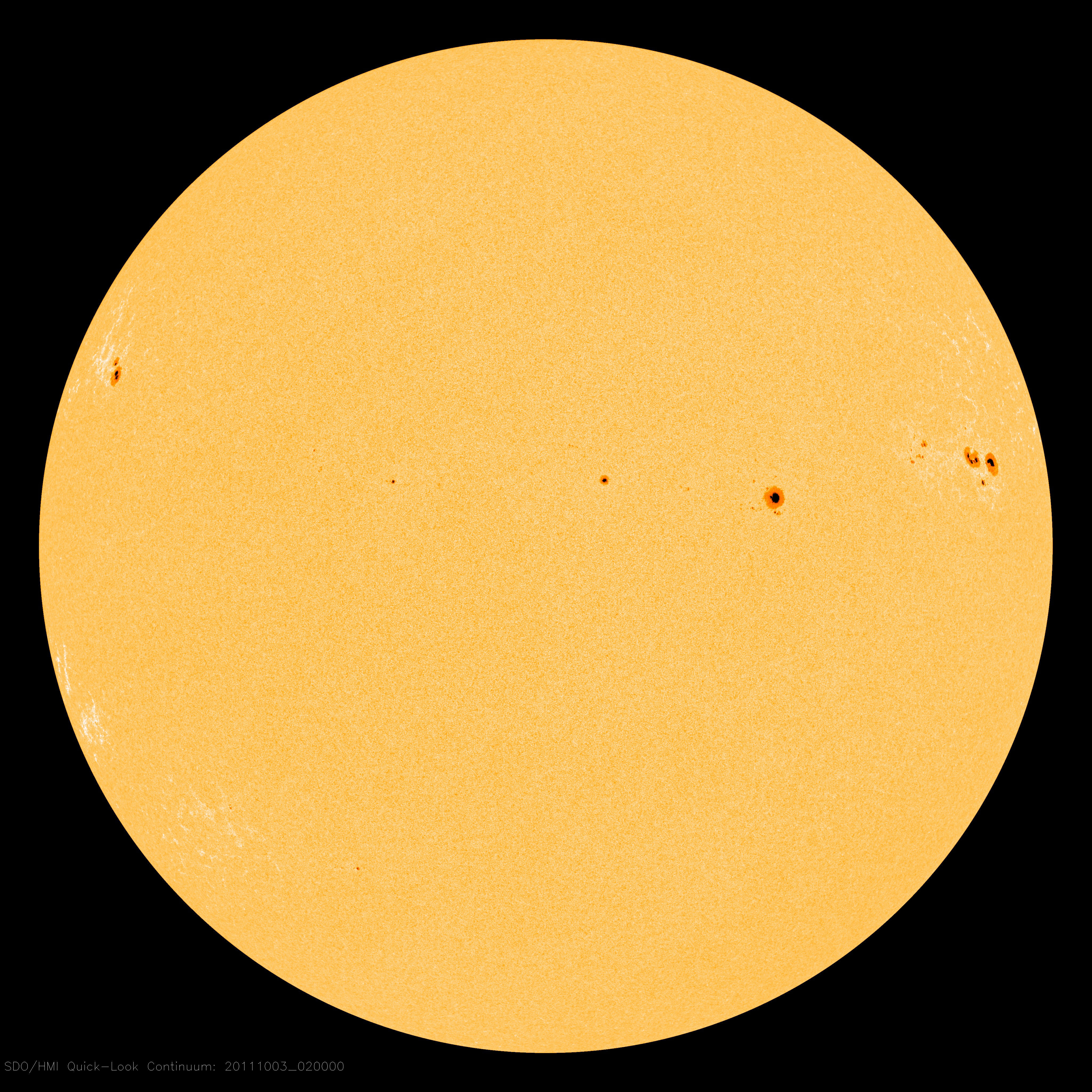
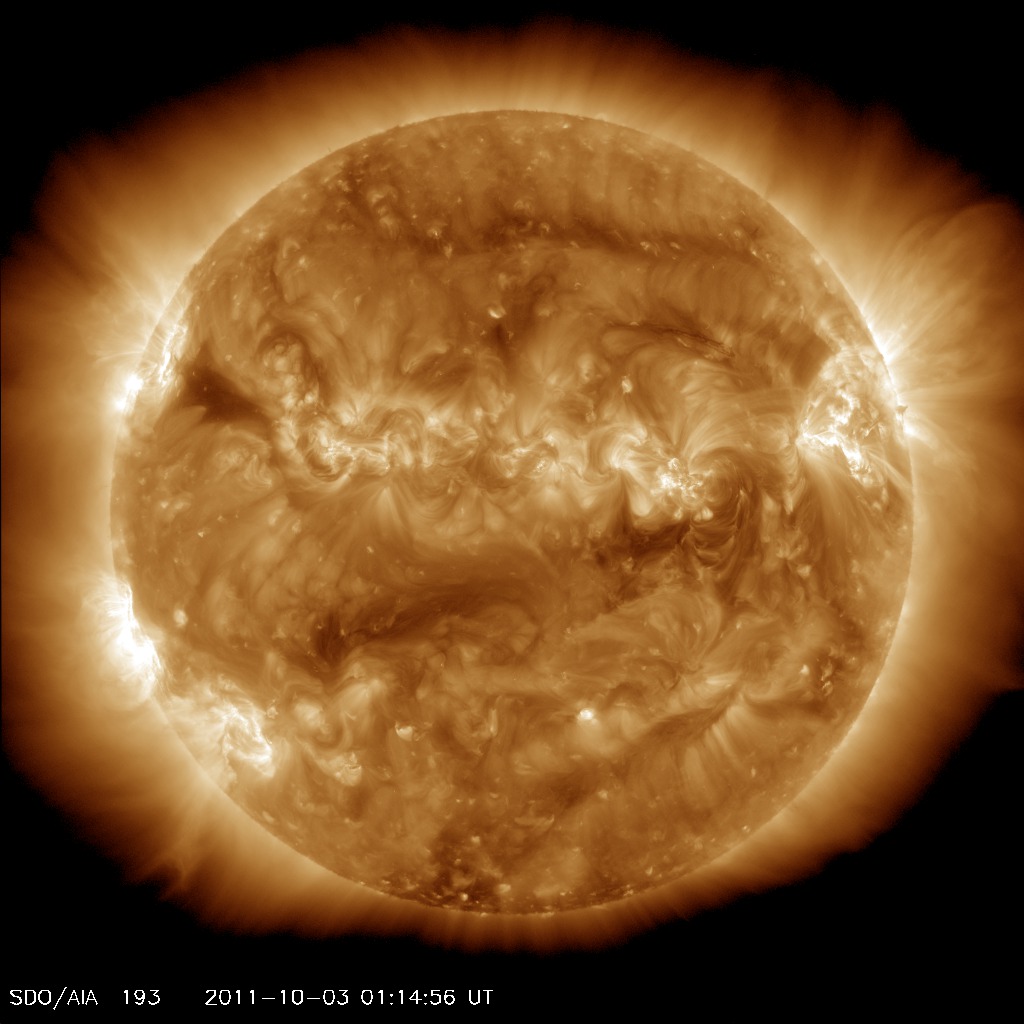
Metallic photos of the sun by renowned photographer Greg Piepol bring together the best of art and science. Buy one or a whole set. They make a stellar gift. | | |
CHINESE SPACE STATION: Last Thursday, China launched an experimental space station named Tiangong-1 (Heavenly Palace-1). The 8.5-ton module, about the size of a railroad car, will remain in orbit for two years as Chinese spacecraft perform rendevous and docking maneuvers, and Chinese astronauts visit for weeks at a time--all good practice for a larger outpost in the future. Check Spaceweather's Satellite Tracker for sighting opportunities. You can also turn your smartphone into a Tiangong-1 tracker by downloading the Simple Flybys app.
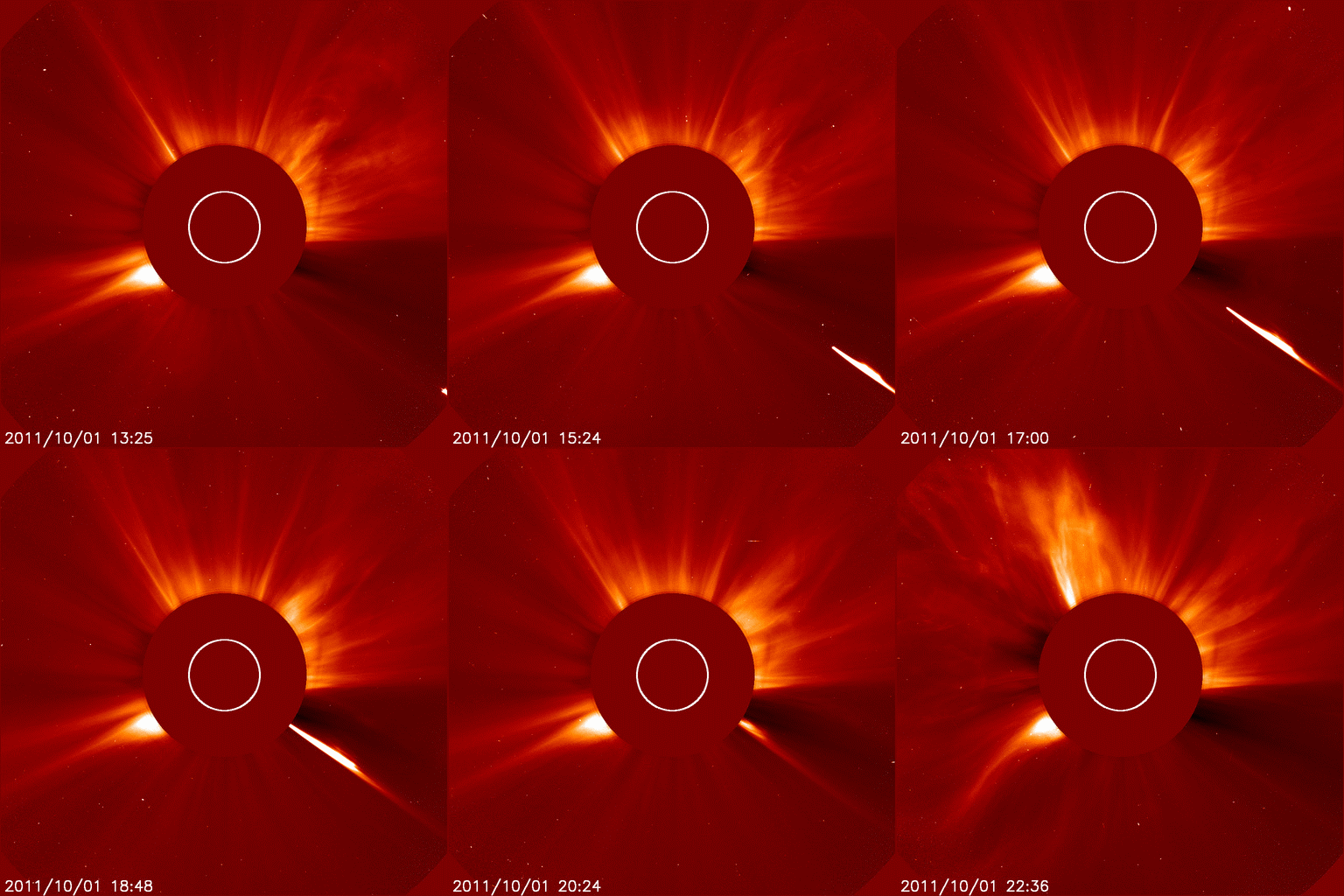
COMET AND CME: A comet discovered by amateur astronomers on Friday, Sept. 30th, disintegrated in spectacular fashion the very next day when it plunged into the sun. The Solar and Heliospheric Observatory recorded the comet's last hours. The end was punctuated by an unexpected explosion:
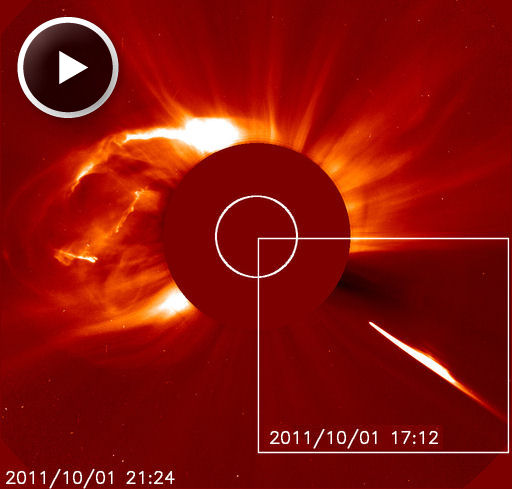
Watch the movie again. The timing of the CME so soon after the comet dove into the sun suggests a link. But what? There is no known mechanism for comets to trigger solar explosions. Before 2011 most solar physicists would have discounted the events of Oct. 1st as pure coincidence--and pure coincidence is still the most likely explanation. Earlier this year, however, the Solar Dynamics Observatory (SDO) watched another sungrazer disintegrate in the sun's atmosphere. On July 5, 2011, the unnamed comet appeared to interact with plasma and magnetic fields in its surroundings as it fell apart. Could a puny comet cause a magnetic instability that might propagate and blossom into a impressive CME? The question is not so crazy as it once seemed to be.
DOUBLE ERUPTION: On October 1st around 10:17 UT, widely-spaced sunspots 1302 and 1305 erupted in quick succession, revealing a long-distance entanglement which was not obvious before. NASA's Solar Dynamics Observatory (SDO) recorded the double blast:
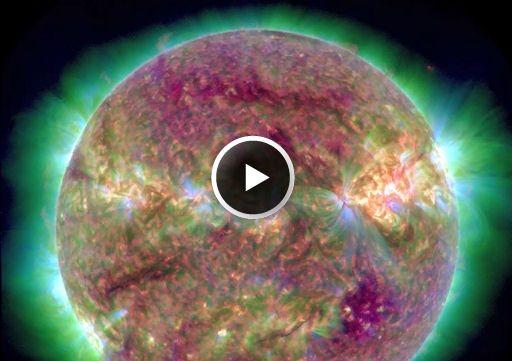
Since it was launched in 2010, SDO has observed many "entangled eruptions." Active regions far apart but linked by magnetic fields can explode one after another, with disturbances spreading around the stellar surface domino-style. Saturday's eruption appears to be the latest example.
The part of the eruption centered on sunspot 1305 hurled a coronal mass ejection toward Earth. The relatively slow-moving (500 km/s) cloud is expected to reach our planet on Oct. 4th or 5th, possibly causing geomagnetic storms when it arrives. High-latitude sky watchers should be alert for auroras. Geomagnetic storm alerts: text, voice.
September 2011 Aurora Gallery
[previous Septembers: 2010, 2009, 2008, 2007, 2006, 2005, 2004]
TODAY'S BONUS SHOTS: Winged Sunspot from Deepak Dogra of New Delhi, India; Spotted Sunset from Claudio Balella of the San Marino Republic in Italy; The Sun in Motion from Jerome Grenier of Paris, France; Moonlit Meteor from Paul Martini of Joshua Tree, California;
Potentially Hazardous Asteroids (
PHAs) are space rocks larger than approximately 100m that can come closer to Earth than 0.05 AU. None of the known PHAs is on a collision course with our planet, although astronomers are finding
new ones all the time.
On October 3, 2011 there were 1250 potentially hazardous asteroids.
Notes: LD means "Lunar Distance." 1 LD = 384,401 km, the distance between Earth and the Moon. 1 LD also equals 0.00256 AU. MAG is the visual magnitude of the asteroid on the date of closest approach. | | The official U.S. government space weather bureau |
| | The first place to look for information about sundogs, pillars, rainbows and related phenomena. |
| | Researchers call it a "Hubble for the sun." SDO is the most advanced solar observatory ever. |
| | 3D views of the sun from NASA's Solar and Terrestrial Relations Observatory |
| | Realtime and archival images of the Sun from SOHO. |
| | from the NOAA Space Environment Center |
| | the underlying science of space weather |
| | for out-of-this-world printing and graphics |