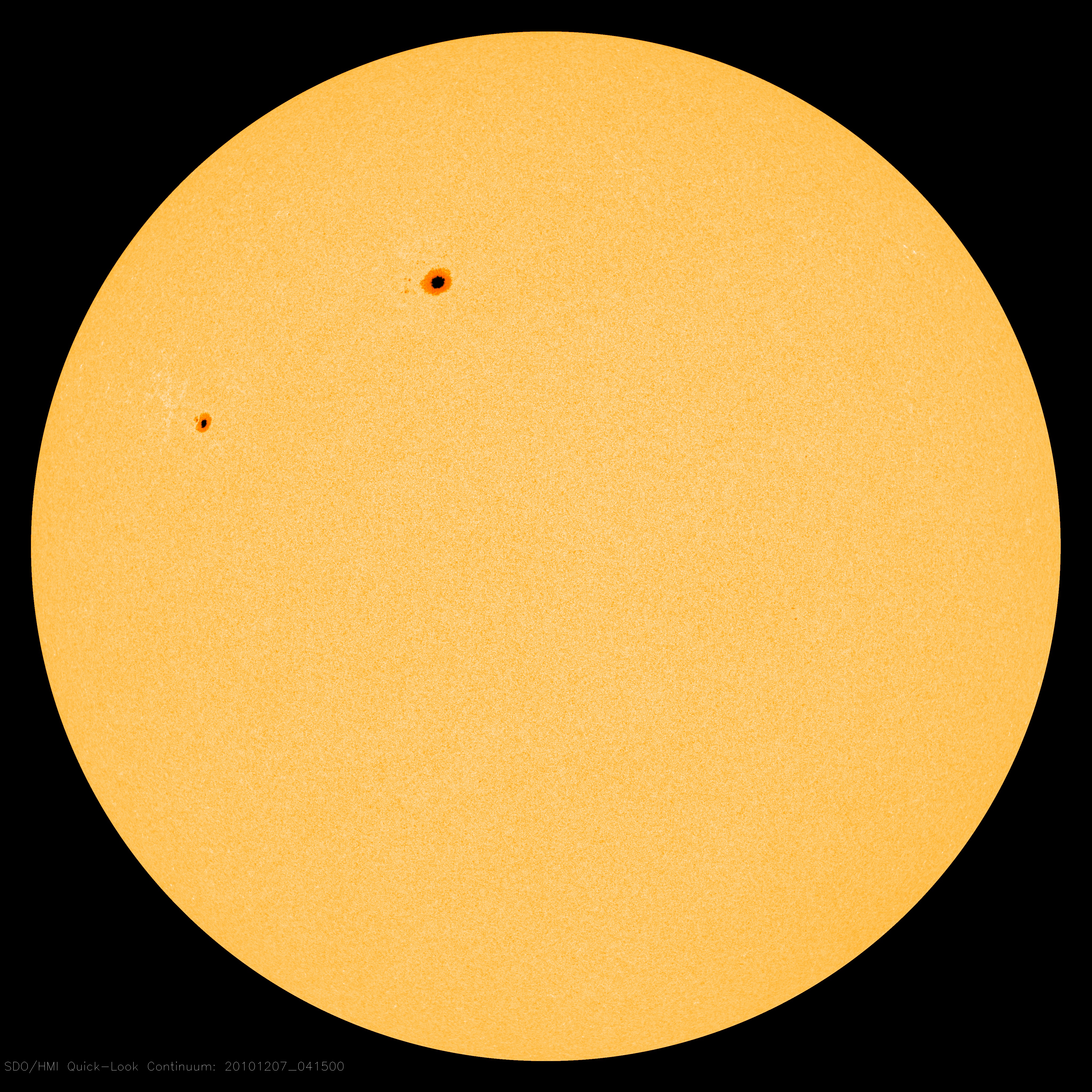
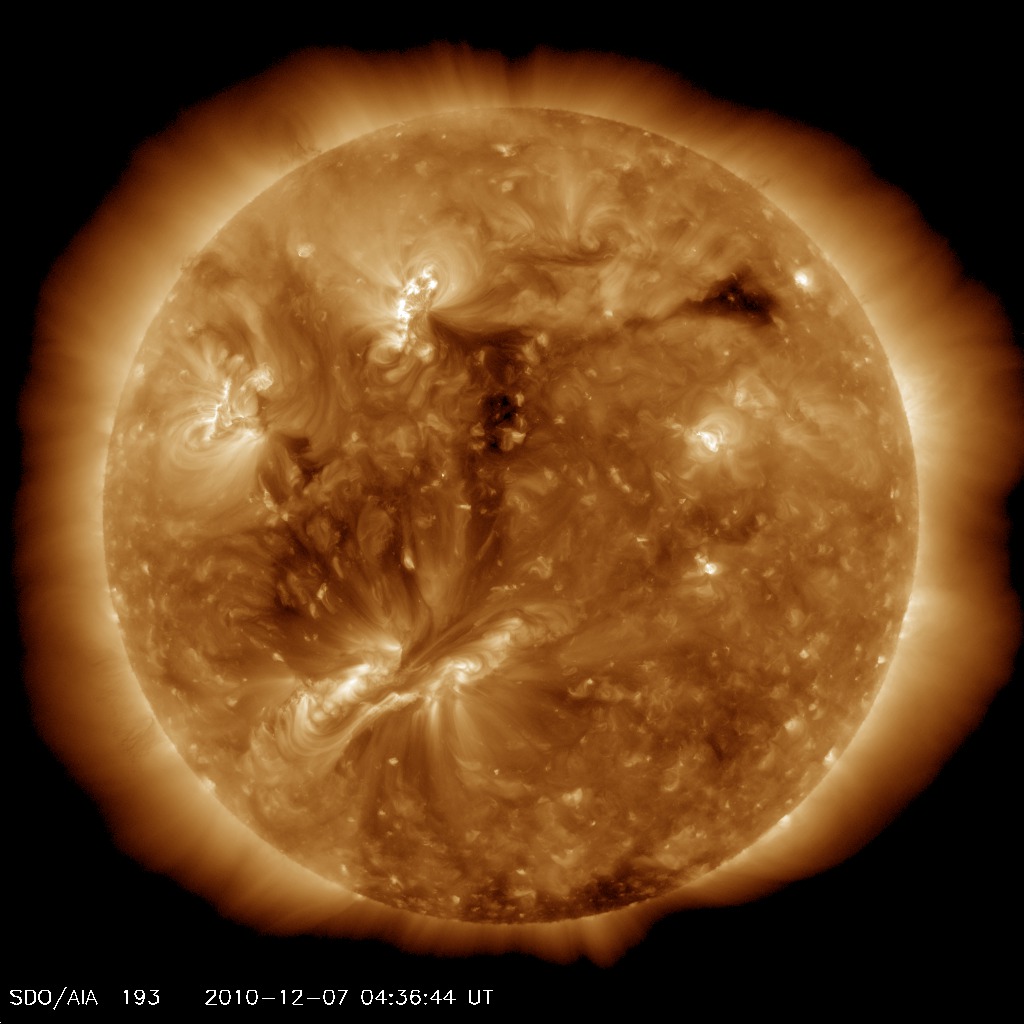
GEMINID METEORS DEFY EXPLANATION: The annual Geminid meteor shower peaks this year on Dec. 13th and 14th. Researchers don't fully understand the Geminids, and new measurements, they say, make it more mysterious than ever. Get the full story from Science@NASA.
MARS POPS OUT: Last night (Dec. 6th), deep in western twilight, the crescent Moon eclipsed (occulted) Mars over North America. "I was perfectly placed to observe the event," says Doug Zubenel of De Soto, Kansas, who caught Mars popping out from behind the crescent. "It happened right behind the water tower of De Soto!"
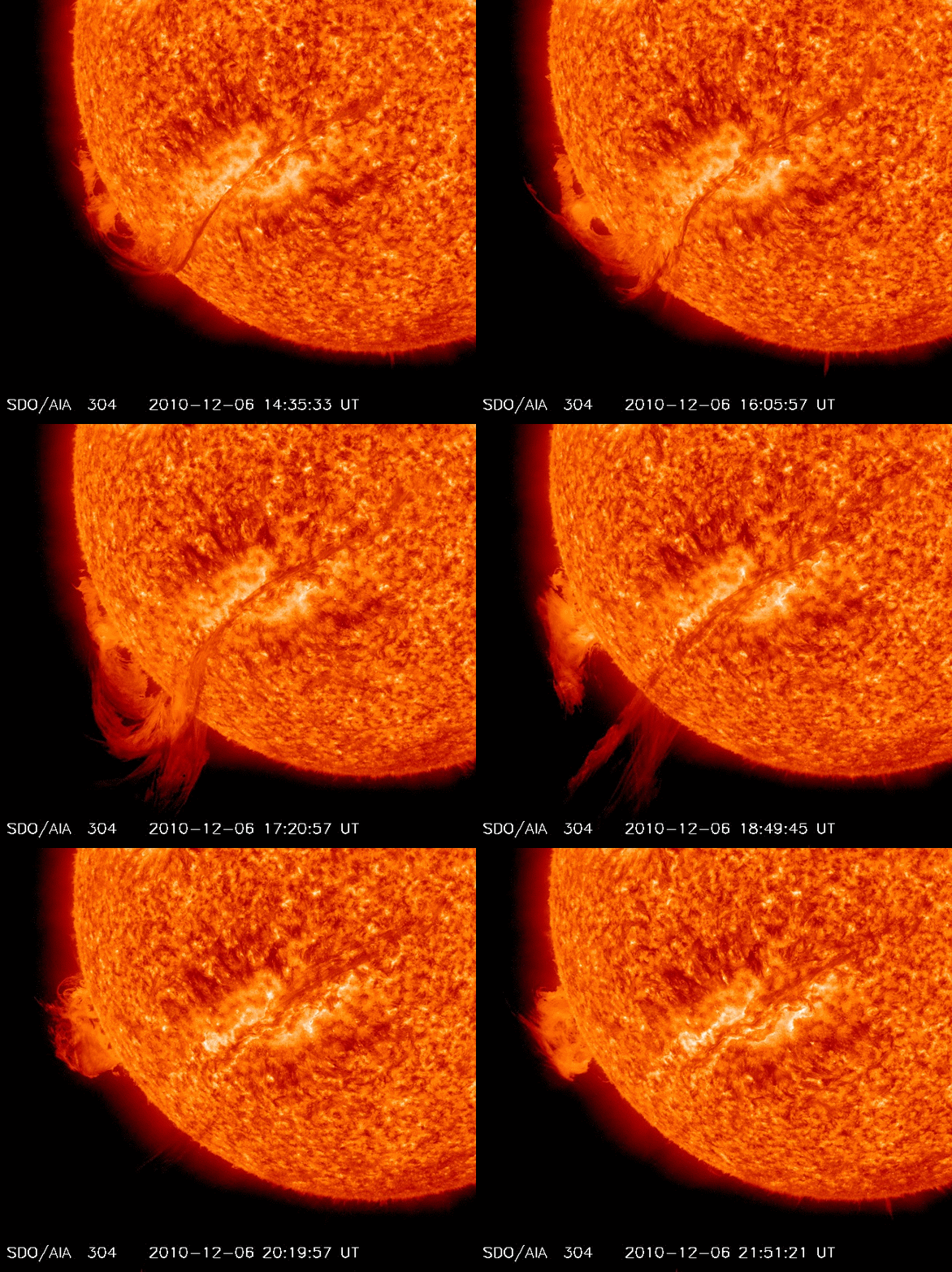
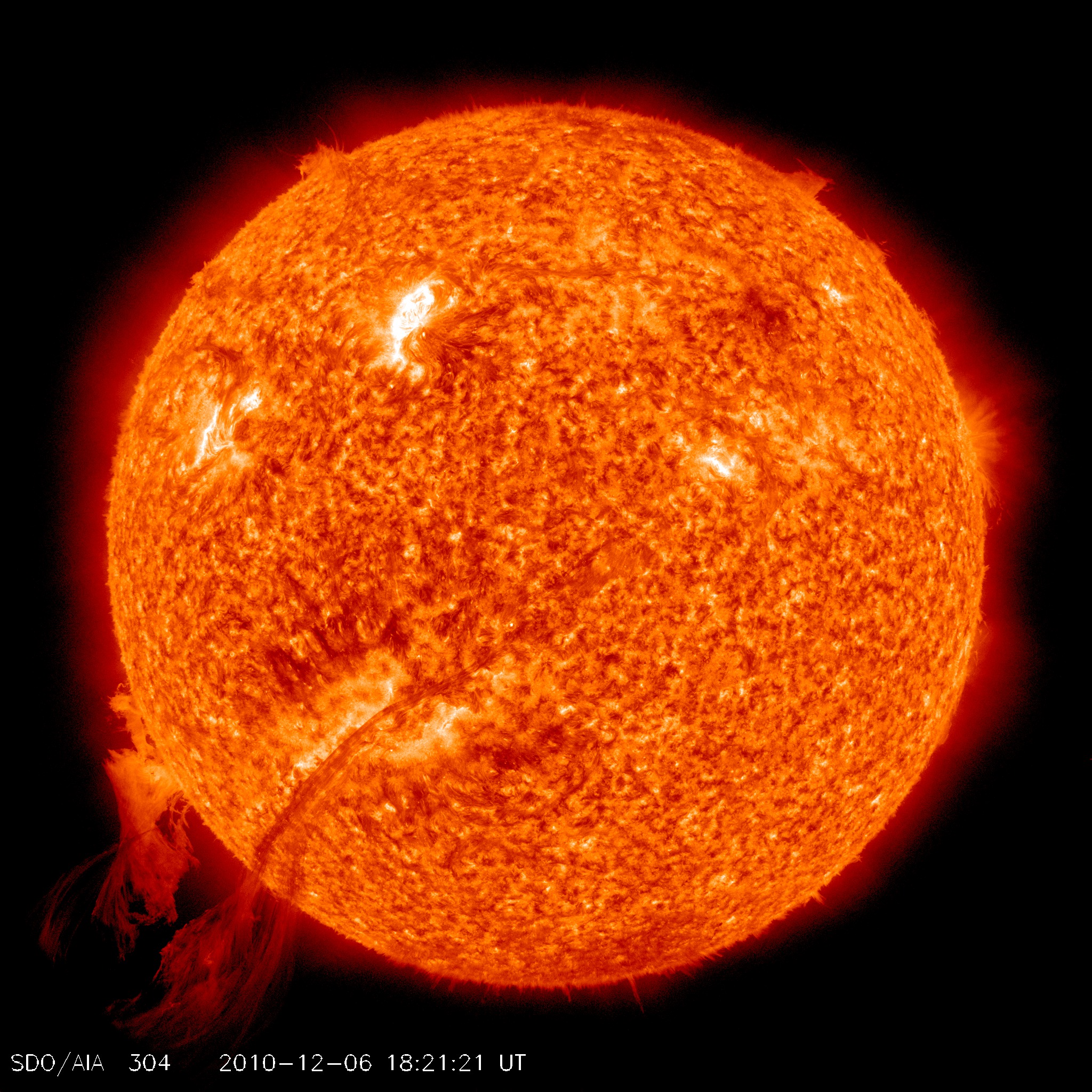
EPIC BLAST: As predicted, the a "mega-filament" of solar magnetism erupted on Dec. 6th, producing a blast of epic proportions. NASA's Solar Dynamics Observatory recorded the action as the 700,000-km long structure lifted off the stellar surface and--snap!!--hurled itself into space. Click on the arrow to play the movie:
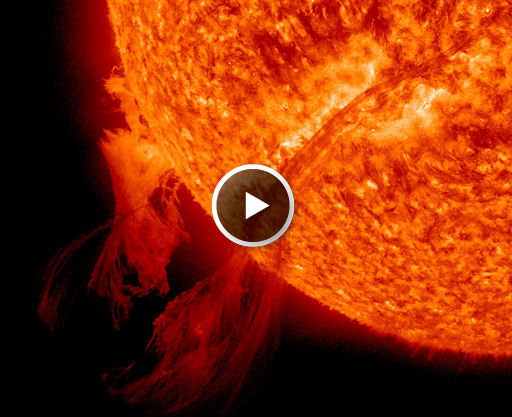
movie formats: 4 MB gif, 1 MB iPad, 0.5 MB iPhone, 1 MB still frame
The eruption produced a bright coronal mass ejection (CME) observed by the STEREO-A spacecraft: video. Earth was not in the line of fire; the cloud should sail wide of our planet. Earth-effects might be limited to pretty pictures.
more images: from Stephen W. Ramsden of Atlanta, GA
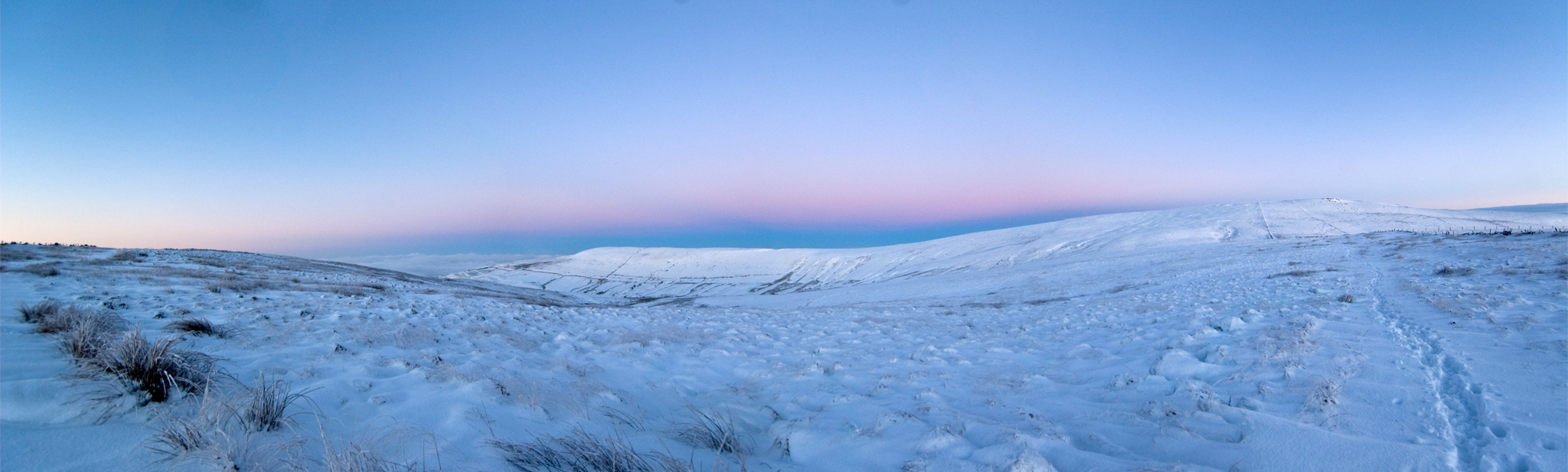
THE SHADOW OF EARTH: Imagine stepping out your front door and being swallowed up by the vast dark shadow of an entire planet. Actually, you've done it many times. The darkness you experience after sunset is the shadow of Earth itself. (Think about it.) If you happen to be outside right at sunset, you can sometimes catch Earth's shadow rising to extinquish the twilight. That's exactly what happened to Andrew Greenwood yesterday in England's Peak District National Park:
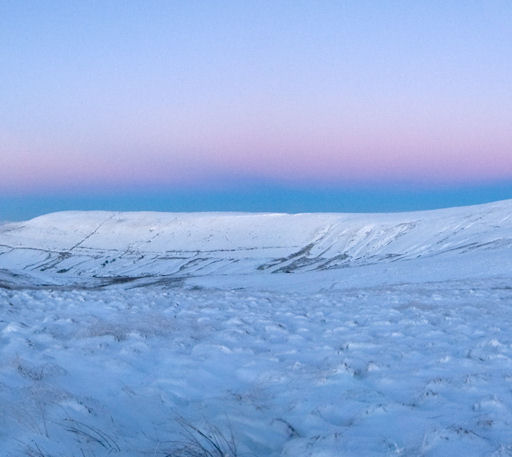
"I was climbing towards a hill known as Shining Tor when I broke through the fog into the most magical sunlit landscape," says Greenwood. "With the clouds below me, the air was crisp and ultra-transparent. It was at this point that I noticed Earth's shadow climbing into the ice-blue sky in the East. This spectacular vision is sometimes called the 'Belt of Venus.' Its contrast against the snow-covered hills was breath-taking; I could not have wished for a more memorable end to what was in fact my 38th birthday!"
more images: from Börkur Hrólfsson of Gullfoss, Iceland.
November 2010 Aurora Gallery
[previous Novembers: 2009, 2008, 2007, 2006, 2004, 2003, 2002, 2001, 2000]
Potentially Hazardous Asteroids (
PHAs) are space rocks larger than approximately 100m that can come closer to Earth than 0.05 AU. None of the known PHAs is on a collision course with our planet, although astronomers are finding
new ones all the time.
On December 7, 2010 there were 1167 potentially hazardous asteroids.
Notes: LD means "Lunar Distance." 1 LD = 384,401 km, the distance between Earth and the Moon. 1 LD also equals 0.00256 AU. MAG is the visual magnitude of the asteroid on the date of closest approach. | | The official U.S. government space weather bureau |
| | The first place to look for information about sundogs, pillars, rainbows and related phenomena. |
| | Researchers call it a "Hubble for the sun." SDO is the most advanced solar observatory ever. |
| | 3D views of the sun from NASA's Solar and Terrestrial Relations Observatory |
| | Realtime and archival images of the Sun from SOHO. |
| | from the NOAA Space Environment Center |
| | the underlying science of space weather |