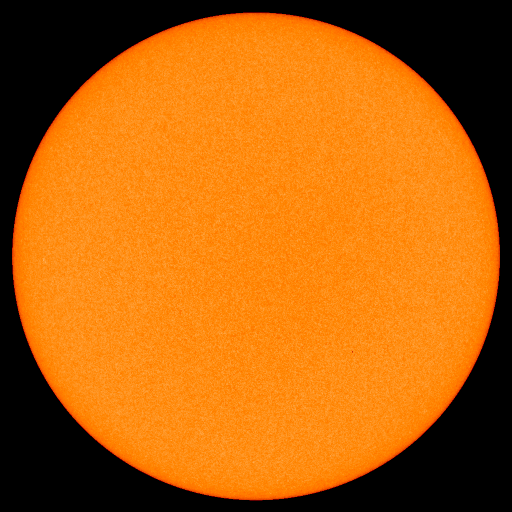
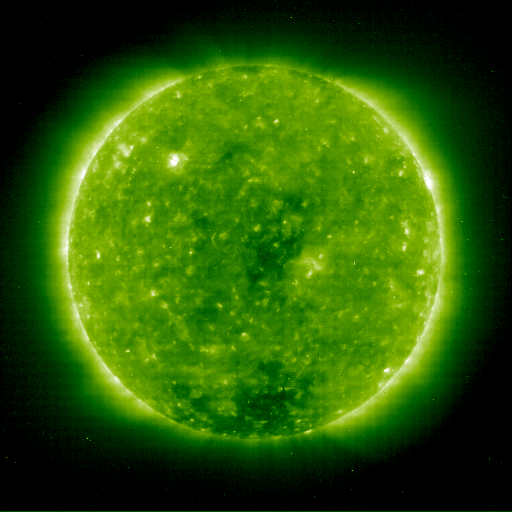
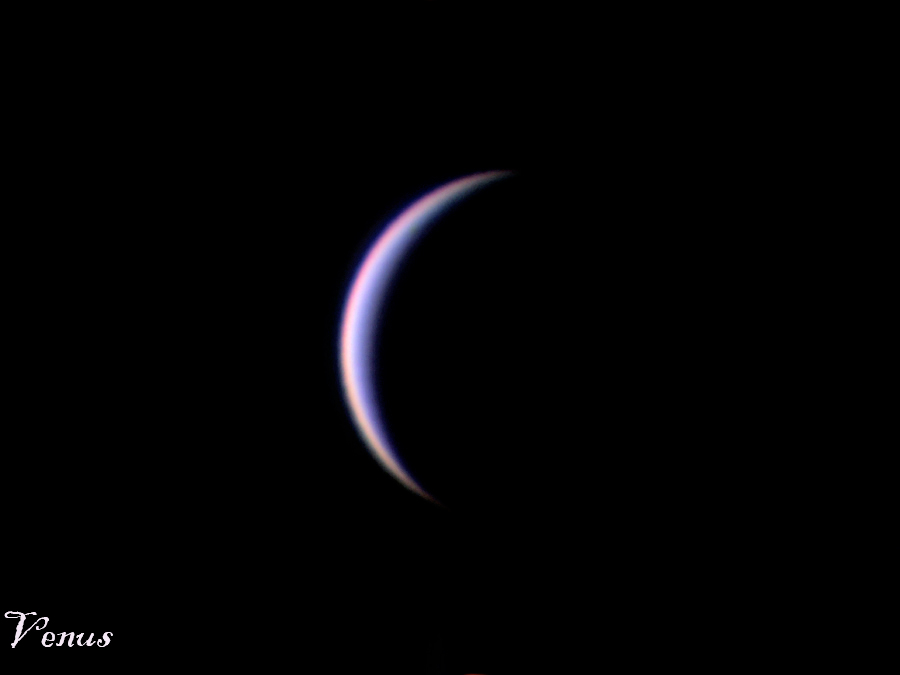
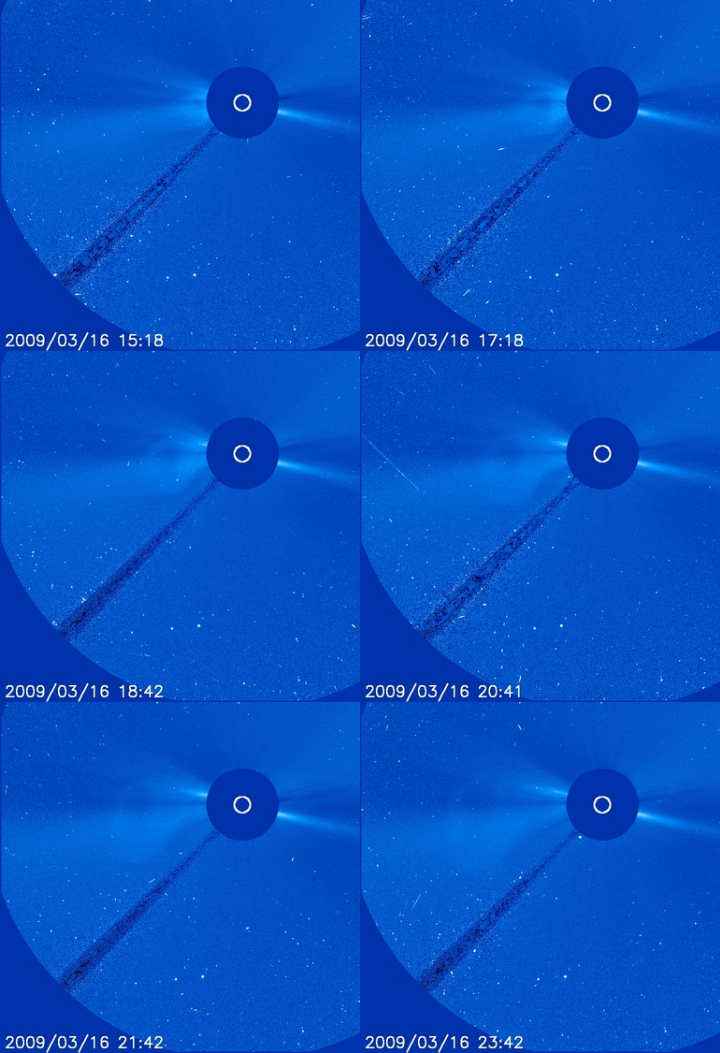
| ASTEROID FLYBY TONIGHT: Newly-discovered asteroid 2009 FH is flying past Earth tonight only 85,000 km away. That's about twice the altitude of a geosynchronous communications satellite. Advanced amateur astronomers in North America can photograph the 20-meter-wide space rock racing through the constellation Gemini after sunset on March 17th. It should be about as bright as a 14th magnitude star. [ephemeris] [3D orbit] A LITTLE SOLAR ACTIVITY: The sun is in the pits of the deepest solar minimum in almost 100 years. At such a calm time, even a little solar activity is remarkable. Here it is. SOHO recorded the movie on March 16th; it shows a minor CME billowing away from the sun's eastern limb. When the sun is active, we see several such CMEs on a daily basis. Now, the rate is about one per month. That's very little solar activity. RAINBOW PLANET: Something special is happening to Venus. The brightest of all planets is hanging low in the western sky at sunset, and if you look at it with a backyard telescope, you'll see that it is a slender 4% crescent. But that's not the special part. What's special is, Venus looks like a rainbow: 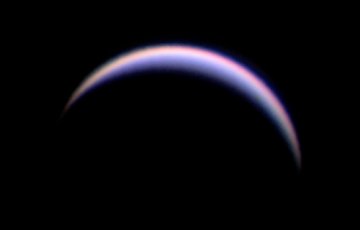
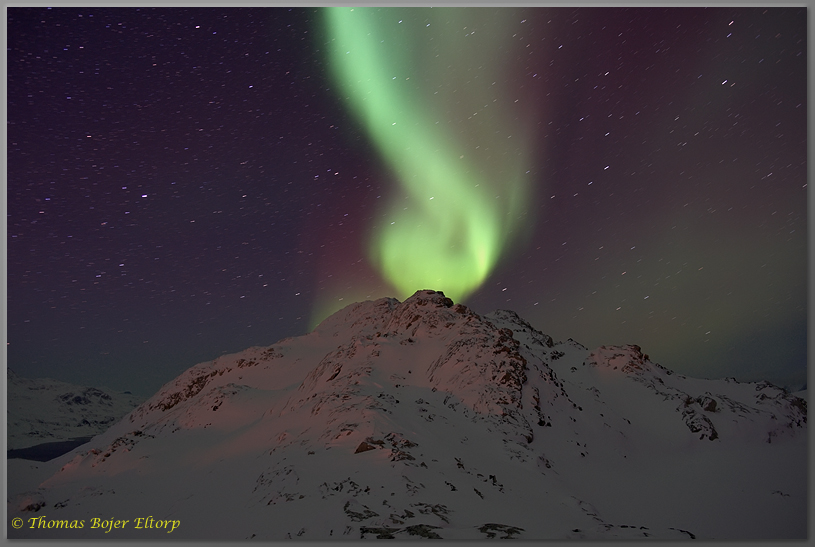
Sadegh Ghomizadeh took the picture from Tehran, Iran, on March 10th. It shows the view through his 11-inch Celestron. "The seeing was poor, but Venus was still bright and beautiful," he says. Venus resembles a rainbow because Earth's atmosphere acts like a prism. When Venus is near the horizon, refraction separates the red crescent from the blue. The crescent is so thin, the splitting of colors is obvious. Later this month, Venus will disappear into the glare of the spring sun, so catch the rainbow planet while you can! more images: from P-M Hedén of Vallentuna, Sweden; from Alan Simpson of Renfrew, Scotland; from Frederic Caron of Victoriaville, Qc, Canada AURORA BLARNEYALIS: Green auroras over Greenland? It must be St. Patrick's Day. The celebration began last night with this display over Nuuk: 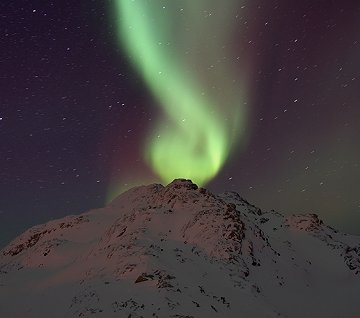
"They were not the most powerful auroras," says photographer Thomas Bojer Eltorpbut, "but it was such a beautiful display." He took the picture by opening the shutter of his Nikon D3 for 90 seconds at ISO 1600. More green is in the offing. A solar wind stream is heading for Earth, and it could spark even stronger geomagnetic activity when arrives on or about March 20th. Arctic sky watchers should be alert for auroras on the first night of Spring. Happy St. Patrick's Day! March 2009 Aurora Gallery
[previous Marches: 2008, 2007, 2006, 2005, 2004, 2003, 2002]
Comet Lulin Photo Gallery
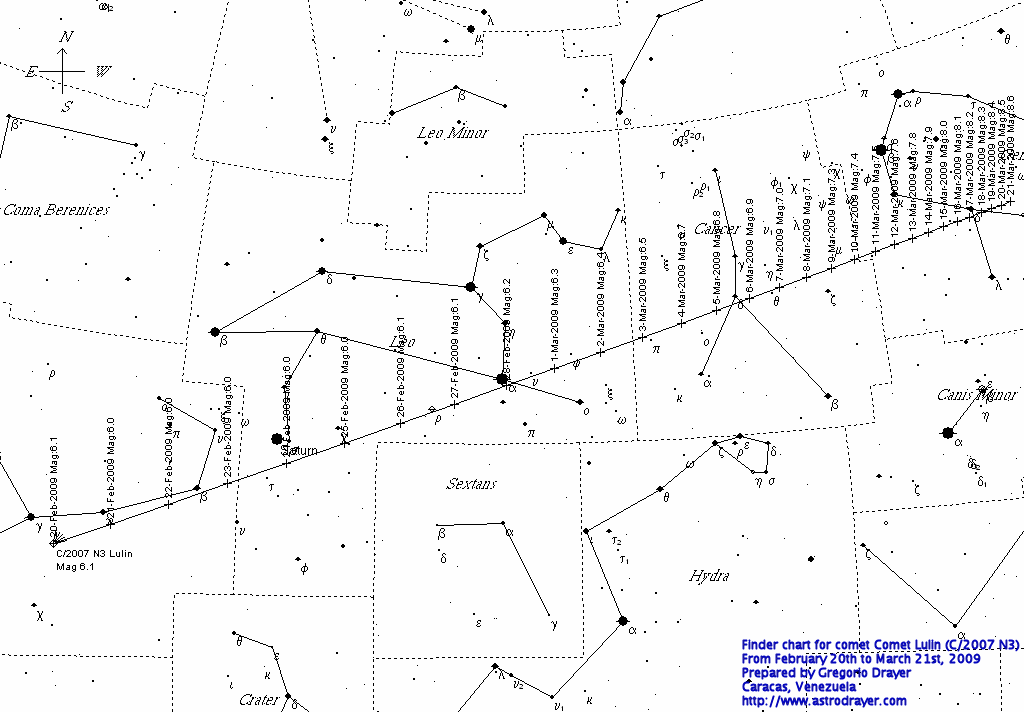
[Comet Hunter Telescope: review] [Comet Lulin finder chart]
Explore the Sunspot Cycle |