| Where's Saturn? Is that a UFO--or the ISS? What's the name of that star? Get the answers from mySKY--a fun new astronomy helper from Meade. | |  |  ASAT DELAY? Rough waters in the Pacific may delay the US Navy's attempt to destroy spy satellite USA 193. According to press reports, an ASAT missile launch originally scheduled for Feb. 20th could be delayed 24 hours or more to improve the chances of a successful strike. Pilots and sailors have been advised to avoid a patch of ocean near Maui for the next five days (Feb. 21-25) around 5:30 p.m. Hawaii time when USA 193 is passing overhead. These represent potential launch windows. [comment] ASAT DELAY? Rough waters in the Pacific may delay the US Navy's attempt to destroy spy satellite USA 193. According to press reports, an ASAT missile launch originally scheduled for Feb. 20th could be delayed 24 hours or more to improve the chances of a successful strike. Pilots and sailors have been advised to avoid a patch of ocean near Maui for the next five days (Feb. 21-25) around 5:30 p.m. Hawaii time when USA 193 is passing overhead. These represent potential launch windows. [comment]
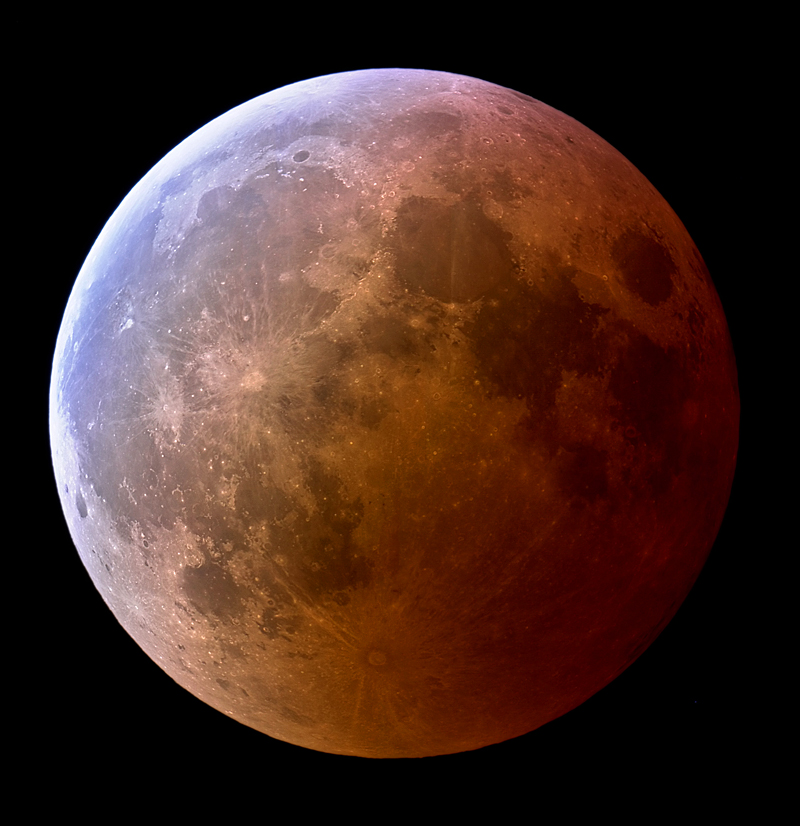
Amateur astronomers: If you're planning to attempt photography or other observations of the Navy's ASAT attempt on USA 193, NBC News would like to interview you before 5 pm EST today. For more information please contact NBC News producer Scott Foster. TOTAL LUNAR ECLIPSE: Tonight the full Moon over Europe and the Americas will turn a delightful shade of red. It's a total lunar eclipse—the last one until Dec. 2010. Exactly when should you look? Click here for an animated timetable. 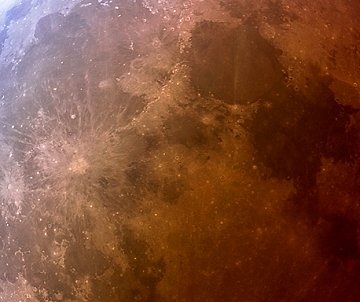
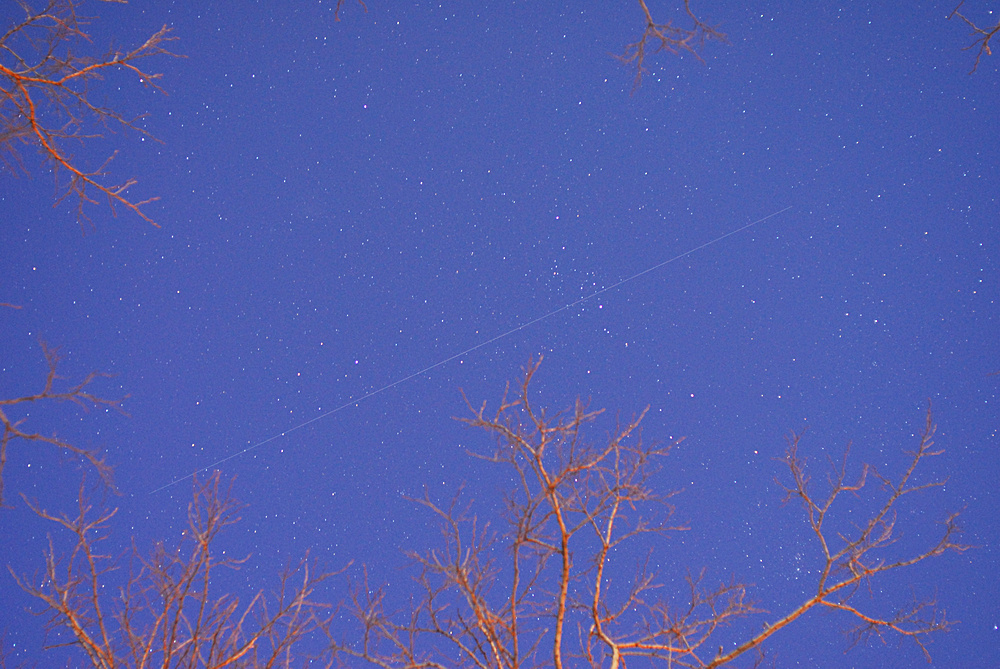
As explained in a recent Science@NASA story, red isn't the only color to look for when the Moon glides through Earth's shadow. Observers of several recent lunar eclipses have reported a flash of turquoise. For example, note the upper left corner of the above photo taken by Jens Hackmann during the European lunar eclipse of March 2007. The source of the turquoise is ozone. Earth's ozone layer absorbs red sunlight while allowing blue rays to pass. This has the effect of turning Earth's shadow turquoise-blue around the edges. Look for it during the first and last minutes of totality (10:01 pm EST and 10:51 pm EST). SPY-SAT SIGHTINGS: Until USA 193 is shot down, it remains visible to sky watchers who know when to look. Amateur astronomer Dan Bush took this picture of USA-193 on the evening of Feb. 18th as it passed over Albany, Missouri: 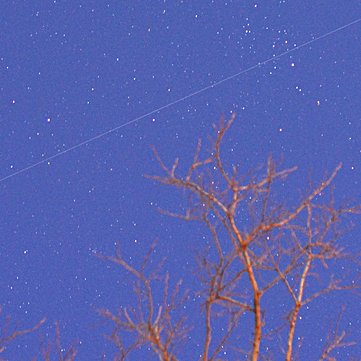
"It was moving right along (quickly) and gave the appearance of being out of control," says Bush. "This is a 15 second exposure using my Nikon D200 at ISO 640." Experienced sky watchers estimate the brightness of the satellite in the magnitude range +1.5 to -0.5, i.e., similar to the stars of Orion and an easy target for off-the-shelf digital cameras. more images: from Martin Popek of Nydek, Czech Republic |