Turn your cell phone into a field-tested satellite tracker. Works for Android and iPhone. | | |
THE SEASONS ARE CHANGING: Today, March 20th, is the date of the vernal equinox. At 7:21 pm EDT (2321 UT), the sun crosses the equator heading north. This marks the start of spring in the Northern Hemisphere and autumn in the Southern Hemisphere. Happy Equinox!
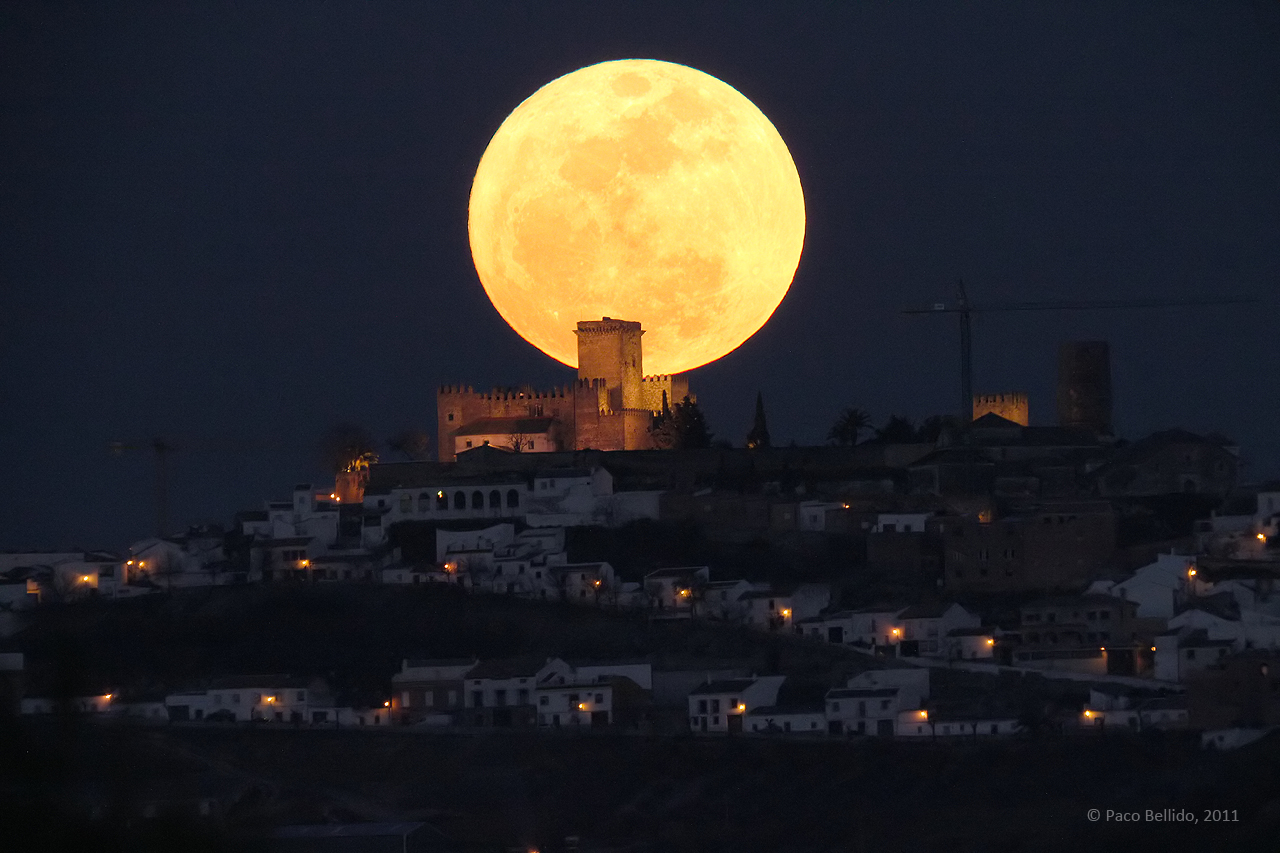
SUPER FULL MOON: The super full Moon of March 19th was the biggest and closest full Moon of the past 18 years. It might also be the most photographed full Moon--ever. Photographers around the world lined up to take pictures like this:
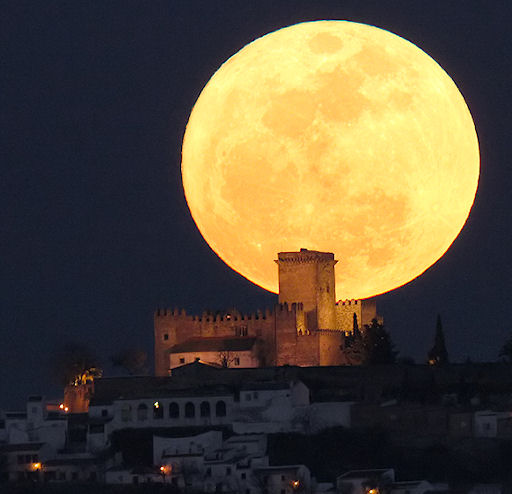
"I've been planning this shot for a long time," says Paco Bellido of Cordoba, Spain. "Using Google Earth, I calculated the best place to set up my camera; then I followed my GPS to the spot. I waited for the Super Moon to rise and--voilá!--there it was behind Espejo's Castle."
Spaceweather.com has been inundated by fine pictures like Bellido's. Browse the links for selected moonshots: from Peter Scott of Joss Bay, Kent, England; from Amirreza Kamkar of Qayen, Khorasan, Iran; from Andrew Greenwood of Kerridge Ridge, England; from Stephan Heinsius of Bad Soden, Germany; from Azhy Hasan of Arbil city, Kurdistan, Iraq; from Daisuke Tomiyasu of Higashinada, Kobe, Japan; from Marek Nikodem of Szubin, Poland; from Jan Koeman of Neeltje Jans, the Netherlands; from Ole Ambrosiussen of Hørbylunde bakke, Silkeborg, Denmark; from Fredrik Broms of Kvaløya, Norway; from Francisco Diego of London, England; from Jens Hackmann of Weikersheim, Germany; from Mahdi Zamani of Tehran, Iran; from Marco Langbroek of Leiden, the Netherlands; from Gregory Scheckler of North Adams, Massachusetts; from Miguel Claro of Cabo Espichel, Sesimbra, Portugal; from Peter Rosén of Central Stockholm, Sweden; from Kevin Palmer of Lindenhurst, Illinois; from Jonathan Sabin of St. Petersburg, Florida; from Bryan Hansel of Grand Marais, Minnesot
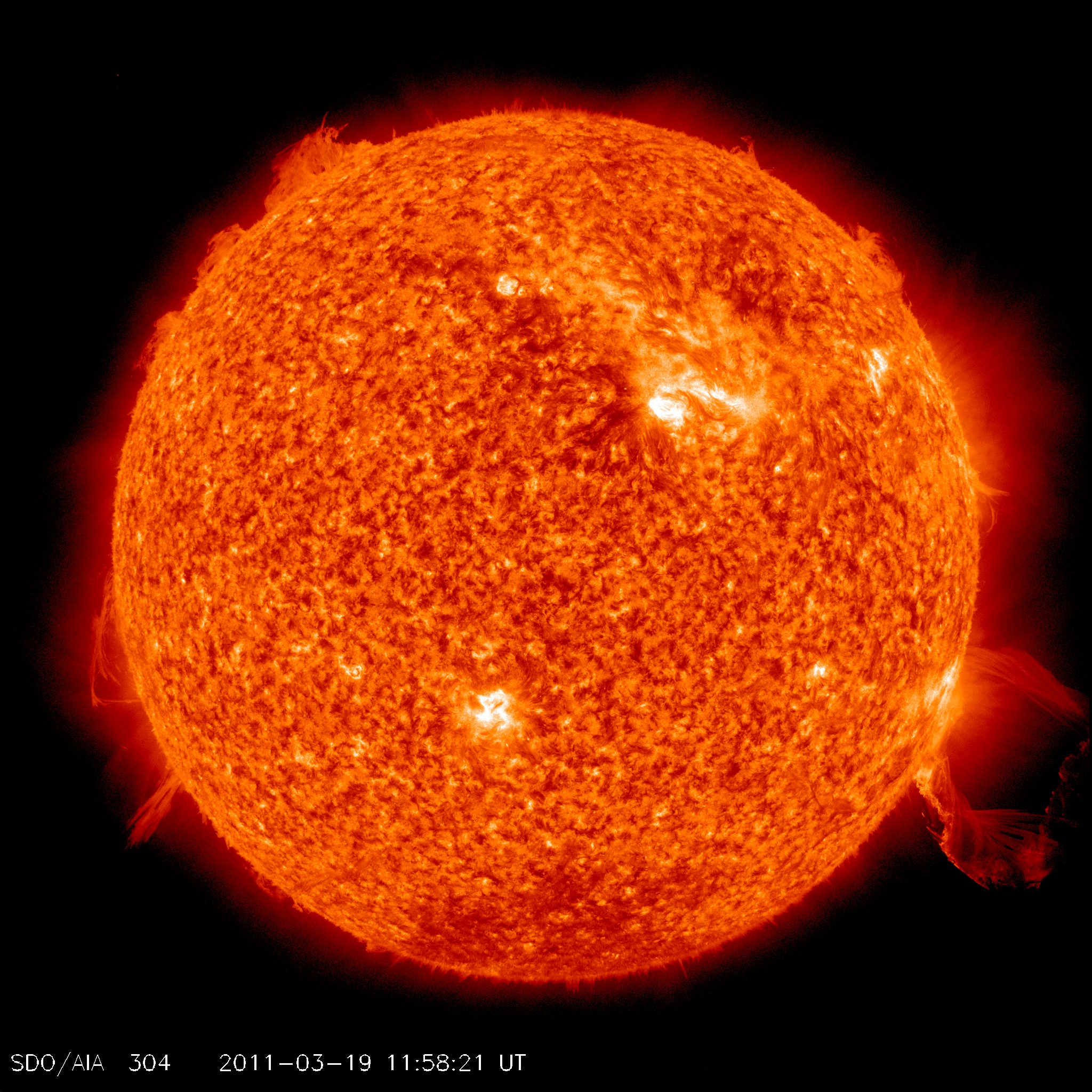
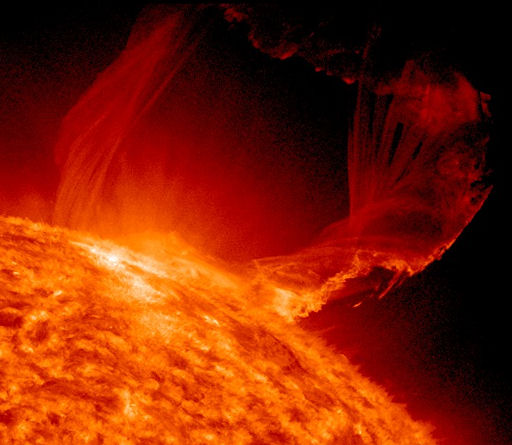
ICONIC ERUPTION: A huge filament of magnetism and hot plasma blasted off the sun's southwestern limb on March 19th around 1200 UT. NASA's Solar Dynamics Observatory recorded the action:
Click to view a full-disk, high-resolution image
The eruption was not Earth-directed, but it did attract plenty of attention on our planet. Many amateur astronomers in Europe witnessed the blast and said it was the biggest one they'd ever seen. This event continues the recent trend of increasing solar activity, and shows anew that Solar Cycle 24 is gaining steam after a long period of relative quiet.
more images: from P-M Hedén of Vallentuna, Sweden; from Sebastien Kersten of Le Cocq, Belgium; from Steve Wainwright of Gower S.Wales UK; from Strikis Iakovos - Marios of Athens Greece; from Günther Strauch of Borken, NRW, Germany; from Peter Desypris of Athens,Greece; from Emiel Veldhuis of Zwolle, the Netherlands; from Mark Townley of Brierley Hill, West Midlands; from Martin Titheradge of Essex, England
March 2011 Aurora Photo Gallery
[previous Marches: 2010, 2009, 2008, 2007, 2006, 2005, 2004, 2003, 2002]