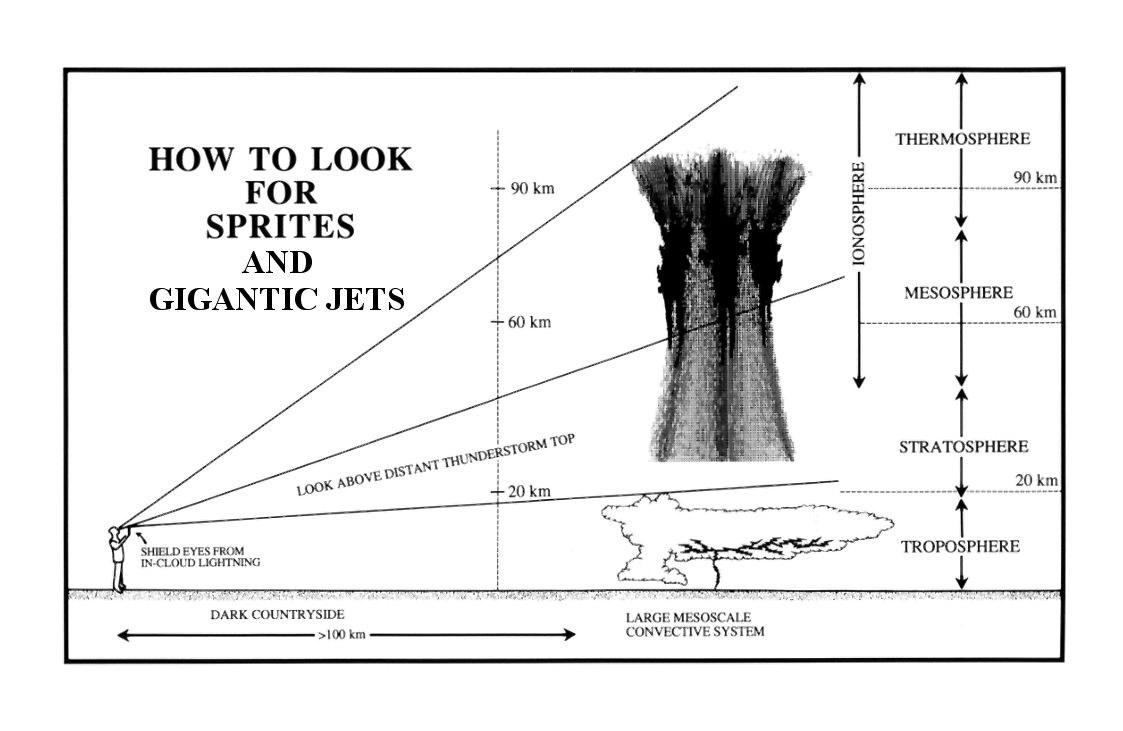
 Where's Saturn? Is that a UFO--or the ISS? What's the name of that star? Get the answers from mySKY--a fun new astronomy helper from Meade. Where's Saturn? Is that a UFO--or the ISS? What's the name of that star? Get the answers from mySKY--a fun new astronomy helper from Meade. GIGANTIC JETS: Think of them as sprites on steroids: Gigantic Jets are lightning-like discharges that spring from the top of thunderstorms, reaching all the way from the thunderhead to the ionosphere 50+ miles overhead. They're enormous and powerful. You've never seen one? "Gigantic Jets are very rare," explains atmospheric scientist and Jet-expert Oscar van der Velde of the Université Paul Sabatier's Laboratoire d’Aérologie in Toulouse, France. "The first one was discovered in 2001 by Dr. Victor Pasko in Puerto Rico. Since then fewer than 30 jets have been recorded--mostly over open ocean and on only two occasions over land." That's why researchers are excited by the events of Aug. 20th. On that night, amateur astronomer Richard Smedley of Broken Arrow, Oklahoma, was hunting for meteors using a low light video camera when he caught two Gigantic Jets instead: 
Click on the image to view the 4.5 MB video
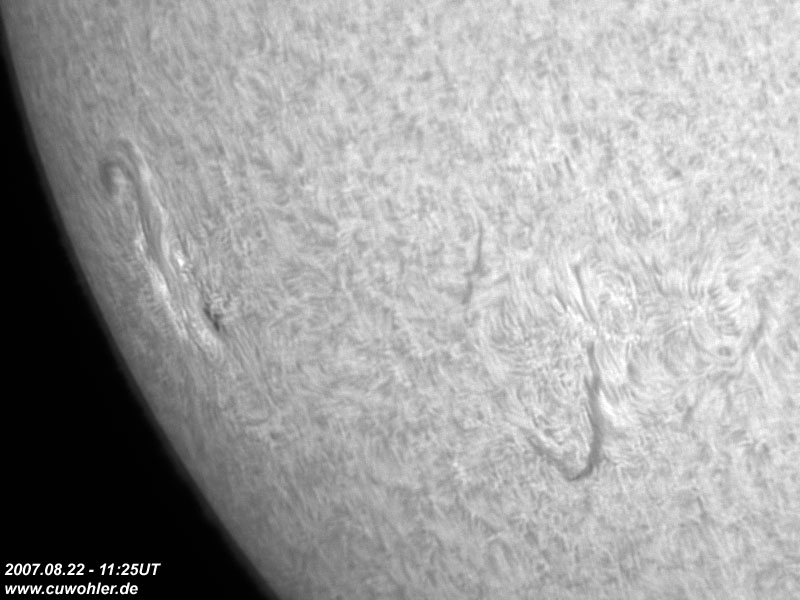
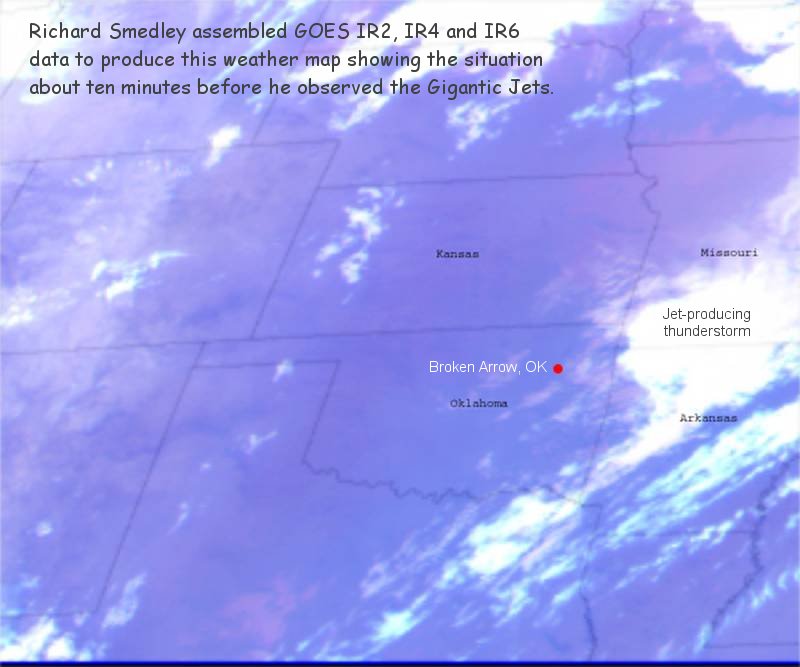
"They were much brighter than a typical meteor--more like a fireball," says Smedley. To appreciate the size of these things, consider the following: "They came from a thunderstorm more than 100 miles away in Missouri: map." This means the Jets were about 48 miles tall measured upward from the top of the thundercloud. Because they connect thunderstorms directly to the ionosphere, Gigantic Jets play some role in the global flow of electricity around our planet, but how big is that role? "No one knows," says van der Velde. "This is cutting-edge research and these photos from Oklahoma provide an exciting new case-study." Amateur astronomers, you can contribute to this research. Check your local weather radar map for storms just over the horizon, point your meteor cameras in that direction, and click. Gigantic Jets may not be as rare as we think. NEW SUNSPOT: New sunspot 969 "looks good," says Cai-Uso Wohler of Bispingen, Germany. His photo of the 'spot taken yesterday through a Coronado SolarMax60 reveals a bushy magnetic filament emerging from the sunspot's dark core: 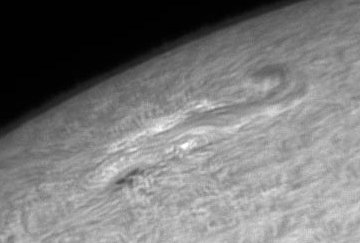
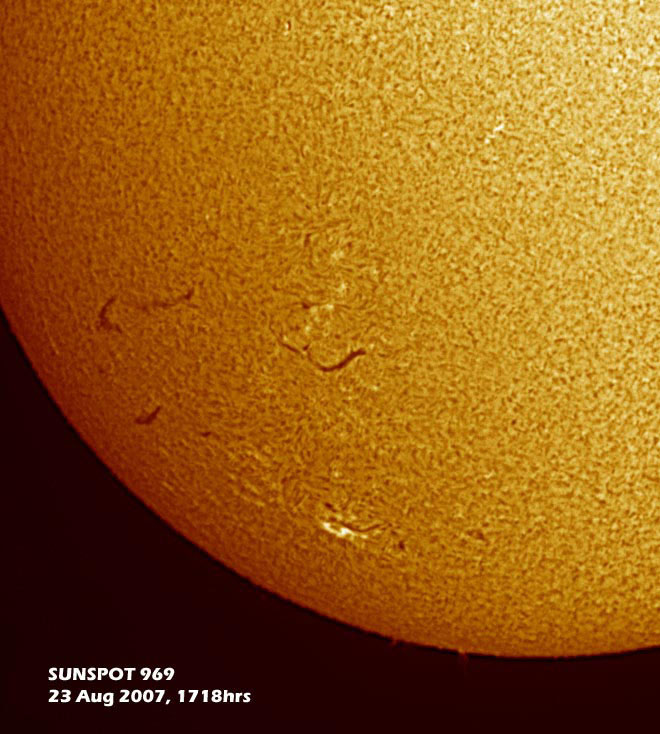
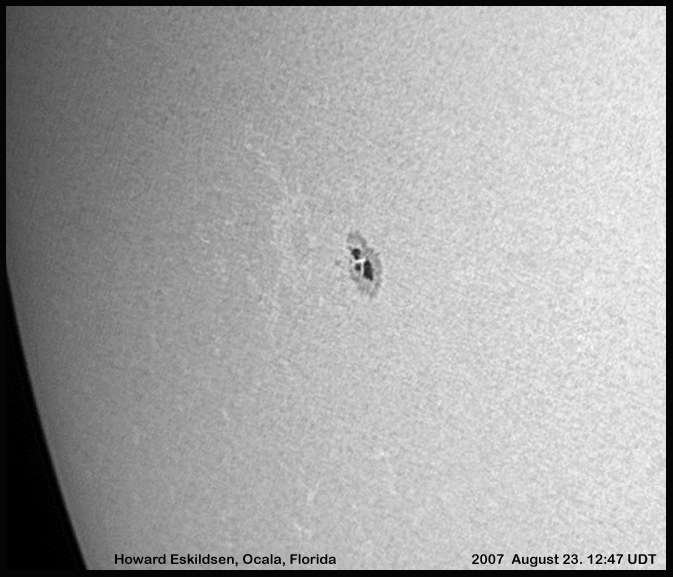
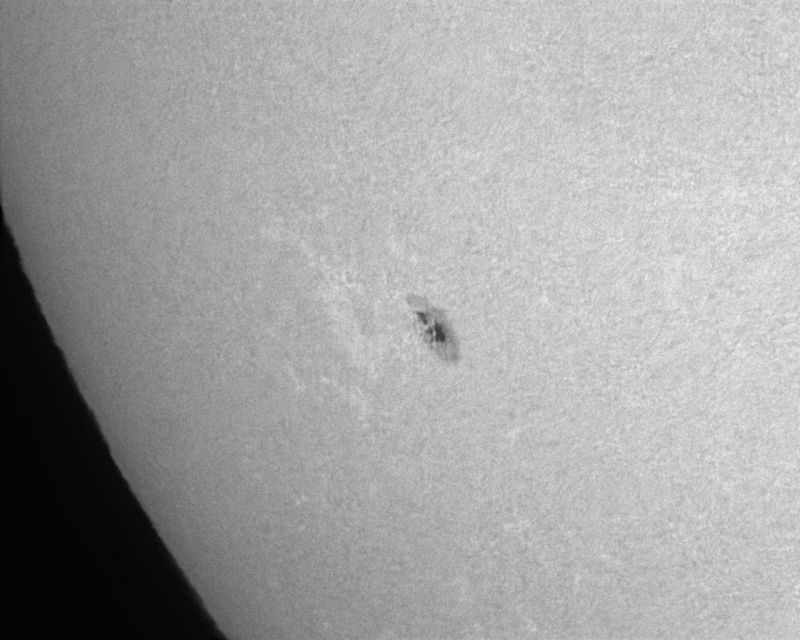
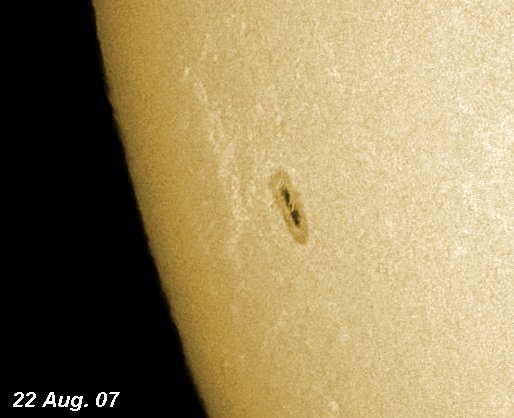
The region may become even more photogenic as it turns toward Earth in the days ahead--stay tuned! more images: from Ng Wee Nghee of Singapore; from Howard Eskildsen of Ocala, Florida; from Pavol Rapavy of Rimavska Sobota, Slovakia; from Peter Paice of Belfast, Northern Ireland; from Maxim Usatov of Dniepropetrovsk, Ukraine. |