They came from outer space--and you can have one! Genuine meteorites are now on sale in the Space Weather Store. | | |
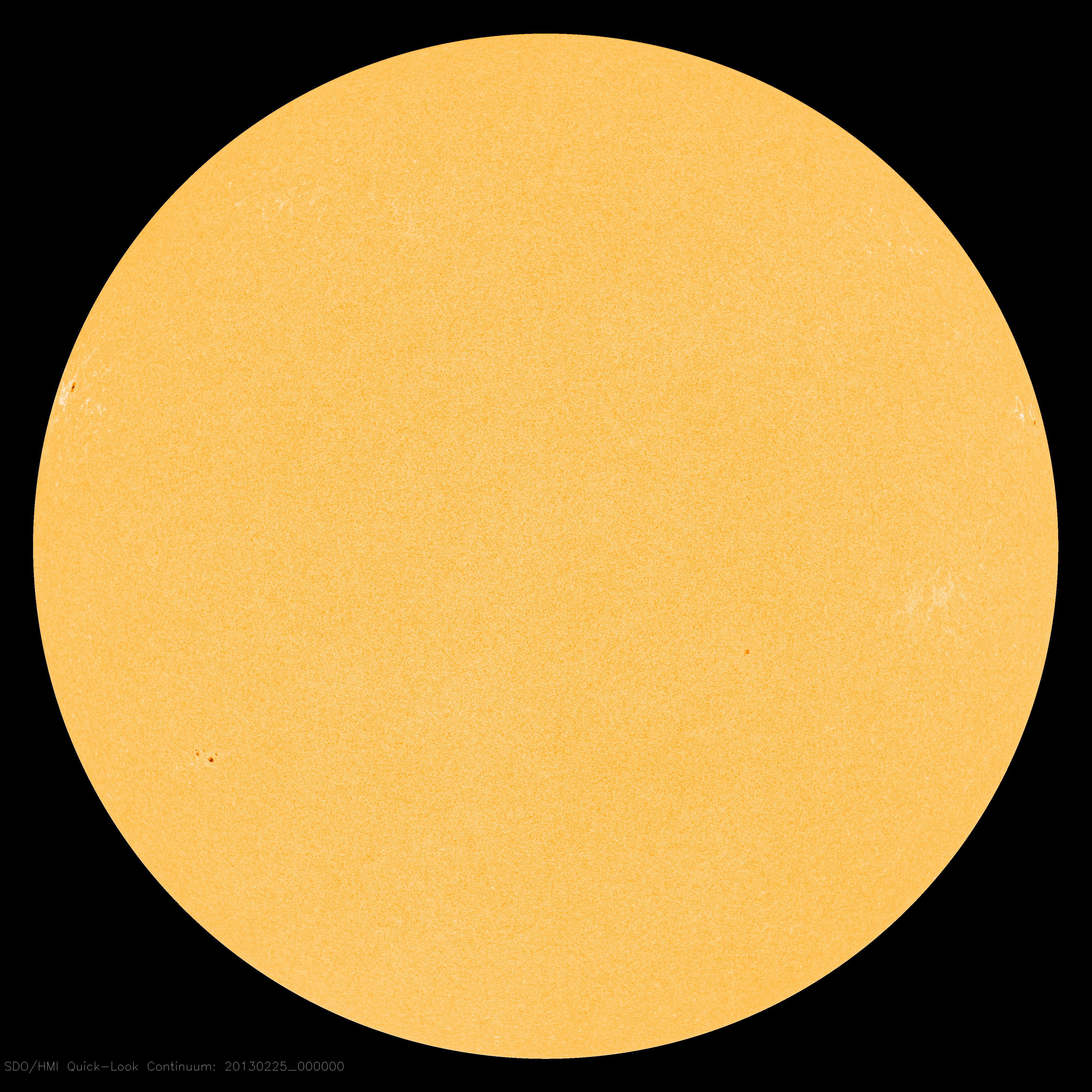
QUIET SUN: Solar activity is low. NOAA forecasters estimate a 5% chance of M-class solar flares and a scant 1% chance of X-flares during the next 24 hours. Solar flare alerts: text, voice.
MOON HALO ALERT: The Moon is waxing full, and that means now is the time to be alert for Moon halos. Photographer Steve Nilsen points out this specimen over the shore of Kvæfjord in Troms, northern Norway:
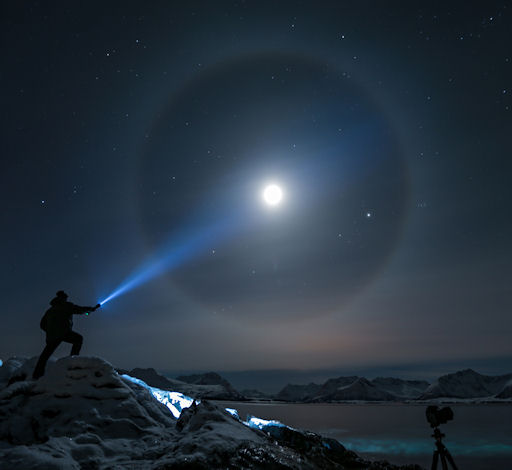
Moon halos are caused by ice crystals in high, thin clouds. The angled faces of the six-sided crystals bend moonlight into circles 22o in radius. (Sunlight can be bent in the same way.) Generally, the brighter the Moon, the better the halo, which is why tonight is a good time to look. The Moon will be full on Feb. 25th at 20:26 UTC.
Note: According to folklore, tonight's full Moon is the "Snow Moon," so-called to mark the heavy snows of February.
Realtime Space Weather Photo Gallery
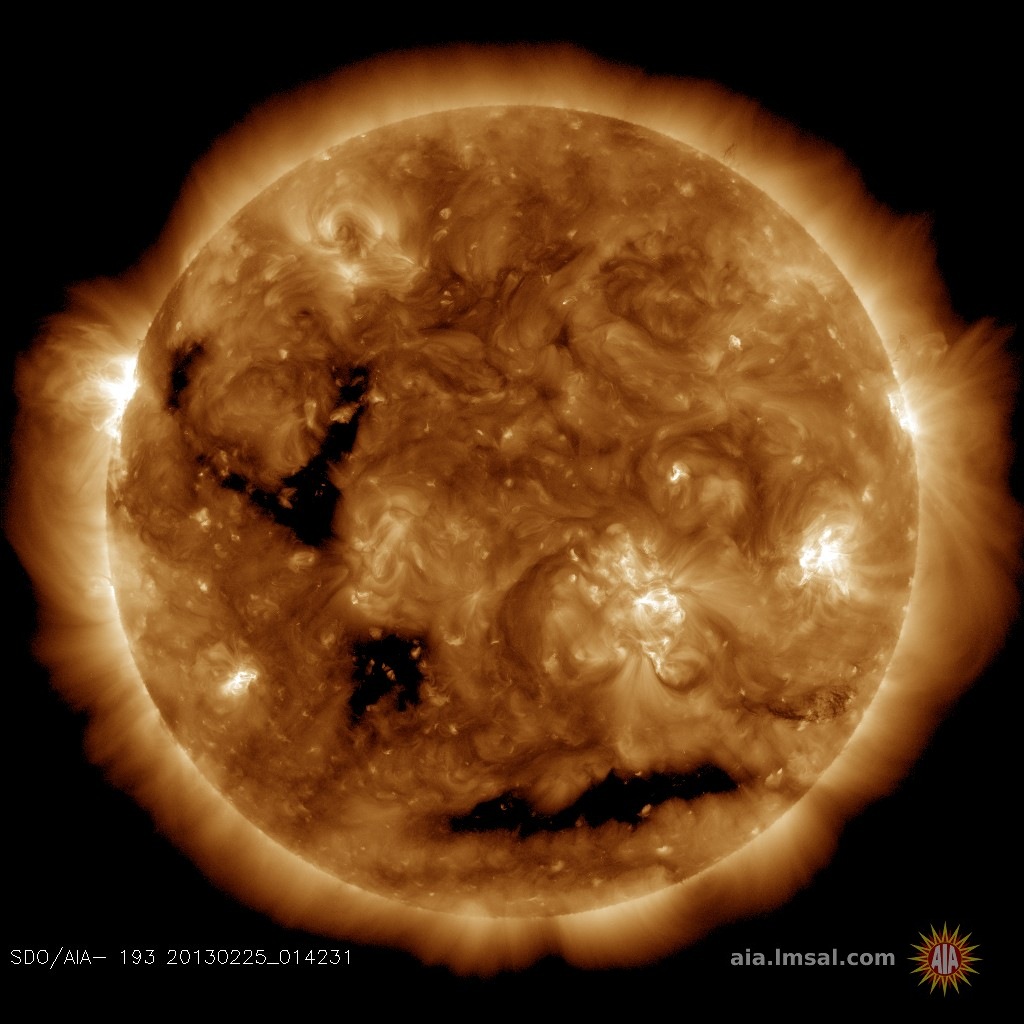
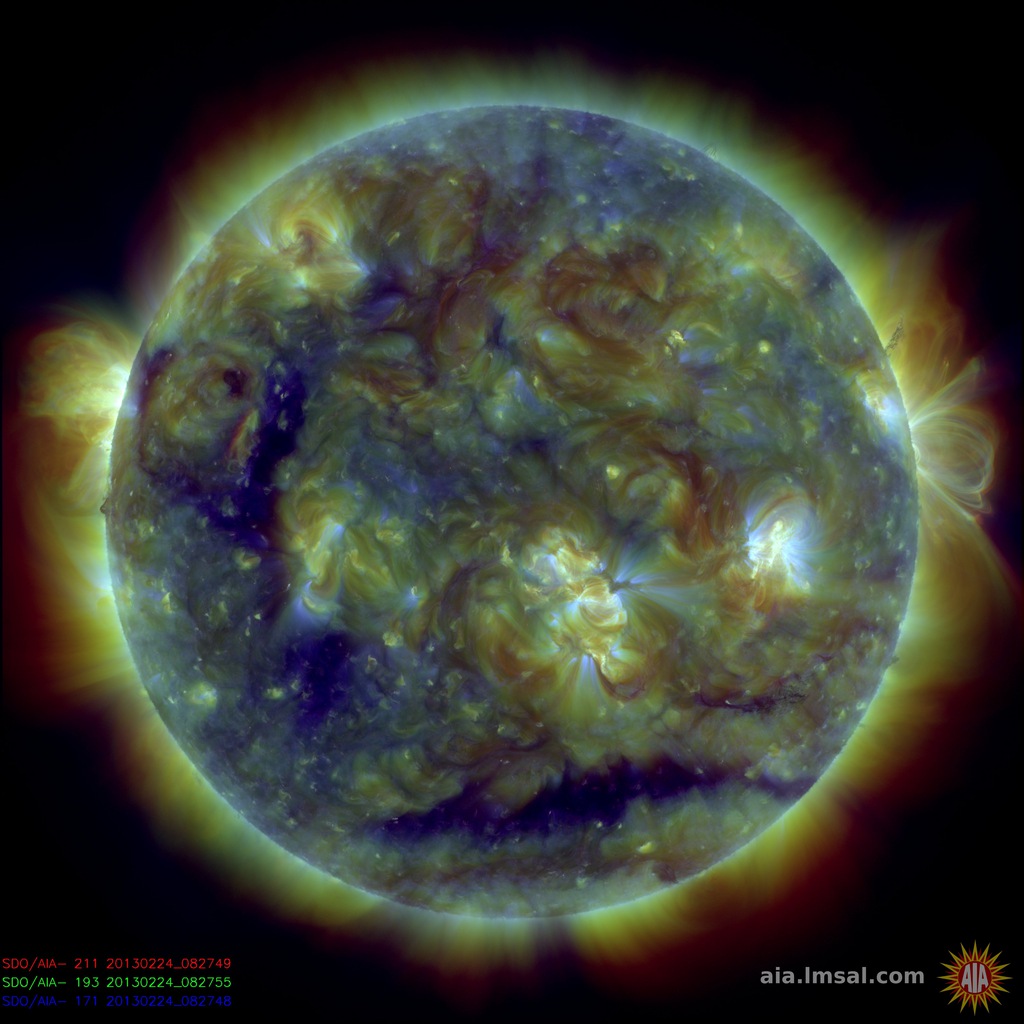
CORONAL HOLE: A dark gap in the sun's atmosphere--a "coronal hole"--has opened up, and it is spewing a stream of solar wind into space. NASA's Solar Dynamics Observatory (SDO) photographed the opening during the early hours of Feb 24th:
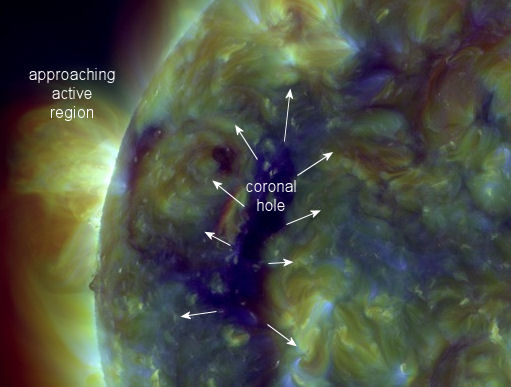
Wondering about the colors in this image? This is how the sun looks through SDO's extreme UV filters.
Coronal holes are places where the sun's magnetic field opens up and allows the solar wind to escape. A stream of solar wind flowing from this particular coronal hole is expected to reach Earth on or about March 2nd. High-latitude sky watchers should be alert for auroras on that date. Aurora alerts: text, voice.
Bonus: The image also shows the magnetic canopy of a sunspot group approaching just beyond the sun's northeastern limb. The active region should emerge in the next 24 hours.
Realtime Aurora Photo Gallery
TWO COMETS AND THE SOUTHERN LIGHTS: Two comets are now visible in the skies of the southern hemisphere: "Comet Lemmon and Comet PanSTARRS got close enough together on the morning of Feb. 17th to fit into single image with a 35mm lens," reports Alex Cherney of Flinders, Victoria, Australia. "A brief but reasonably strong aurora was a welcome bonus." Click to set the scene in motion:
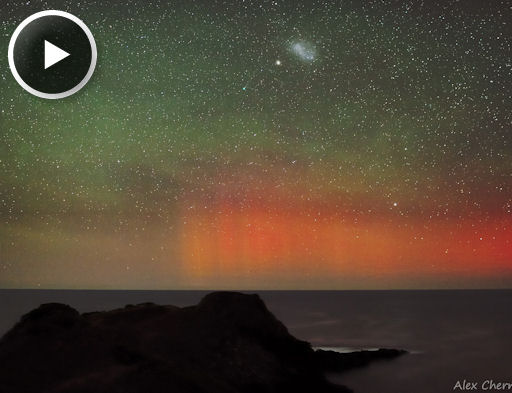
"Both comets were faint but visible to the naked eye, C/2011 L4 (PanSTARRS) slightly brighter than C/2012 F6 (Lemmon)," says Cherney. "I would guestimate the visual magnitude of Comet Lemmon at +5.5 and PanSTARRS at +5." Also visible in Cherney's images are the Small Magellanic Cloud and the 47 Tuc globular star cluster.
Comet Pan-STARRS is heading for a close encounter with the sun just inside the orbit of Mercury that could significantly boost its visibility in early March. At that time, the comet will be visible to northern-hemisphere observers as well. A video from NASA explores the possibilities.
More about Comet Lemmon: 3D orbit, ephemeris, light curves; and Comet Pan-STARRS: 3D orbit, ephemeris, light curves.
Realtime Comet Photo Gallery
Realtime Noctilucent Cloud Photo Gallery
[previous years: 2003, 2004, 2005, 2006, 2007, 2008, 2009, 2011]