Turn your cell phone into a field-tested satellite tracker. Works for Android and iPhone. | | |
FIRST IMAGES OF THE LUNAR ECLIPSE: The lunar eclipse of June 15th has just finished. First images are arrriving now: from Australia, Switzerland; New Zealand, Australia, Italy, New Zealand, South Africa, Italy; New Zealand;
VOLCANIC LUNAR ECLIPSE: On Wednesday night, June 15th, there's going to be a total lunar eclipse visible from every continent except North America. The Moon will spend 100 minutes fully engulfed in Earth's shadow, making this the longest lunar eclipse in nearly 11 years. Maximum coverage occurs on Wednesday night at 20:12 UT. [details] [animated map] [webcasts: #1, #2]
Exhaust from the erupting volcano in Chile could alter the appearance of the eclipse. Scroll past the shadowed Moon for further discussion:
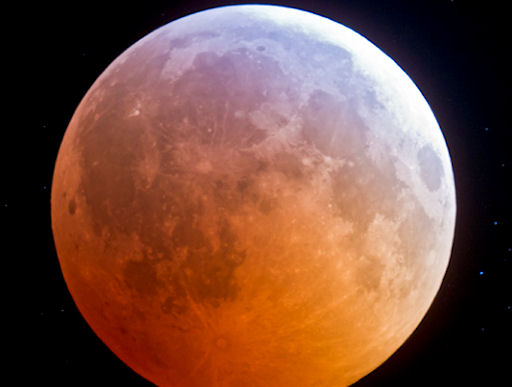
Above: A lunar eclipse on Dec. 21, 2010, photographed by Alan Dyer of Gleichen, Alberta. [gallery]
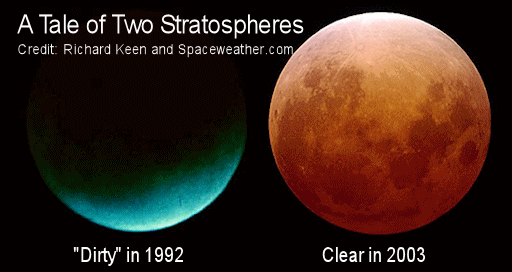
Atmospheric scientist Richard Keen of the University of Colorado explains the volcano-eclipse connection: "The Moon will pass deep into Earth's shadow during totality, actually passing over the center of the shadow at mid-eclipse. As such, it should be a fairly dark eclipse. Furthermore, it appears that last week's eruption of the volcano in Chile may have placed some sulfur dioxide into the stratosphere. The ash and sulfur plume is extensive and dense, with ash reported at least as high as 13.7 km. Particles in the southern stratosphere could cause a darkening of the southern part of the Moon during totality."
In recent years, Keen has studied the brightness of the Moon during eclipses to probe conditions in the stratosphere. When the eclipsed Moon is bright, the stratosphere is clear. On the other hand, a dark eclipse indicates a dusty stratosphere. Clear vs. dusty is important because the state of the stratosphere affects climate; a clear stratosphere lets the sunshine in to warm the Earth below. At a 2008 SORCE conference Keen reported that "the lunar eclipse record indicates a clear stratosphere over the past decade, and that this has contributed about 0.2 degrees to recent warming."
Sky watchers in the eclipse zone are encouraged to monitor the darkness.
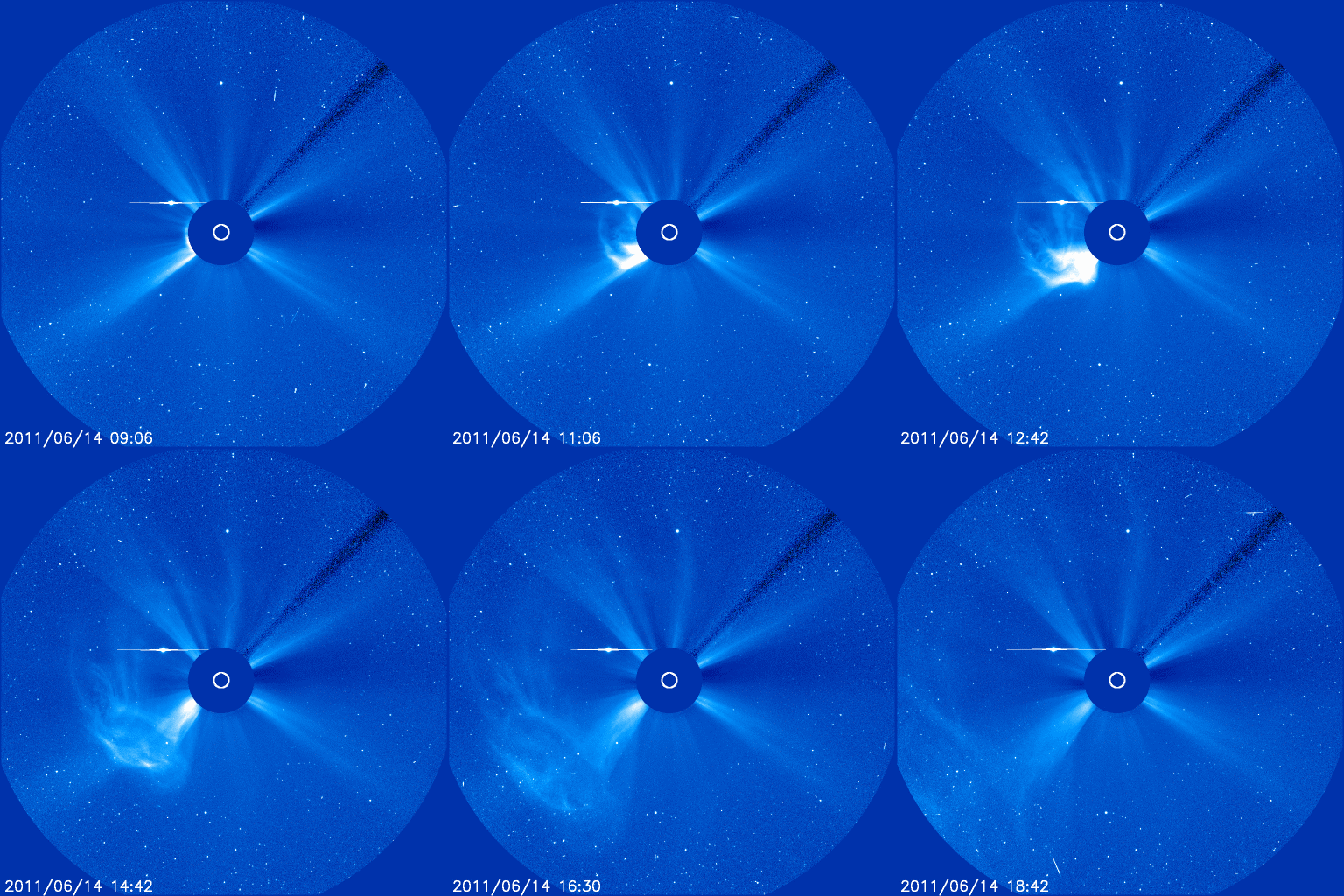
CORONAL MASS EJECTION: On June 14th around 0810 UT, a magnetic filament near the sun's eastern limb became unstable and erupted. The resulting blast hurled a bright and massive CME into space:
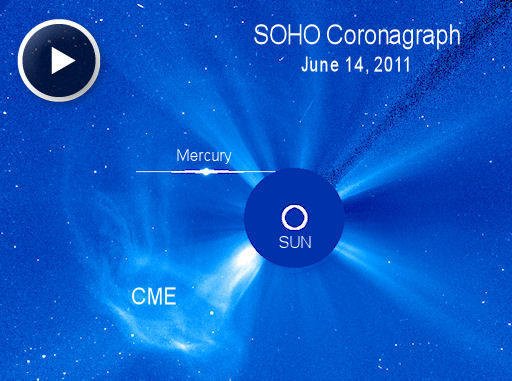
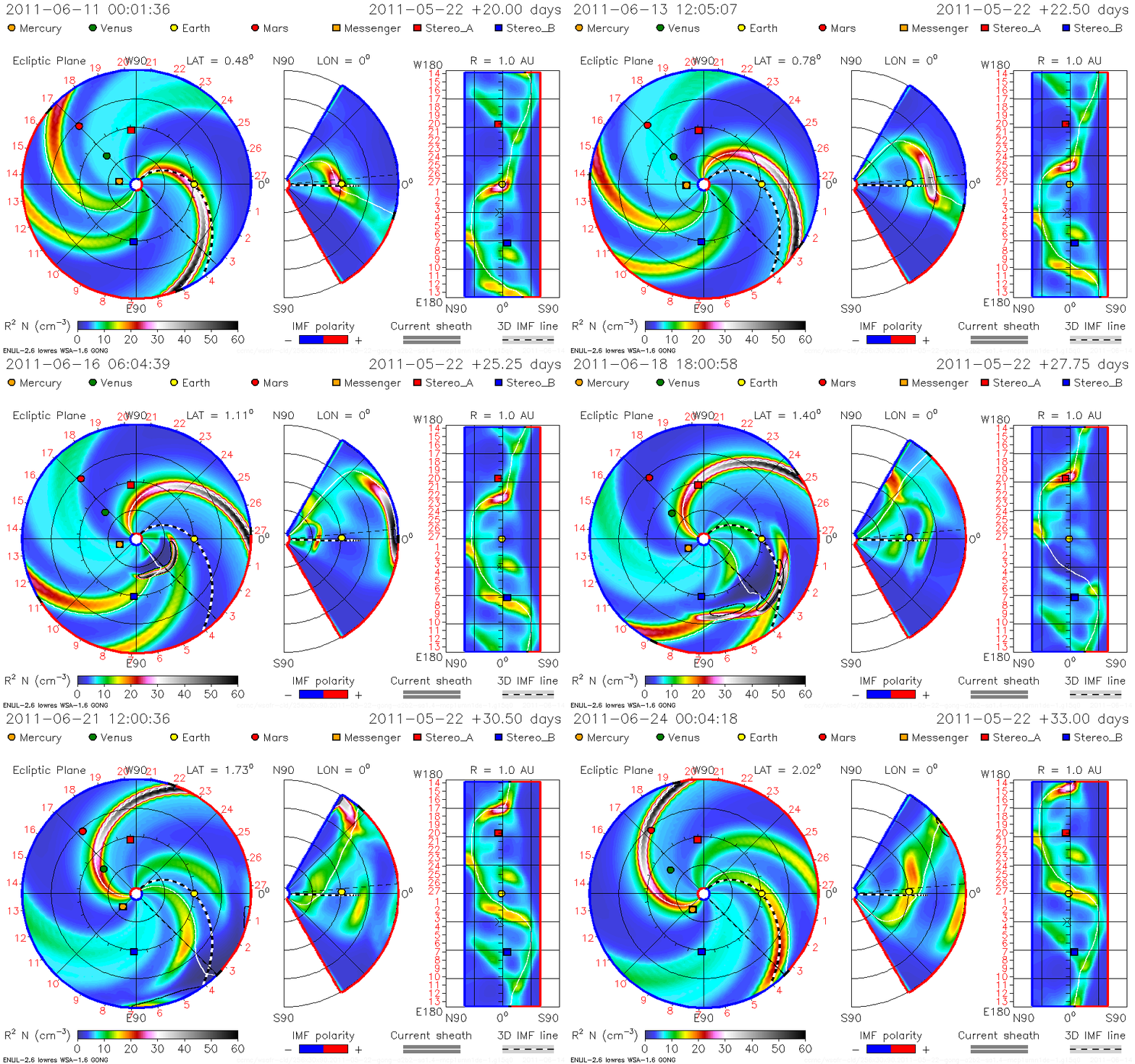
The expanding cloud was observed by 3 spacecraft: STEREO-A, STEREO-B and SOHO. Researchers at the Goddard Space Flight Center's Space Weather Lab assembled data from the fleet to create a 3-dimensional model of the expanding cloud: movie. According to their analysis, the cloud blew away from the sun at a speed of 830 km/s and it could deliver a glancing blow to Earth's magnetic field on June 17th at 10:50 UT (plus minus 7 hours). The impact is not expected to provoke strong geomagnetic storming. Nevertheless, high-latitude sky watchers should be alert for auroras when the CME arrives. Aurora alerts: text, voice
June 2011 Aurora Gallery
[Aurora alerts: text, voice] [previous Junes: 2010, 2008, 2001]
Midnight Solar Eclipse Gallery
[NASA: A Rare Eclipse of the Midnight Sun]