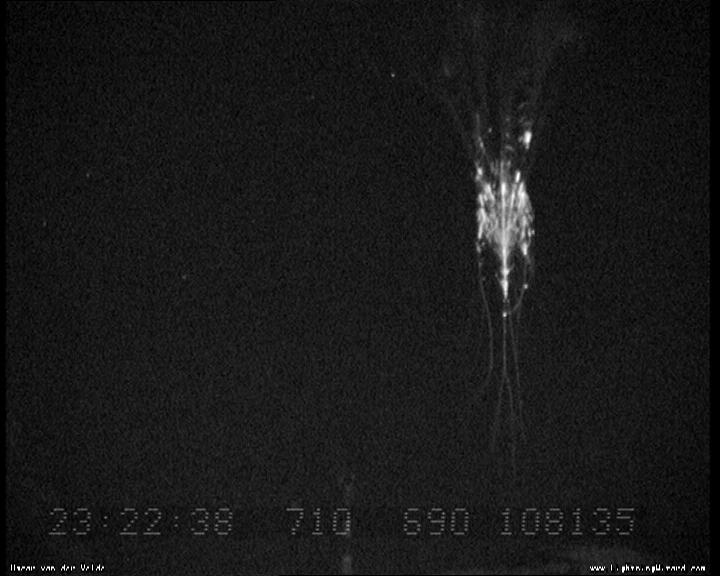
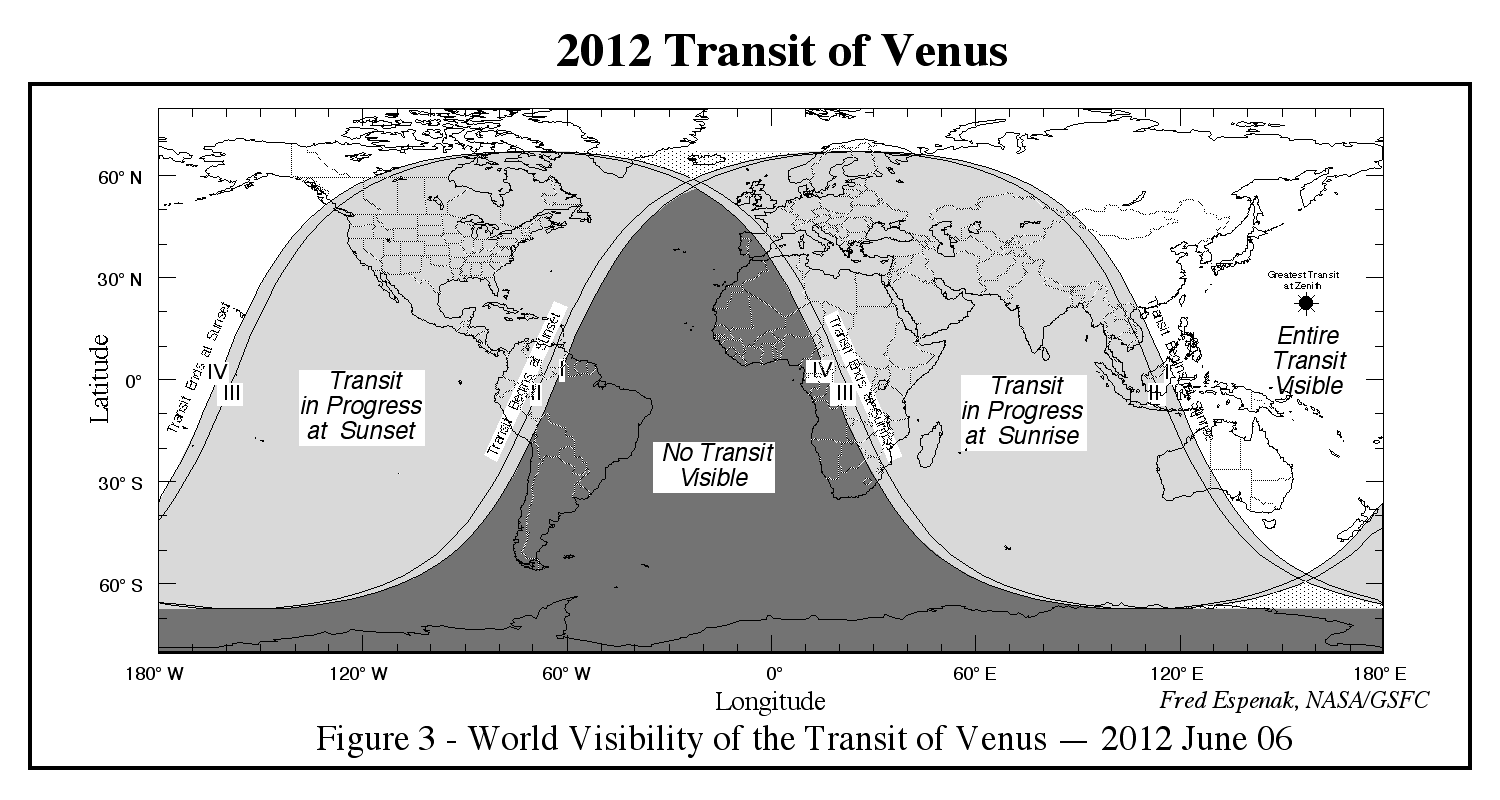
| TRANSIT OF VENUS: Five years ago today, Venus made an historic transit of the Sun. Our 15-page photo gallery documents the crossing, ranked by witnesses as one of the most beautiful events of modern astronomy. The next transit: June 6, 2012. Book your ticket for the South Pacific! STRANGE LIGHTNING: High above Earth, in the realm of meteors and noctilucent clouds, a strange and beautiful form of lightning dances at the edge of space. Researchers call the bolts "sprites"; they are red, fleeting, and tend to come in bunches. Atmospheric scientist Oscar van der Velde of Sant Vicenç de Castellet, Spain, photographed this specimen on June 5th: 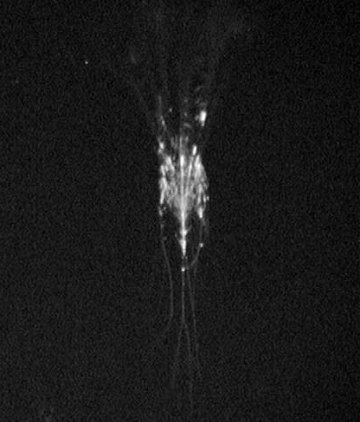
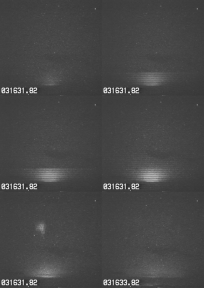
"With my new zoom lens I can now magnify the sky above thunderstorms to get very detailed images of sprites," says van der Velde. "This amazing 'carrot sprite' occurred near the coast of southern France about 250 km away from me." "Sprites are a true space weather phenomenon," he adds. "They develop in mid-air around 80 km altitude, growing in both directions, first down, then up. This happens when a fierce lightning bolt draws lots of charge from a cloud near Earth's surface. Electric fields [shoot] to the top of Earth's atmosphere--and the result is a sprite. The entire process takes about 20 milliseconds." Although sprites have been seen, off and on, for at least a century, most scientists did not believe they existed until after 1989 when sprites were photographed by cameras onboard the space shuttle. Now "sprite chasers" routinely photograph sprites from their own homes. "I set up a Watec 902H2 Ultimate security camera on my balcony and used UFOCapture software to catch the sprite," says van der Velde. Give it a try! diagram: How to Look for Sprites (used with permission of sky-fire.tv) more images: from Oscar van der Velde of Sant Vicenç de Castellet, Spain; from Damir Segon of Pula, Croatia; from Mike Burdette of Bolivar, Missouri; INTENSIFYING NOCTILUCENT CLOUDS: "June 5th marked the 3rd night in a row of bright noctilucent clouds over Northern Ireland," reports photographer Martin Mc Kenna. "It was another huge display glowing electric blue all night long until dawn washed it from the sky." This photo shows some of the fine, wavy structures that stretched more than 1/3 of the way around the horizon: 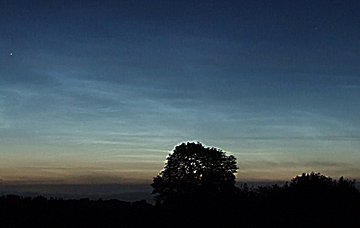
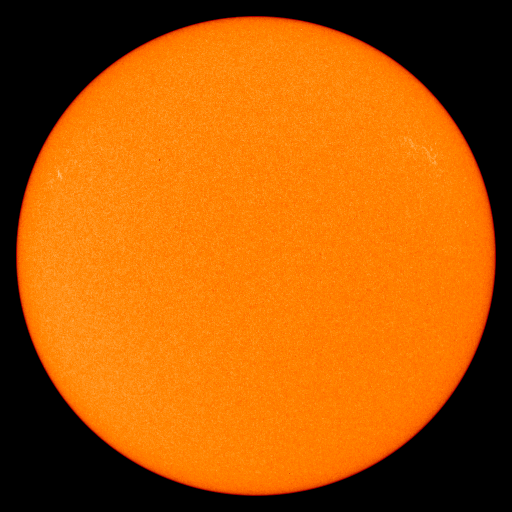
"It was a great show," he says. The weeks ahead could be even better. There is a well-known correlation between noctilucent clouds (NLCs) and the solar cycle: NLC activity tends to peak during years of solar minimum, possibly because low solar activity allows the upper atmosphere to cool, promoting the growth of ice crystals that make up the clouds. With a century-class solar minimum underway, the stage is set for NLCs. UPDATED: 2009 Noctilucent Photo Gallery
[previous years: 2008, 2007, 2006, 2005, 2004, 2003]
Explore the Sunspot Cycle |