|
| |

SPACE WEATHER
NOAA Forecasts |
|
Updated at: 2026 Nov 21 2200 UTC
FLARE |
0-24
hr |
24-48
hr |
CLASS M |
10
% |
10
% |
CLASS X |
01
% |
01
% |
 Geomagnetic Storms:
Probabilities for significant
disturbances in Earth's magnetic field are given for three activity levels: active, minor
storm, severe
storm
Updated at: 2026 Nov 21 2200 UTC
Mid-latitudes
|
0-24
hr |
24-48
hr |
ACTIVE |
15
% |
30
% |
MINOR |
05
% |
10
% |
SEVERE |
01
% |
01
% |
High latitudes
|
0-24
hr |
24-48
hr |
ACTIVE |
20
% |
15
% |
MINOR |
25
% |
30
% |
SEVERE |
20
% |
30
% |
|
|
|
 |
|
|
|
| |
|
|
|
| |
AI writing is everywhere -- except here. This website is written by Dr. Tony Phillips, a carbon-based lifeform with 30 yrs of forecasting experience. Our guarantee: If you find a mistake, it was made by a real human being.
|
|
|
GEOMAGNETIC STORM WATCH: A CME might hit Earth on Nov. 23rd, according to a NOAA forecast model. It was launched by an erupting solar filament on Nov 19th, but gaps in coronagraph imagery caused it to be overlooked at first. The impact could cause a G1-class geomagnetic storm with high latitude auroras. Aurora alerts: SMS Text.
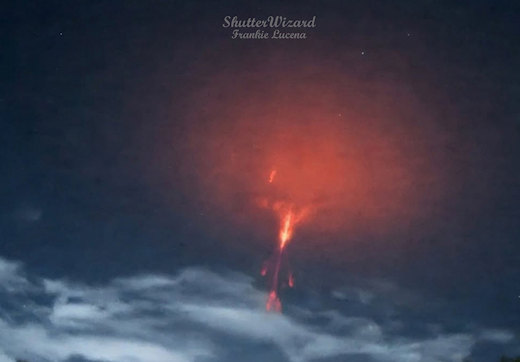
THE 'ALIEN SPRITE': There's an alien in the skies over Puerto Rico. At least, that's what it looks like.
On Nov. 20th, Frankie Lucena photographed a red sprite with a head, arms and legs above a thunderstorm 98 km northwest of his home in Cabo Rojo. "I've captured sprites that seem to have feet before, but never one that seems to have hands," he says. "This is just plain crazy!"
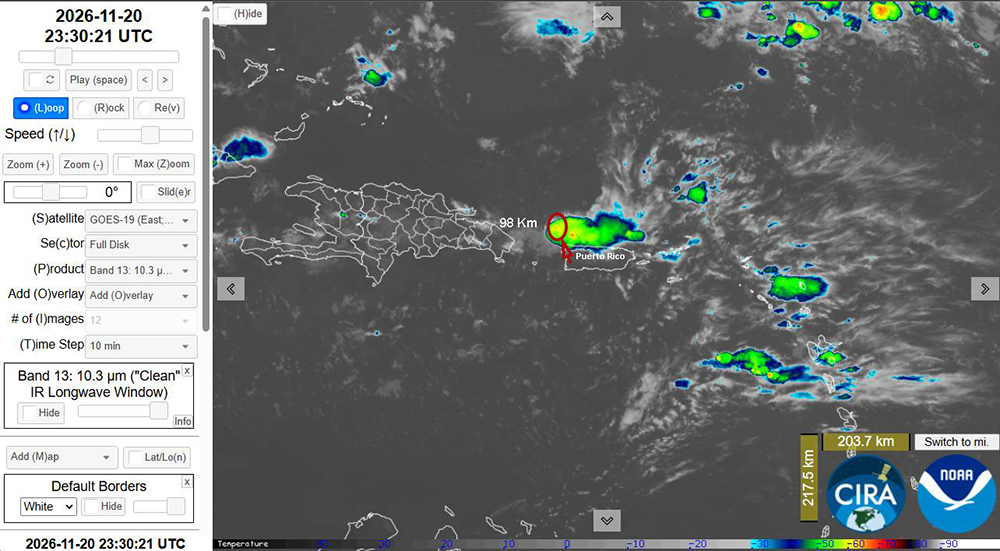
Sprites are giant electrical flashes that happen high above thunderstorms, near the edge of space. This one came from a thunderstorm just off the northwest coast of Puerto Rico, seen here in an infrared image from NOAA's GOES-19 satellite.
The alien's anatomy: The body is where the sprite began, a bright knot where thin air is breaking down electrically, much as it does inside a neon sign. From there, streamers shot down toward the clouds to make the legs and feet, and up into the sky to make the arms.
Sprites come in many shapes: jellyfish, carrots, columns, angels. Aliens have now been added to the list.
Realtime Space Weather Photo Gallery
Free: Space Weather Newsletter
FLUX CAPACITOR LED NIGHT LIGHT: This gift will take you back in time to 1985: The Flux Capacitor Night Light. It's an almost 1:1-scale replica of the time traveling tech from Back to the Future. To make it extra unique, we flew it to the stratosphere onboard a cosmic ray research balloon:
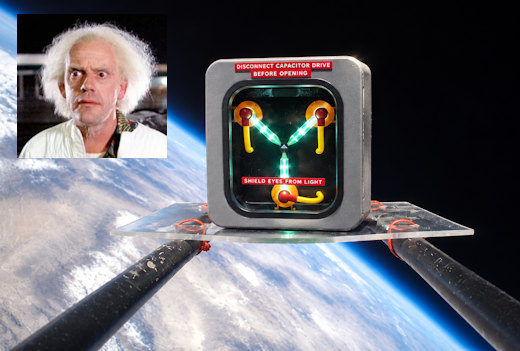
You can have it for $178.95. The LEDs are fully functional and powered by a standard 5v USB. The external battery we flew with the capacitor powered the lights for more than 2 hours despite experiencing temperatures less than -58 C.
Along with the night light, you'll receive a full-color gift card showing the Flux Capacitor in flight and telling the story of its journey to the edge of space.
Far Out Gifts: Earth to Sky Store
All sales support hands-on STEM education
Realtime Aurora Photo Gallery
Free: Spaceweather.com Newsletter
Every night, a network
of NASA
all-sky cameras scans the skies above the United
States for meteoritic fireballs. Automated software
maintained by NASA's Meteoroid Environment Office
calculates their orbits, velocity, penetration depth
in Earth's atmosphere and many other characteristics.
Daily results are presented here on Spaceweather.com.
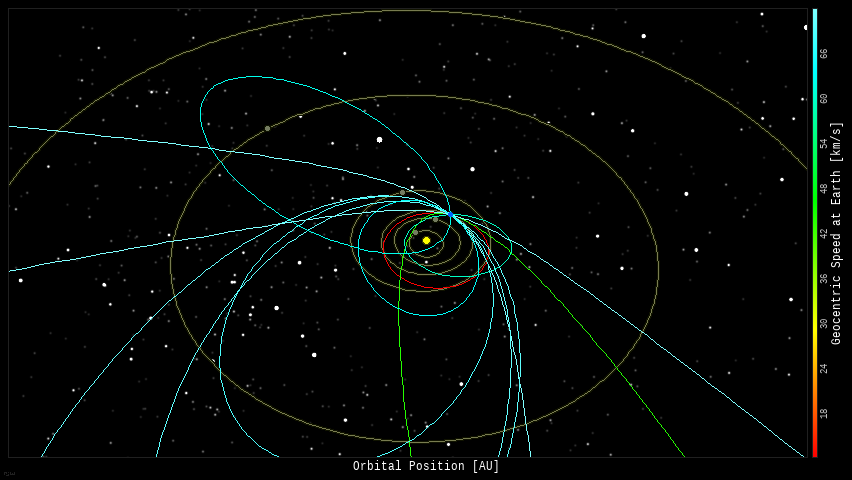
On November 20, 2026, the network reported 11 fireballs.
(6 sporadics, 5 Leonids)
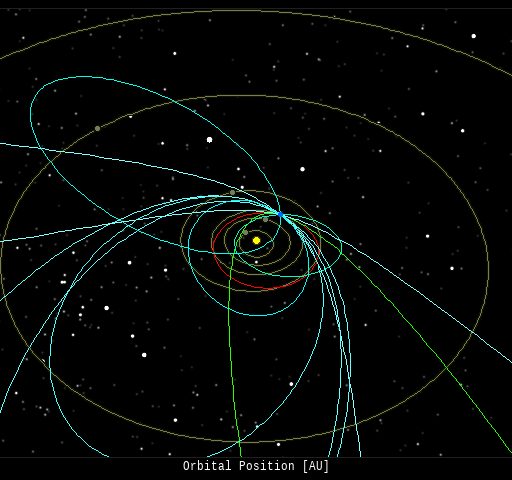
In this diagram of the inner solar system, all of the fireball orbits intersect at a single point--Earth. The orbits are color-coded by velocity, from slow (red) to fast (blue).
[Larger image] [movies]
Potentially Hazardous Asteroids ( PHAs)
are space rocks larger than approximately 100m that
can come closer to Earth than 0.05 AU. None of the
known PHAs is on a collision course with our planet,
although astronomers are finding new
ones all the time.
On November 22, 2026 there were 2349 potentially hazardous asteroids.
 |
Recent
& Upcoming Earth-asteroid encounters:
| Asteroid |
Date(UT) |
Miss Distance |
Velocity (km/s) |
Diameter (m) |
| 2026 VW15 |
2026-Nov-16 |
5.1 LD |
6.1 |
14 |
| 2026 WV |
2026-Nov-16 |
4.5 LD |
12.3 |
18 |
| 2026 VQ2 |
2026-Nov-16 |
19.6 LD |
12.6 |
32 |
| 2026 WC |
2026-Nov-16 |
15.6 LD |
3.9 |
20 |
| 2026 VM3 |
2026-Nov-16 |
8.1 LD |
3.7 |
12 |
| 2026 VJ13 |
2026-Nov-17 |
3.5 LD |
10.4 |
13 |
| 2023 VE6 |
2026-Nov-17 |
18.4 LD |
10.1 |
13 |
| 2026 WL1 |
2026-Nov-17 |
7.5 LD |
15.8 |
31 |
| 2026 WA |
2026-Nov-17 |
0.3 LD |
6.7 |
5 |
| 2026 VB13 |
2026-Nov-17 |
9.9 LD |
20.5 |
31 |
| 2022 VB2 |
2026-Nov-17 |
7.8 LD |
9 |
33 |
| 2026 WH |
2026-Nov-18 |
4.6 LD |
9 |
14 |
| 2026 WU |
2026-Nov-18 |
1.8 LD |
10.1 |
10 |
| 2012 VF46 |
2026-Nov-18 |
16.6 LD |
11.2 |
68 |
| 2026 WW |
2026-Nov-18 |
0.6 LD |
26.7 |
14 |
| 2023 VT7 |
2026-Nov-18 |
20 LD |
10.8 |
55 |
| 2026 WN |
2026-Nov-18 |
8.6 LD |
7.8 |
62 |
| 2026 VY18 |
2026-Nov-18 |
10.1 LD |
17.5 |
40 |
| 2019 WT1 |
2026-Nov-18 |
19.7 LD |
9.7 |
16 |
| 2018 NE1 |
2026-Nov-19 |
16.7 LD |
13.3 |
74 |
| 2007 WK3 |
2026-Nov-19 |
14.3 LD |
7.8 |
20 |
| 2026 WN1 |
2026-Nov-19 |
3.7 LD |
5.1 |
8 |
| 2026 VA11 |
2026-Nov-19 |
8.8 LD |
8.9 |
13 |
| 2026 WR1 |
2026-Nov-19 |
6.2 LD |
8.4 |
22 |
| 2026 TB84 |
2026-Nov-19 |
12.1 LD |
9.9 |
68 |
| 2026 WQ1 |
2026-Nov-20 |
12.2 LD |
12.7 |
17 |
| 2026 VD6 |
2026-Nov-20 |
10.5 LD |
9.4 |
17 |
| 2026 WO1 |
2026-Nov-21 |
15.2 LD |
7.1 |
10 |
| 2026 VN11 |
2026-Nov-21 |
5.2 LD |
7.1 |
42 |
| 2026 WB1 |
2026-Nov-21 |
1.9 LD |
14 |
9 |
| 2026 VD9 |
2026-Nov-21 |
10.2 LD |
4.7 |
32 |
| 2026 VY15 |
2026-Nov-21 |
9.6 LD |
13.3 |
29 |
| 2026 WA1 |
2026-Nov-21 |
1.2 LD |
13.7 |
5 |
| 2026 WJ |
2026-Nov-22 |
1.7 LD |
9.2 |
14 |
| 2026 WC1 |
2026-Nov-22 |
5.9 LD |
19.7 |
16 |
| 2026 WF |
2026-Nov-23 |
6.7 LD |
10.9 |
20 |
| 2026 VF18 |
2026-Nov-23 |
10.5 LD |
7.5 |
16 |
| 2026 WD |
2026-Nov-23 |
4.5 LD |
13.9 |
15 |
| 2026 VQ5 |
2026-Nov-25 |
5.2 LD |
11.7 |
59 |
| 2026 VV11 |
2026-Nov-25 |
16.3 LD |
8.8 |
40 |
| 2026 VQ19 |
2026-Nov-26 |
4 LD |
6.8 |
31 |
| 2026 WU1 |
2026-Nov-27 |
12.6 LD |
12.4 |
40 |
| 2025 CP1 |
2026-Nov-30 |
12.9 LD |
10.8 |
6 |
| 2026 WK1 |
2026-Dec-03 |
5.3 LD |
6.3 |
25 |
| 2019 XF2 |
2026-Dec-04 |
3.1 LD |
10.2 |
14 |
| 2023 XH3 |
2026-Dec-06 |
18.7 LD |
16.5 |
14 |
| 2020 XC3 |
2026-Dec-08 |
14.5 LD |
14.3 |
110 |
| 2026 WG |
2026-Dec-08 |
11.5 LD |
6.3 |
29 |
| 2016 NV |
2026-Dec-08 |
14.3 LD |
10.4 |
379 |
| 2010 VQ |
2026-Dec-12 |
4.6 LD |
4.3 |
10 |
| 2025 XN6 |
2026-Dec-12 |
6.9 LD |
12.2 |
5 |
| 2026 QQ8 |
2026-Dec-13 |
3.5 LD |
0.8 |
2 |
| 2026 LZ1 |
2026-Dec-14 |
14.4 LD |
11.2 |
36 |
| 2025 YN |
2026-Dec-18 |
18.3 LD |
13.1 |
21 |
| 2018 FQ4 |
2026-Dec-19 |
16.7 LD |
10.4 |
14 |
| 2021 PF7 |
2026-Dec-26 |
15.5 LD |
7.7 |
10 |
| 2019 AY3 |
2027-Jan-04 |
20 LD |
20 |
61 |
| 2023 FP1 |
2027-Jan-05 |
10.4 LD |
2.7 |
17 |
| 2014 BP |
2027-Jan-13 |
8.7 LD |
10.4 |
34 |
| 2024 RR14 |
2027-Jan-13 |
8.4 LD |
8 |
140 |
| 2025 BL |
2027-Jan-16 |
15.9 LD |
6.5 |
27 |
| 2025 AK3 |
2027-Jan-17 |
6.5 LD |
7 |
21 |
| 2023 TX |
2027-Jan-17 |
12.9 LD |
7.7 |
4 |
Notes: LD means
"Lunar Distance." 1 LD = 384,401 km, the distance
between Earth and the Moon. 1 LD also equals 0.00256
AU.
| |
Cosmic Rays in the Atmosphere |
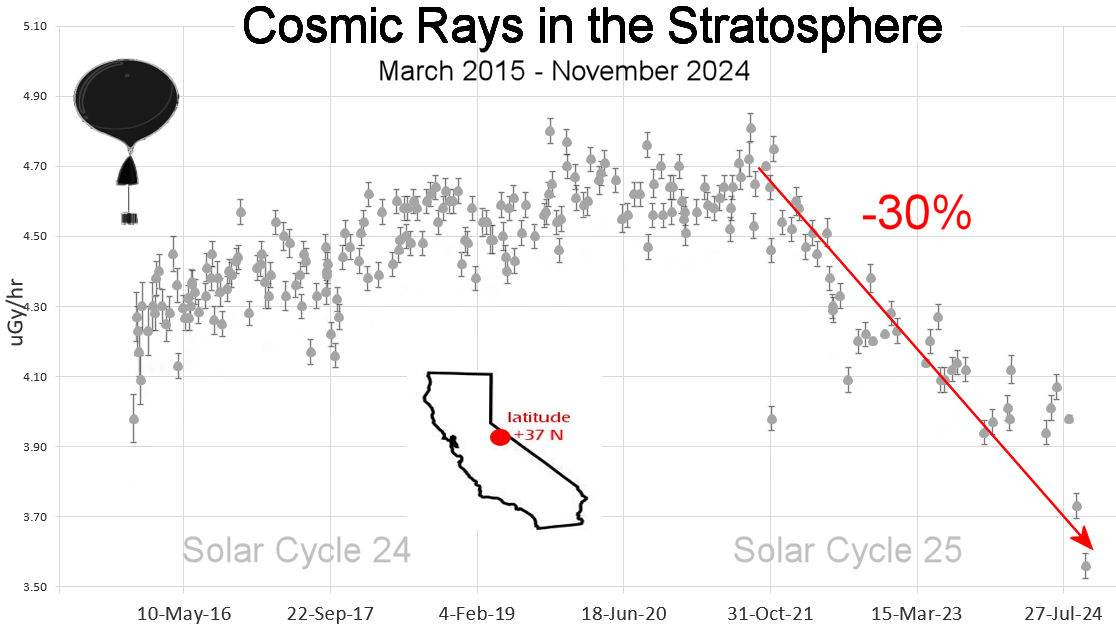
SPACE WEATHER BALLOON DATA: Almost once a week, Spaceweather.com and the students of Earth to Sky Calculus fly space weather balloons to the stratosphere over California. These balloons are equipped with sensors that detect secondary cosmic rays, a form of radiation from space that can penetrate all the way down to Earth's surface. Our monitoring program has been underway without interruption for 10 years, resulting in a unique dataset of in situ atmospheric measurements.
Latest results (Nov. 2024): Atmospheric radiation is sharply decreasing in 2024. Our latest measurements in November registered a 10-year low:
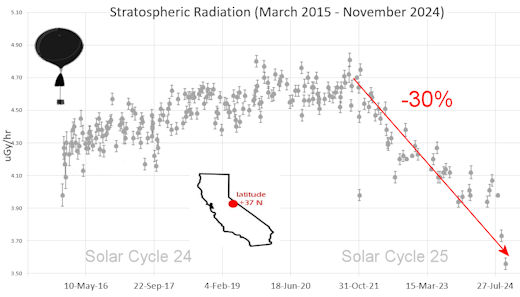
What's going on? Ironically, the radiation drop is caused by increasing solar activity. Solar Cycle 25 has roared to life faster than forecasters expected. The sun's strengthening and increasingly tangled magnetic field repels cosmic rays from deep space. In addition, solar coronal mass ejections (CMEs) sweep aside cosmic rays, causing sharp reductions called "Forbush Decreases." The two effects blend together to bring daily radiation levels down.
.Who cares? Cosmic rays are a surprisingly "down to Earth" form of space weather. They can alter the chemistry of the atmosphere, trigger lightning, and penetrate commercial airplanes. According to a study from the Harvard T.H. Chan school of public health, crews of aircraft have higher rates of cancer than the general population. The researchers listed cosmic rays, irregular sleep habits, and chemical contaminants as leading risk factors. A number of controversial studies (#1, #2, #3, #4) go even further, linking cosmic rays with cardiac arrhythmias and sudden cardiac death.
Technical notes: The radiation sensors onboard our helium balloons detect X-rays and gamma-rays in the energy range 10 keV to 20 MeV. These energies span the range of medical X-ray machines and airport security scanners.
Data points in the graph labeled "Stratospheric Radiation" correspond to the peak of the Regener-Pfotzer maximum, which lies about 67,000 feet above central California. When cosmic rays crash into Earth's atmosphere, they produce a spray of secondary particles that is most intense at the entrance to the stratosphere. Physicists Eric Regener and Georg Pfotzer discovered the maximum using balloons in the 1930s and it is what we are measuring today.
| |
The
official U.S. government space weather bureau |
| |
The
first place to look for information about sundogs,
pillars, rainbows and related phenomena. |
| |
Researchers
call it a "Hubble for the sun." SDO
is the most advanced solar observatory ever. |
| |
3D
views of the sun from NASA's Solar and Terrestrial
Relations Observatory |
| |
Realtime
and archival images of the Sun from SOHO. |
| |
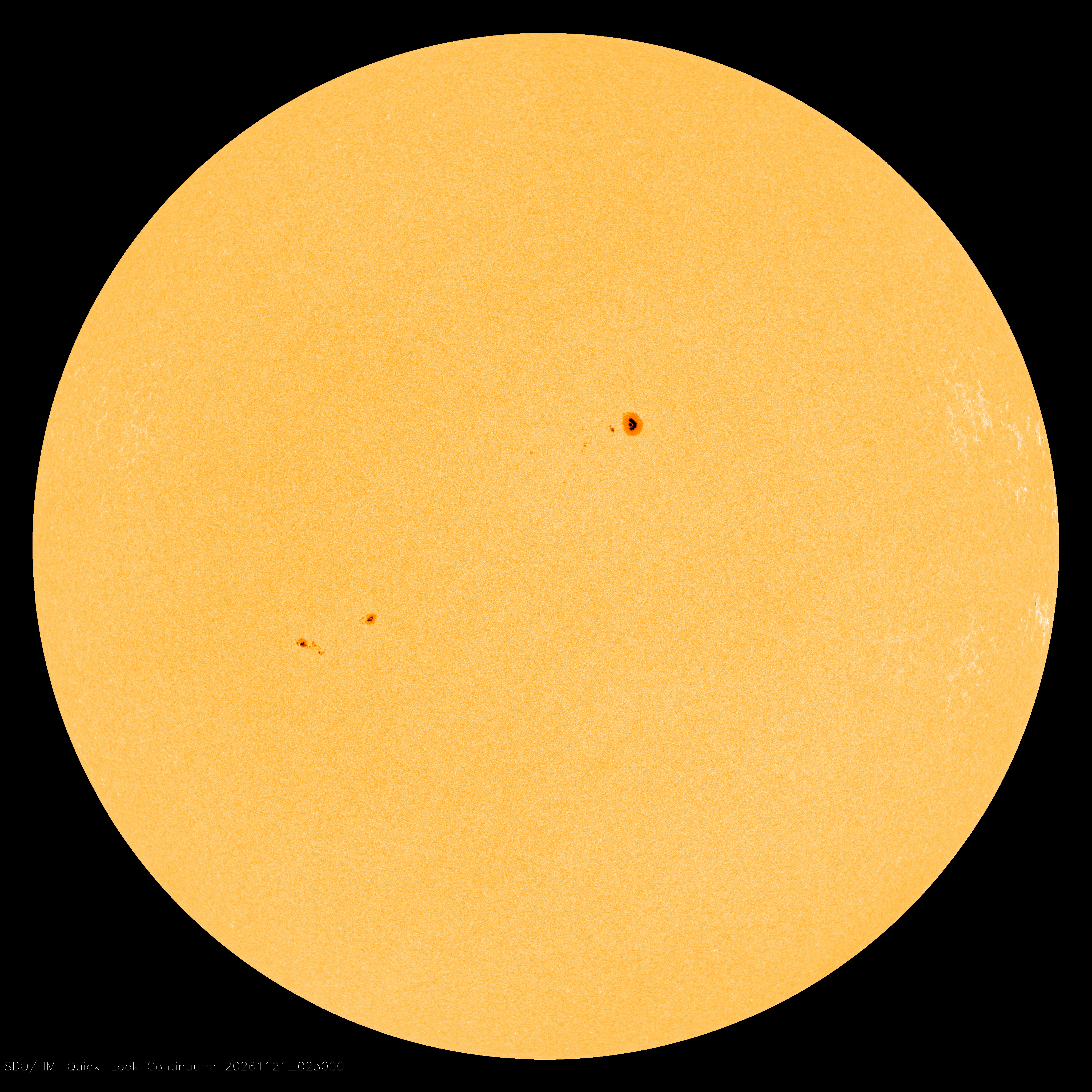
information about sunspots based on the latest NOAA/USAF Active Region Summary |
| |
current counts of failed and deployed Starlink satellites from Jonathan's Space Page. See also, all satellite statistics. |
| |
Authoritative predictions of space junk and satellite re-entries |
| |
from
the NOAA Space Environment Center |
| |
fun to read, but should be taken with a grain of salt! Forecasts looking ahead more than a few days are often wrong. |
| |
from the NOAA Space Environment Center |
| |
the
underlying science of space weather |
 |
Got a chipped or cracked windshield that prevents you from seeing space weather events while driving? Get windshield replacement from SR Windows & Glass with free mobile auto glass service anywhere in the Phoenix area. |
| |
These links help Spaceweather.com stay online. Thank you to our supporters! |
|
|
| |
|
|
|
|
 |
|
|

|
©2021 Spaceweather.com. All rights reserved. This site is penned daily by Dr. Tony Phillips. |