M-CLASS SOLAR FLARES: Big sunspot AR1899 is crackling with M-class solar flares. Because the active region is approaching the sun's western limb, however, none of these flares are squarely Earth directed. Geoeffective solar activity is expected remain low this weekend. Solar flare alerts: text, voice
COMET ISON LIVES UP TO THE HYPE: Comet ISON is now only 5 days from perihelion. On Nov, 28th, Thanksgiving Day in the USA, it will fly through the sun's atmosphere little more than a million kilometers above the surface of the sun. At closest approach, the temperature of ISON's core could rise as high as 5000o Fahrenheit--an existential challenge for an icy comet. No one knows if it will survive.
As the "final countdown" ticks to zero, photographers are taking some marvelous parting shots. Here is Comet ISON plunging into the sunrise beside Mt. Fuji on Nov. 22nd:
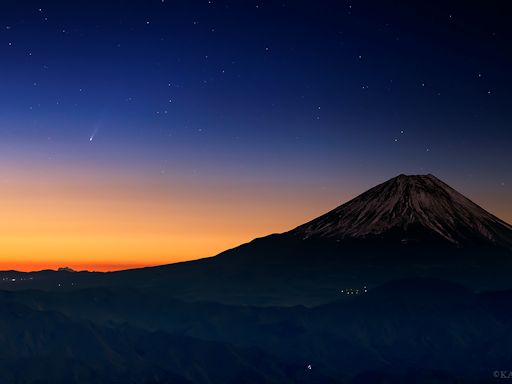
Japanese photographer Kagaya took the picture using a Canon EOS 1D C digital camera. "This is a 3-second exposure at ISO 2000," he says. In the full-sized image, you can also see Mercury hovering to the left of the comet.

For more unique images of Comet ISON, including a Nov. 23rd daytime shot from Los Angeles and a conjunction with the Temple of Poseidon in Greece, browse the realtime photo gallery:
Realtime Comet ISON Photo Gallery
Ephemerides: Comet ISON, Comet Lovejoy, Comet Encke, Comet LINEAR X
SOLAR FLEET PICKS UP COMET ISON: Because NASA's twin STEREO probes are designed to observe the sun, they can see sundiving comets even when the glare becomes intense. Yesterday, Comet ISON joined Earth, Mercury, and Comet Encke in the field of view of STEREO-A's Heliospheric Imager. Click on the image to view ISON's grand entrance:

"The dark 'clouds' of stuff you see coming from the right are density enhancements in the solar wind, and these are what are causing all the ripples you see in comet Encke's tail," explains Karl Battams of NASA's Comet ISON Observing Campaign. "I can pretty much promise you that we're going to see ISON's tail doing that in a couple of day's time, but on a much larger scale!"
Battams points out another exciting development: Comet Encke and Comet ISON are converging for a photogenic close encounter. "No they're not going to hit each other - in reality they are millions of miles apart - but as seen from the STEREO-A spacecraft, they are going to get very close!" he says. "We are probably a couple of days away from seeing two comets almost side-by-side in that camera, with long tails flowing behind them in the solar wind. To say that such an image will be unprecedented is rather an understatement." Stay tuned for that.
Realtime Comet ISON Photo Gallery
Realtime Space Weather Photo Gallery