SPRING SDO ECLIPSE SEASON BEGINS: Twice every year, around the time of the equinoxes, Earth can pass directly between the Sun and NASA's Solar Dynamics Observatory (SDO), producing a series of beautiful eclipses. SDO's vernal eclipse season began yesterday, producing a near-total blackout of the sun:

For the next three weeks these eclipses will repeat once a day around 07:30 UT. At the beginning of the season, the eclipses are short, only a few minutes long. Their duration increases to 72 minutes, mid-season, before tapering off to minutes again as the season winds down. Because most eclipses are relatively short, there is still plenty of uninterrupted time for SDO to monitor activity on the sun. Researchers estimate a scant 2% data loss averaged over the weeks ahead.
The ongoing eclipse season will end in late March. Between now and then, stay tuned for some rare blackouts.
Realtime Space Weather Photo Gallery
SUBSIDING STORM: A geomagnetic storm that started on Feb. 27th when a CME sideswiped Earth's magnetic field is subsiding. At its peak, the storm measured G2 on NOAA storm scales and sparked bright auroras over northern Europe, Greenland and Iceland. Tryggvi Már Gunnarsson was driving out of Reykjavik when he saw the display:
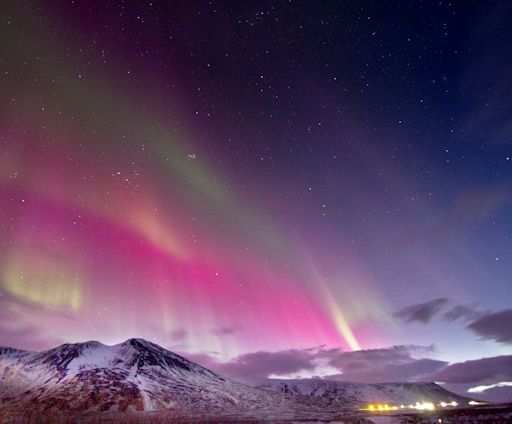
"As I was driving from Reykjavik to north Iceland I saw this red halo on the sky. My first thought was: A volcano must be erupting!," says Gunnarsson. "Then, as the green colors appeared, I realized this was the aurora borealis. It was one of the most magnificent aurorashows I have ever seen."
If the magnetic storm had lasted just a little longer, bright lights would have appeared over some northern-tier US states, too. Instead, the display was rapidly fading by the time night fell over North America. High-latitude sky watchers should remain alert for auroras as Earth moves through the wake of the CME. NOAA forecasters estimate a 55% chance of resurgent storms on Feb. 28th. Aurora alerts: text, voice