MOSTLY QUIET WITH A CHANCE OF FLARES: With no sunspots strongly flaring, solar activity is low. However, sunspot AR2089 could break the quiet. It has a 'beta-gamma-delta' magnetic field that harbors energy for X-class solar flares. NOAA forecasters estimate a 20% chance of X-flares on June 17th. Aurora alerts: text, voice
NOCTILUCENT CLOUDS: This morning in Northern Ireland, the usual rosy glow of sunrise was fringed with electric blue. "We had quite a stunning display of noctilucent clouds," reports photographer Noel Blaney, who sends this picture from the city of Bangor in County Down:
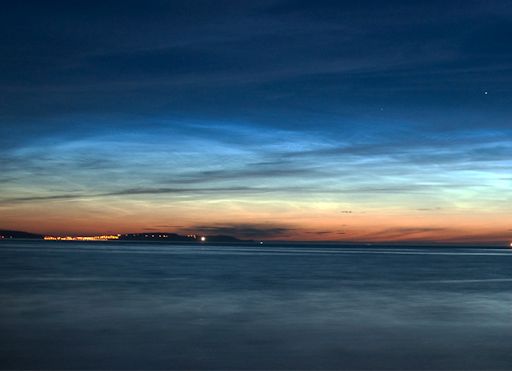
"This was the 3rd significant display of the season," says Blaney.
He can expect the apparitions to become more frequent. Noctilucent clouds (NLCs) are a summertime phenomenon, and the clouds generally grow brighter and more widespread after the summer solstice, which is only days away.
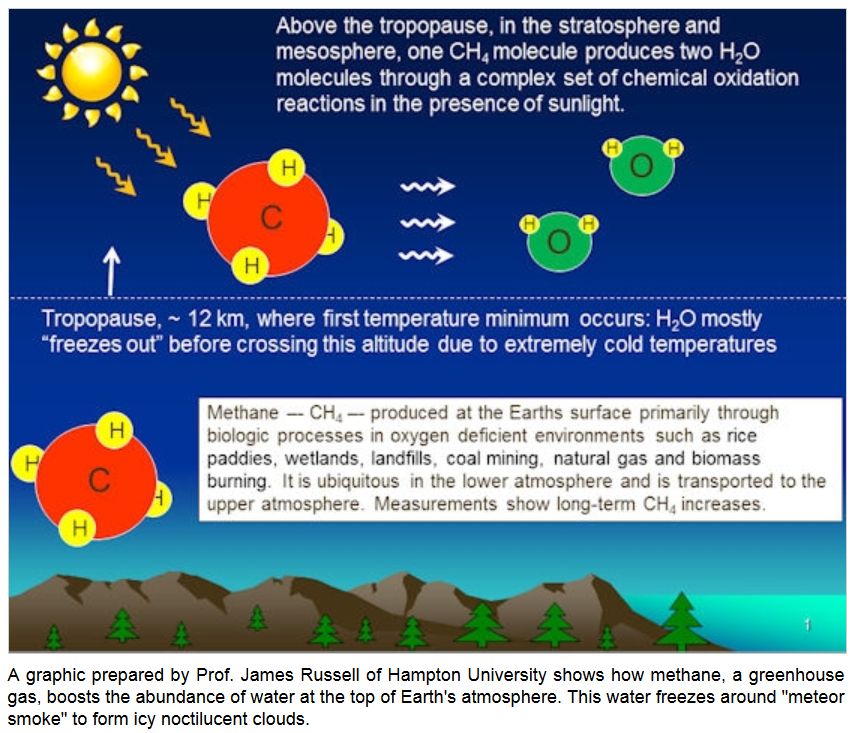
NLCs are Earth's highest clouds. Seeded by meteor smoke and boosted by the greenhouse gas methane, they float 82 km above Earth's surface at the edge of space itself. The natural habitat of noctilucent clouds is the Arctic Circle. In recent years, however, they have spread to lower latitudes with sightings as far south as Utah and Colorado. This will probably happen in 2014 as well.
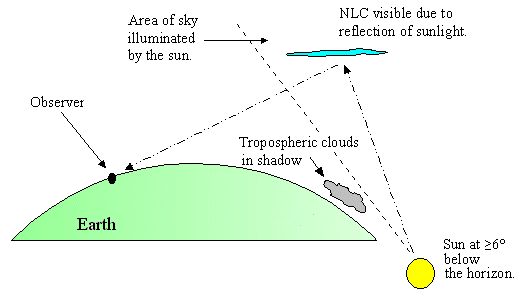
Observing tips: Look west 30 to 60 minutes after sunset when the Sun has dipped 6o to 16o below the horizon. If you see luminous blue-white tendrils spreading across the sky, you may have spotted a noctilucent cloud.
VOYAGER 3 PROJECT: In 1979, the Voyager 1 probe took a stunning series of images on its final approach to Jupiter that clearly showed the complex movement of the cloudbelts for the first time ever. Fast-forward to 2014: "35 years later, almost to the day, 7 Swedish amateur astronomers set out to replicate this odyssey using images taken with our own ground-based telescopes," says Peter Rosén, a member of the "Voyager 3 Project." Click to watch the results of their 6-month adventure:

Realtime Space Weather Photo Gallery
SUMMER SUN HALO: Around the northern hemisphere, sky watchers are starting to report a rainbow-colored sun halo that appears almost-exclusively during summer: the circumhorizon arc. "I saw one on June 13th. It was very bright," says Michail Anastasio, who snapped this picture from the cockpit of a plane flying 20,000 feet over Singapore:
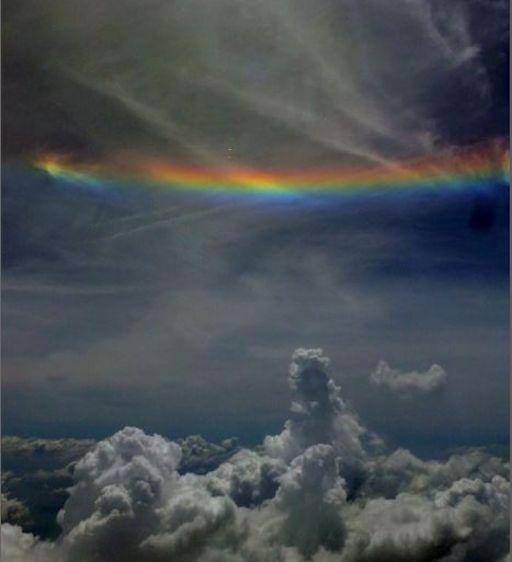
Nicknamed the "fire rainbow" because of its fiery rainbow colors, this apparition in fact has nothing to do with either fire or rainbows. It is caused by sunlight refracting through plate-shaped ice crystals in cirrus clouds. The geometry of the refraction requires that the sun be high in the sky (above 58o), which explains why this is a summertime phenomenon.
June and July are the best months to see circumhorizon arcs. Look for them circling the horizon sometimes in patches, sometimes not, always brightly decorated with pure and well separated prismatic colors. You'll know it when you see it. More examples may be found in the realtimme photo gallery:
Realtime Space Weather Photo Gallery