ARCTIC LIGHTS: For the second day in a row, auroras are dancing around the Arctic Circle. The lights were sparked by a minor CME impact on Oct. 14th and amplified on Oct. 15th when Earth passed through a fold in the heliospheric current sheet. NOAA forecasters estimate a 40% chance of continued polar geomagnetic storms on Oct. 16th. Aurora alerts: text, voice
GREEN COMET APPROACHES RED PLANET: On Sunday, Oct. 19th, Comet Siding Spring will pass only 140,000 km away from Mars. For comparison, that's about 1/3rd the distance between Earth and the Moon. For a while last year, astronomers thought the comet might actually hit Mars, setting off a cataclysmic climate change experiment, but now we know it's going to be a near miss. Last night, only three days before closest approach, astrophotographer Damian Peach snapped this picture:

"The comet is presently moving against the dense star clouds of the southern Milky Way," says Peach. "Soon, however, it will reach Mars."
An international fleet of Mars orbiters and rovers will observe the encounter from close range. The most interesting data could come from MAVEN, a NASA spacecraft that has reached Mars just ahead of the comet. MAVEN is designed to study the martian atmosphere. That's good, because when the comet arrives, the atmosphere of the comet will likely brush against the atmosphere of Mars, possibly sparking auroras on the Red Planet. MAVEN could record these alien lights.
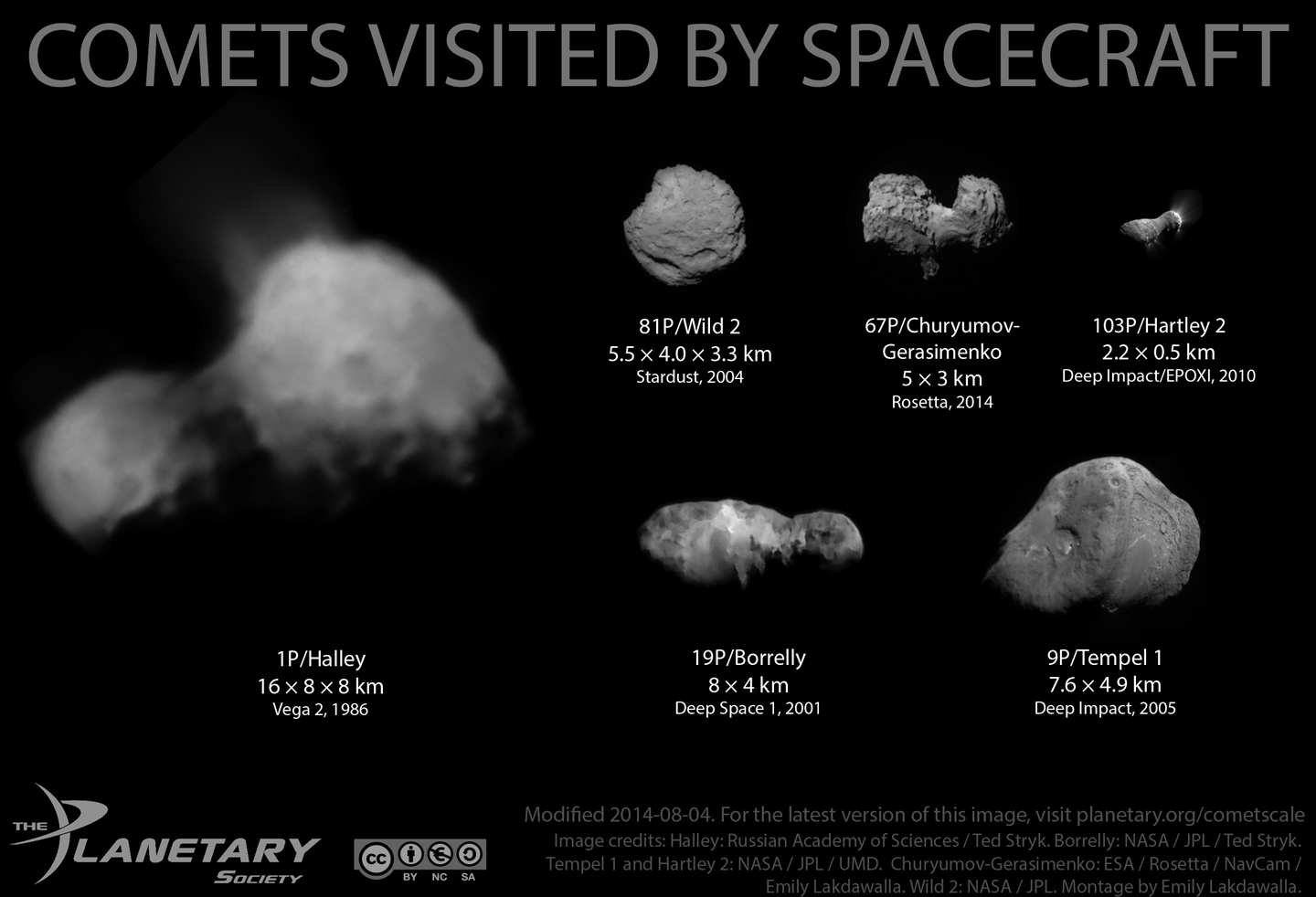
"Just as exciting," adds comet researcher Karl Battams of the Naval Research Lab, "is the prospect of the Mars Reconnaissance Orbiter's HiRISE camera being able to actually resolve (i.e. determine the shape of) the nucleus of the comet. ESA and NASA spacecraft have seen comet nuclei before, but comet Siding Spring is a little different. It's an 'Oort Cloud comet' on its first ever foray into our solar system. This means it is largely pristine and will likely not have undergone any major changes since it formed. We've never seen one of these comets up close. Never. We don't know exactly what to expect."
Experienced amateur astronomers with mid-sized telescopes and sensitive digital cameras should have no trouble photographing Comet Siding Spring in the nights ahead. It can be found glowing like a 12th magnitude star in the constellation Ophiuchus right next to ... you guessed it ... the planet Mars. [light curve] [ephemeris] [3D orbit]
FARSIDE EXPLOSION: A sunspot capable of powerful eruptions is about to rotate onto the Earthside of the sun. It announced itself on Oct. 14th by hurling a spectacular CME over the sun's southeastern limb:

The underlying explosion was hidden behind the southeastern edge of the sun. Even in eclipse, however, the blast registered M2 on the Richter Scale of Solar Flares. The actual rating must have been must higher, perhaps even X-class.
NASA's Solar Dynamics Observatory recorded an extreme ultraviolet movie of debris flying over the sun's limb:

Within the next 24 hours,the blast site should emerge over the limb where we can see it from Earth. Then analysts can examine its magnetic field and evaluate the potential for future eruptions. Stay tuned. Solar flare alerts: text, voice
Realtime Space Weather Photo Gallery