ELUSIVE 5TH-ORDER RAINBOW SIGHTED: Most rainbows are caused by light reflected once, or sometimes twice, inside raindrops. Larger numbers of reflections are possible, but the rainbows they create are very rare. After years of searching, atmospheric optics experts have sighted a rainbow caused by five reflections, the elusive 5th-order rainbow. Read all about it.
HUGE SUNSPOT: If you have a solar telescope, point it at the sun. A huge sunspot is turning toward Earth. Philippe Tosi of Nîmes, France, took this picture of AR2192 on Oct. 18th:
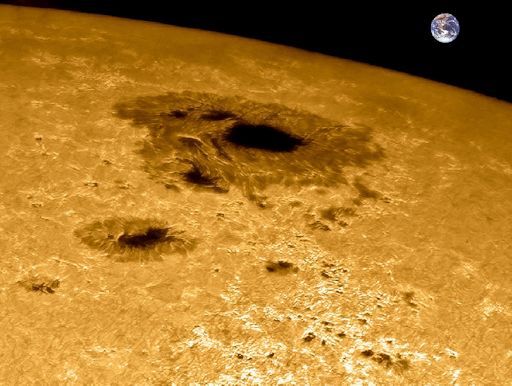
An inset picture of Earth shows the scale of the sunspot. All by tself, the primary dark core could swallow a planet twice as wide as our own.
Big sunspots pose a threat for strong flares, and this behemoth is no exception. Last week, while it was still on the farside of the sun, AR2192 unleashed several potent blasts including this massive CME. Now it is crackling with C-class flares that could herald something stronger: NOAA forecasters estimate a 30% chance of M-class flares and a 5% chance of X-flares in the next 24 hours. Solar flare alerts: text, voice

Realtime Space Weather Photo Gallery
GREEN COMET APPROACHES RED PLANET: On Sunday, Oct. 19th, Comet Siding Spring will pass only 140,000 km away from Mars. For comparison, that's about 1/3rd the distance between Earth and the Moon. For a while last year, astronomers thought the comet might actually hit Mars, setting off a cataclysmic climate change experiment, but now we know it's going to be a near miss. Last night, only three days before closest approach, astrophotographer Damian Peach snapped this picture:

"The comet is presently moving against the dense star clouds of the southern Milky Way," says Peach. "Soon, however, it will reach Mars."
An international fleet of Mars orbiters and rovers will observe the encounter from close range. The most interesting data could come from MAVEN, a NASA spacecraft that has reached Mars just ahead of the comet. MAVEN is designed to study the martian atmosphere. That's good, because when the comet arrives, the atmosphere of the comet will likely brush against the atmosphere of Mars, possibly sparking auroras on the Red Planet. MAVEN could record these alien lights.
"Just as exciting," adds comet researcher Karl Battams of the Naval Research Lab, "is the prospect of the Mars Reconnaissance Orbiter's HiRISE camera being able to actually resolve (i.e. determine the shape of) the nucleus of the comet. ESA and NASA spacecraft have seen comet nuclei before, but comet Siding Spring is a little different. It's an 'Oort Cloud comet' on its first ever foray into our solar system. This means it is largely pristine and will likely not have undergone any major changes since it formed. We've never seen one of these comets up close. Never. We don't know exactly what to expect."
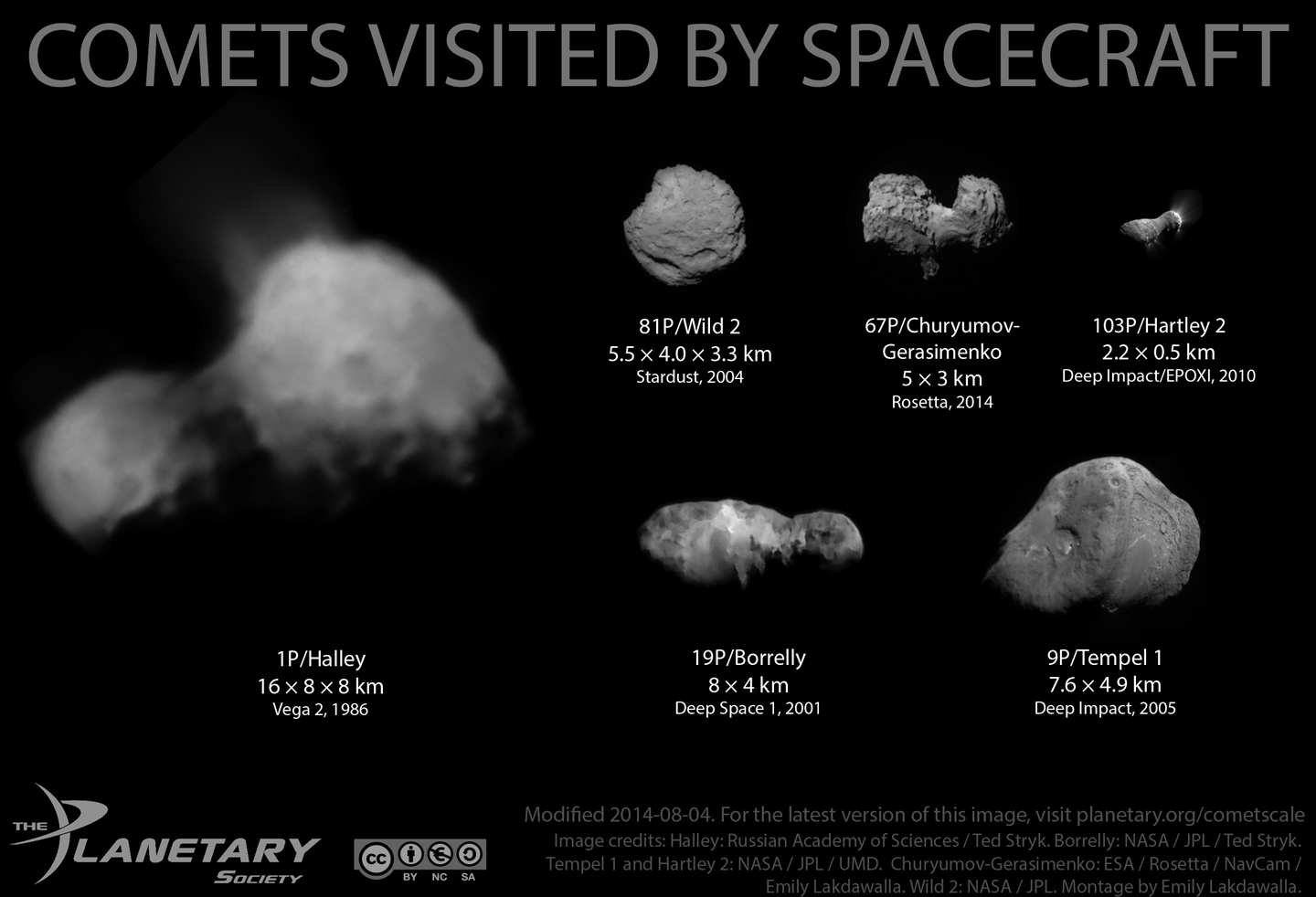
Experienced amateur astronomers with mid-sized telescopes and sensitive digital cameras should have no trouble photographing Comet Siding Spring in the nights ahead. It can be found glowing like a 12th magnitude star in the constellation Ophiuchus right next to ... you guessed it ... the planet Mars. [light curve] [ephemeris] [3D orbit]