THE SUN IS FLATLINING: For the 6th day in a row, solar activity remains very low. No sunspots are flaring, and the sun's X-ray output has flatlined. NOAA forecasters estimate a scant 1% chance of significant solar flares on Feb. 18th. Solar flare alerts: text, voice

GEOMAGNETIC STORM: Earth is entering a solar wind stream, and this is sparking G1-class geomagnetic storms around the Arctic Circle. During the late hours of Feb. 17th, an outburst over Björkliden, Sweden, turned the whole landscape green:
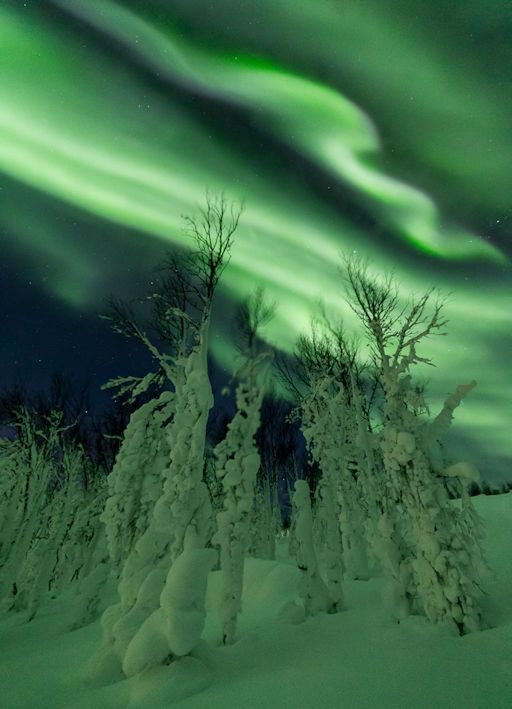
"I was in Björkliden just coming back down from a mountain hut via snowmobile when I saw that a strong aurora was building," says photographer Oliver Wright. "I jumped off among the snowy trees and took a quick picture. This is only a 1.6 second exposure!"
NOAA forecasters estimate a 40% chance of geomagnetic storms on Feb. 18th as the solar wind continues to blow. Aurora alerts: text, voice
VENUS AND MARS: When the sun goes down tonight, step outside and face west. Venus is beaming through the twilight, so bright that it is often mistaken for a landing plane. Wait a while as the sky grows darker. Fainter Mars pops out right beside Venus. Didier Van Hellemont photographed the pair at sunset on Feb. 17th over Sint-Laureins, Belgium:
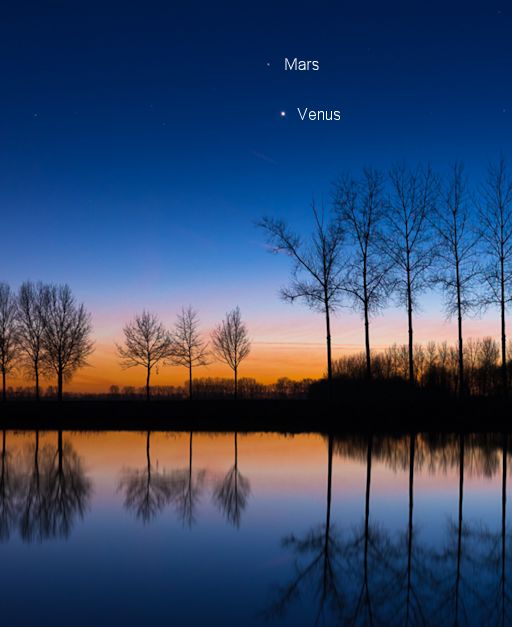
In only a few days, the two planets will be dramatically closer together. At closest approach on Feb. 21st, they will be only 0.4o apart, less than the width of a full Moon. The night before closest approach might be best of all: On Feb. 20th, the crescent Moon will pass right by the converging planets. Mark both dates on your calendar, Feb. 20th and 21st, and watch the western sky at sunset. It's a great way to end the day.
Realtime Space Weather Photo Gallery