ASTEROID NON-STORY: Many readers are asking, Why is Spaceweather.com not covering today's near-miss of Earth by asteroid 1999 FN53? Answer: There is no near-miss. Asteroid 1999 FN53 is indeed flying past the Earth-moon system on May 14th, but the distance is 10 million kilometers. A collision is absolutely impossible, and it's not even close. News reports to the contrary are over-hyped.
THE 'WOW' PROMINENCE: Around the world, amateur astronomers are monitoring a magnificent structure on the sun. "I looked through my solar scope this morning, and this prominence made me catch myself saying, WOW!" reports John Nassr of Baguio, the Philippines. This is what he saw:
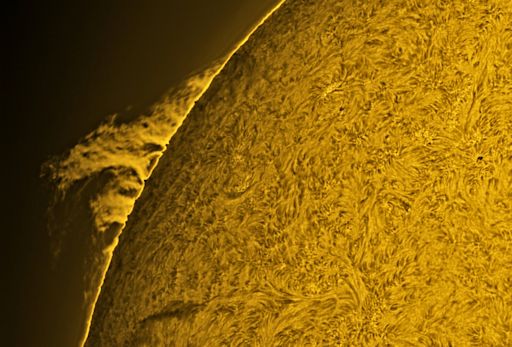
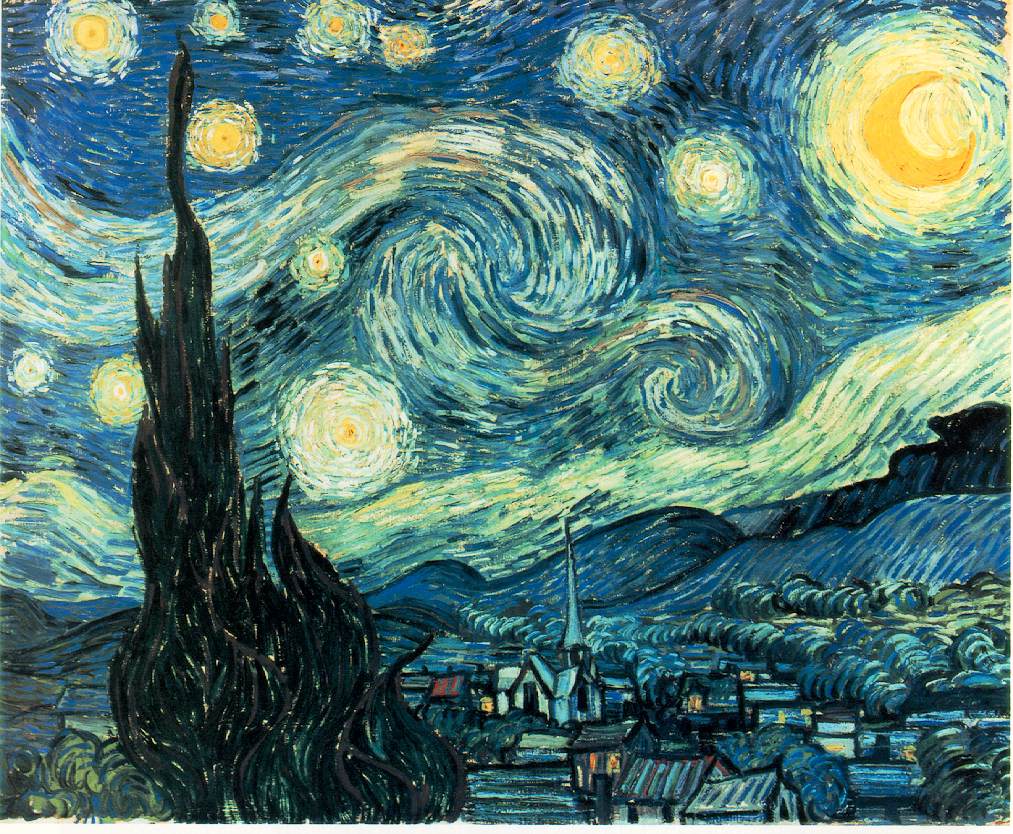
It's called a "hedgerow prominence." Hot glowing plasma inside the structure is held aloft by unstable solar magnetic fields. Space telescopes have taken high resolution images of similar prominences and seen amazing things: (1) tadpole-shaped plumes that float up from the base of the prominence; (2) narrow streams of plasma that descend from the top like waterfalls; and (3) swirls and vortices that resemble van Gogh's Starry Night. Got a solar telescope? Take a look!
Realtime Space Weather Photo Gallery
MIDNIGHT SUN VS. NORTHERN LIGHTS: A high-speed solar wind stream is sparking geomagnetic storms around the poles. As a result, sky watchers who had given up hope of seeing auroras during the bright nights of northern summer are suddenly ... seeing them.
"Apparently the aurora-chasing season isn't quite over yet," reports Colin Tyler Bogucki of Eagle River, Alaska. "We had a nice display around 1:00-1:30 this morning outside the Eagle River Nature Center." It was visible over the glow of the Midnight Sun:

"The window of viewing opportunity is narrow right now, with only a few hours of semi-dark skies," says Bogucki. "I was wading in Eagle River here, shooting straight down the valley to the northwest. As you can see, the twilight is still glowing well after sunset."
"In just a matter of days," he adds, "the night sky will be too bright to auroras again until late summer." Famous last words? NOAA forecasters estimate a 50% chance of geomagnetic storms on May 14th as the solar wind continues to blow. Aurora alerts: text, voice
SPACE STATION TRANSIT: On May 12th, the sunspot number increased--but only for a split-second--when a winged silhouette flew across the solar disk. Levin Dieterle of Reutin (Alpirsbach), Germany, captured the the transit:

It was the International Space Station. "I took the pictures using a Canon EOS 5D MKIII digital camera looking through a 6-inch refracting telescope--solar filtered, of course!" says Dieterle. Calsky provided the transit prediction.
So far this week, space station transits have been the chief form of activity on the quiet sun. No significant solar flares have been observed despite the fact that behemoth sunspot AR2339, shown above alongside the ISS, has an unstable 'beta-gamma' magnetic field. The sunspot may yet produce its own contribution: NOAA forecasters estimate a 30% chance of M-flares and a 5% chance of X-flares on May 14th. Solar flare alerts: text, voice
Realtime Space Weather Photo Gallery