4TH of JULY GEOMAGNETIC STORM: During the late hours of July 4th, a solar wind stream hit Earth's magnetic field, sparking a moderately-strong (G2-class) geomagnetic storm. Fireworks were exploding across much of North America when the storm reach its peak. In Cape Cod, Massachusetts, auroras appeared alongside the pyrotechnics:

"I was able to capture the aurora low on the northern horizon over the Atlantic Ocean while fireworks were going off at the local beach in celebration of Independence Day," says photographer Chris Cook. "This is a 30 second exposure at ISO1000."
The storm is subsiding now, but it might not be over. NOAA forecasters estimate a 55% chance of polar geomagnetic storms on July 5th as the solar wind continues to blow. Aurora alerts: text or voice.
SUMMER SPACE BREW: On June 27th, Spaceweather.com and the students of Earth to Sky Calculus launched a helium balloon to the stratosphere carrying an array of high-energy radiation sensors. The purpose of the flight was to monitor how the upper atmosphere is recovering from the intense geomagnetic storm of June 22-23. (Answer: It has recovered. The radiation environment in the stratosphere is back to normal.) These packets of brewer's yeast went along for the ride:

The yeast packets pictured above traveled 109,904 feet above Earth's surface. En route to the stratosphere, they experienced temperatures as low as -64 C and doses of ionizing radiation more than 50x Earth-normal. Conditions "up there" are akin to the planet Mars.
The test-tube-like object between the two yeast packets is a bubble chamber for measuring neutrons. The dose of neutron radiation measured during the flight was three times higher than the dose of ionizing radiation, amounting to more than 150x Earth-normal.
What kind of beer will these "space yeast" brew? You can find out for yourself. For only $49.95 we will send you a packet of brewer's yeast flown to the edge of space. The following varieties are available: Windsor English-style Ale, BRY-97 American West Coast Ale, Saflager 23, Safale US-05, Safbrew T-58, and Safbrew WB-06. To place your order, contact Dr. Tony Phillips. All proceeds support student research.
Realtime Space Weather Photo Gallery
ELECTRIC-BLUE RIPPLES IN THE SKY: Summer is the season for noctilucent clouds (NLCs), and July is the month when they are often at their best. Example: These telltale electric-blue ripples appeared over Carnikava, Latvia, on July 3rd:

"The waves were beautiful," says photographer Inta Nuke. "I could see them right through my window." Nuke captured the ripples using a digital camera set at ISO 100. It was a 10 second exposure.
Photographers elsewhere should take note of those settings, because NLCs are spreading, and a photo-op could be coming to a backyard near you.
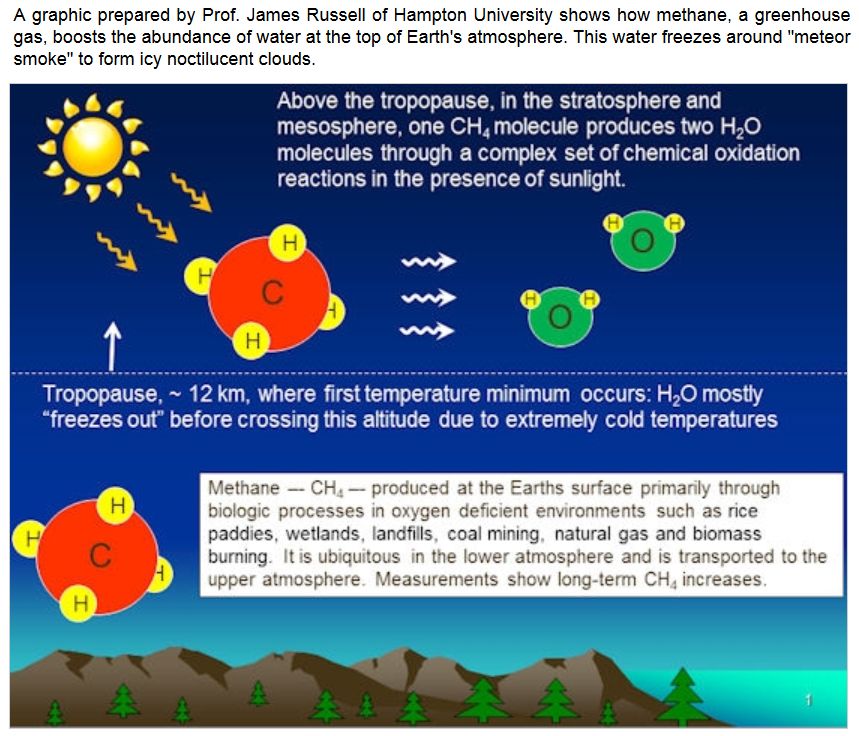
Noctilucent clouds first appeared in the 19th century after the eruption of super-volcano Krakatoa. At the time, people thought NLCs were caused by the eruption, but long after Krakatoa's ash settled, the clouds remained. In recent years, NLCs have intensified and spread with summer sightings as far south as Utah and Colorado. This could be a sign of increasing greenhouse gases in Earth's atmosphere.
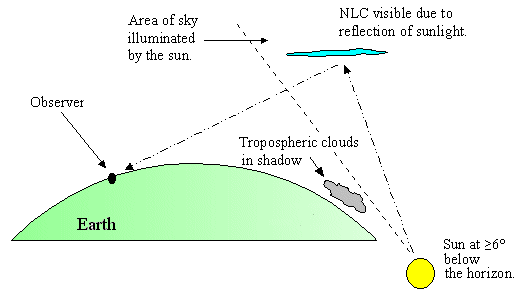
Observing tips: Look west 30 to 60 minutes after sunset when the Sun has dipped 6o to 16o below the horizon. If you see luminous blue-white tendrils spreading across the sky, you may have spotted a noctilucent cloud.