ARCTIC AURORAS LIKELY ON DEC. 1ST : NOAA forecasters estimate a 45% chance of polar geomagnetic storms on Dec. 1st when a co-rotating interaction region (CIR) is expected to hit Earth's magnetic field. CIRs are transition zones between slow- and fast-moving solar wind streams. Solar wind plasma piles up in these regions, producing density gradients and shock waves that do a good job of sparking auroras. A fast solar wind blowing in the wake of the CIR could sustain the storm through Dec. 2nd. Aurora alerts: text or voice
TWO CMEs, ONE MIGHT BE EARTH-DIRECTED: A pair of CMEs--one bright and one faint--billowed away from the sun on Nov. 29th. Click to view a movie from the Solar and Heliospheric Observatory:

The bright CME (pictured above) will miss Earth; it came from an explosion on the far side of the sun and is not heading in our direction. The faint one, which appears later in the movie, could be geoeffective. It appears to be associated with a minor eruption of Earth-facing sunspot AR2459. Stay tuned for further analysis about the possible origin and impact of the faint CME. Solar flare alerts: text or voice
Realtime Space Weather Photo Gallery
MOONLIT AURORAS: For the past few nights, auroras have been difficult to see through the glare of the full Frosty Moon. On Nov. 27th, a splash of green penetrated the moonlight over Iceland:
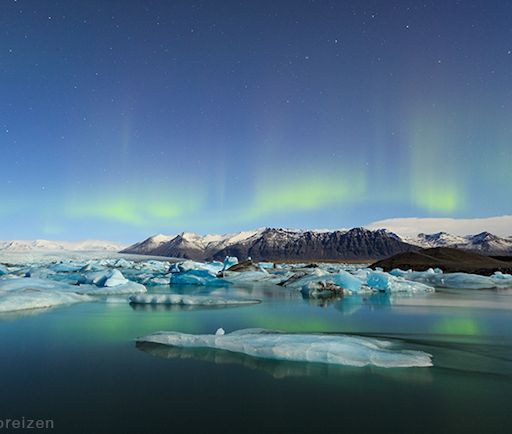
"The moon lit the icebergs on lake Jökulsárlón in Iceland and made it almost look like daytime," reports photographer Madelon Dielen. "The auroras were there for a few minutes--just enough to give some extra color to this beautiful scene. "
The green could intensify in the nights ahead. NOAA forecasters estimate a 45% chance of G1-class geomagnetic storms by Dec. 1st when a high-speed stream of solar wind is expected to hit Earth's magnetic field. Aurora alerts: text or voice

SOLAR PROMINENCE, POISED TO ERUPT? The face of the sun may be quiet, but the edge of the sun is not. A gigantic arch of plasma is dancing along the sun's southwestern limb. Shahrin Ahmad of Sri Damansara, Malaysia, photographed the structure on Nov. 28th:
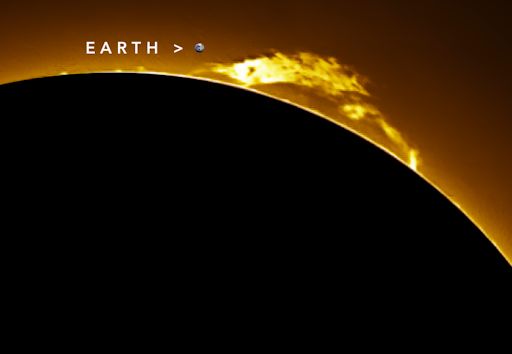
Ahmad inserted a picture of Earth for scale. The plasma-filed prominence stretches more than 150,000 km from end to end--dimensions that make it an easy target for backyard solar telescopes. Monitoring is encouraged. Magnetic fields holding the plasma aloft are twisted, tangled, and prone to explosive magnetic reconnection. An eruption could occur at any moment. Solar flare alerts: text or voice
Realtime Noctilucent Cloud Photo Gallery