CHANCE OF STORMS: NOAA forecasters estimate a 40% chance of geomagnetic storms on Dec. 9th, increasing to 55% on Dec. 10th in response to an incoming solar wind stream. High-latitude sky watchers should remain alert for colorful auroras after nightfall. Aurora alerts: text or voice
THE GEMINID METEOR SHOWER IS UNDERWAY: Canada's Meteor Orbit Radar (CMOR) is picking up echoes from the constellation Gemini. It's a sign that the annual Geminid meteor shower is underway. The bright pink "hot spot" in this CMOR sky map shows where Geminid meteoroids are hitting the atmosphere:
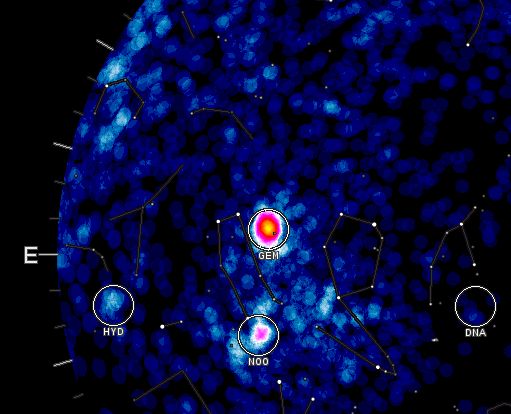
Geminid meteoroids are gravelly debris from "rock comet" 3200 Phaethon. They hit Earth's atmosphere traveling ~35 km/s (78,000 mph) and typically disintegrate about 80 km (50 miles) above Earth's surface. While many Geminids are faint, bright fireballs are not unusual. Indeed, NASA's all-sky network of meteor cameras recorded 10 Geminid fireballs over the USA just last night.
Hakan Bayindir captured this Geminid over Uludag, Bursa, Turkey, on Dec. 8th:
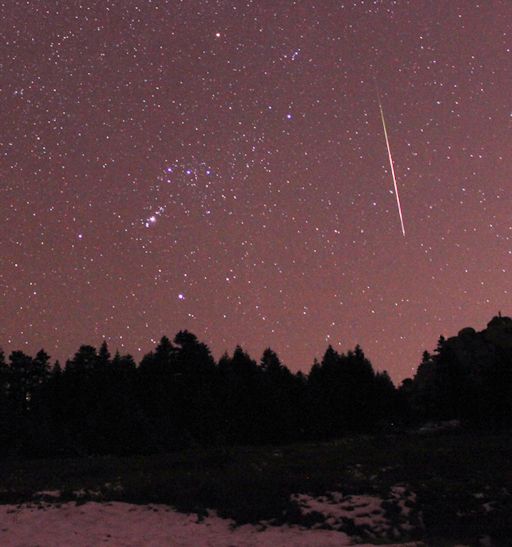
"This is a 15 second exposure I made using my Canon EOS 600D digital camera set at ISO 1600."
Photographers should take note of those settings because many more Geminids are in the offing. Meteor sightings will increase in the nights ahead as Earth plunges deeper into the debris zone of 3200 Phaethon. Forecasters expect peak rates to occur on Dec. 13-14, when dark-sky observers in both hemispheres could see as many as 120 meteors per hour during the hours after local midnight. Observing conditions will be nearly ideal because the shower peaks just a few days after the New Moon.
Stay tuned for updates and, meanwhile, listen for Geminid echoes in the audio feed from our live meteor radar.
SUN SWALLOWS A COMET: On Tuesday, Dec. 8th, the sun swallowed a comet. The Solar and Heliospheric Observatory (SOHO) spotted the icy vistor from the outer solar system making a headlong plunge into our star. One comet went in; none came out. Click to play the movie:

Heated by the sun at point blank range, the comet's fragile ices vaporized, leaving at most a "rubble pile" of rock and gravel scattered along its sungrazing orbit. Any remains are invisible from Earth.
The comet, R.I.P., was a member of the Kreutz family. Kreutz sungrazers are fragments from the breakup of a single giant comet many centuries ago. They get their name from 19th century German astronomer Heinrich Kreutz, who studied them in detail. Several Kreutz fragments pass by the sun and disintegrate every day. Most, measuring less than a few meters across, are too small to see, but occasionally a bigger fragment like this one (~10 m to 50 m) attracts attention.
Because of their common parentage, sungrazers often come in clusters. For this reason, it wouldn't be surprising to find yet another one in the offing. Monitor Karl Battam's Sungrazing Comet twitter feed for more sightings.
Realtime Space Weather Photo Gallery