GEOMAGNETIC STORM: A G2-class geomagnetic storm is in progress on Dec. 20th as Earth moves through the wake of a CME that struck our planet's magnetic field yesterday. Ayumi Y. Bakken photographed the display from Fairbanks, Alaska:

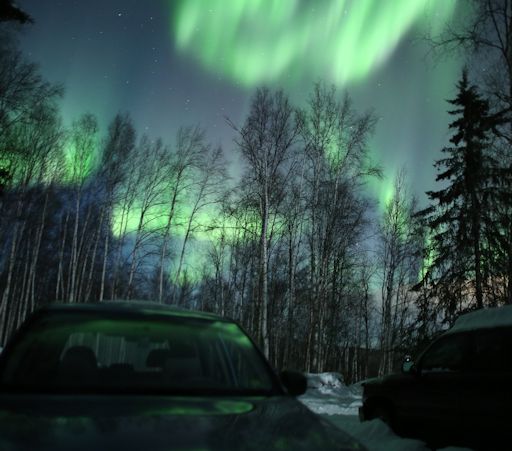
"What a wonderful night!" says Bakken. "The aurora was dancing all night starting around 7pm. Even my car reflected the green light."
NOAA forecasters estimate a 50% chance of continued storming tonight, waning to 15% on Dec. 22nd as CME effects subside. High-latitude sky watchers should be alert for auroras. Aurora alerts: text or voice
UNIQUE CHRISTMAS GIFT: Is there a young scientist in your life? For Christmas, you can give them the gift of exploration--specifically, a trip to the edge of space:

To raise funds for its student research program, Earth to Sky Calculus is selling a limited number of Holiday Season balloon flights carrying ... whatever you desire. Small experiments. Holiday or anniversary photos. Business advertisements. The sky is the limit. Young people receiving this gift can design their own experiment and attend the launch via Skype. The gift includes a brainstorming session via Skype with Dr. Tony Phillips and the students of Earth to Sky. Cost: $500. Buy now and receive the certificate in time for Christmas. Contact Dr. Tony Phillips to book your flight.
COLORFUL LIGHTS OVER CHILE: Geomagnetic storms are brewing, but not every colorful light in the night sky is an aurora. For instance, Yuri Beletsky sends this picture taken Dec. 17th from the Atacama desert in Chile:
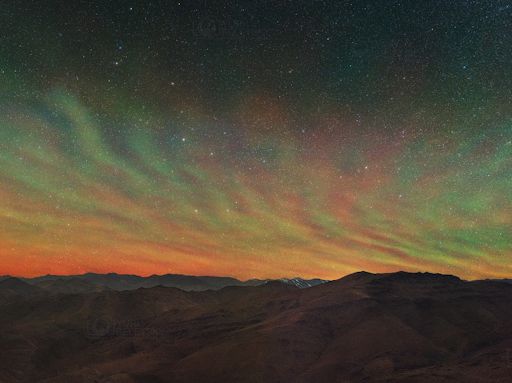
"These are not auroras. We just witnessed an amazing display of airglow," says Beletsky. "It was so intense that you could not see many stars close to the horizon - the sky was literally shining."
Airglow is aurora-like phenomenon in the upper atmosphere caused by a variety of chemical reactions. It begins during the day when solar ultraviolet radiation ionizes atoms and molecules. At night, those same atoms and molecules glow as they re-capture lost electrons. The green in Beletsky's photo comes from oxygen atoms in a layer 90-100 km high; the red is probably associated with OH ions at an altitude of about 85 km. The wavy structure of the glow is due to high-altitude gravity waves, which alter the temperature and density structure of the upper atmosphere.
"Airglow is much less intense than aurora," continues Beletsky. "The display I saw looked, to the naked eye, like a series of black-and-white waving bands. The full color of the display was easily captured, however, by my digital camera."
Realtime Spaceweather Photo Gallery