WEAK IMPACT, GREEN AURORAS: A slow-moving CME hit Earth's magnetic field on Jan. 18th at ~2100 UT. The gentle impact did not cause a full-fledged geomagnetic storm, but the aurora borealis appeared anyway. Truls Tiller photographed the lights from Ersfjorden, just outside Tromsø, Norway:
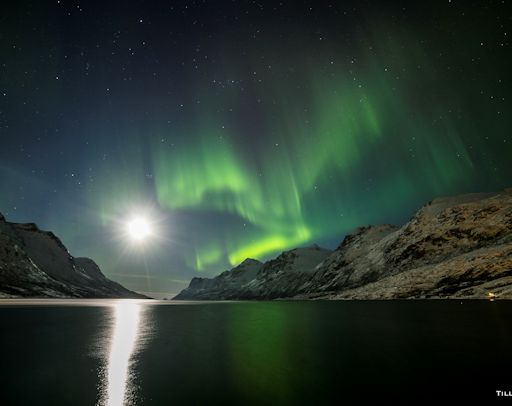
"The bright moon lit up the mountains around the fjord, framing the auroras beautifully," says Tiller.
More auroras could be in the offing. NOAA forecasters estimate a 45% chance of geomagnetic storms on Jan. 19th as Earth passes through the wake of the CME. Aurora alerts: text or voice.
SOLAR ECLIPSE BALLOON NETWORK: Spaceweather.com and the students of Earth to Sky Calculus have developed a balloon payload that can photograph solar eclipses from the stratosphere. This sets the stage for a one-of-a-kind photography experiment: On August 21, 2017, the Moon will pass in front of the sun over the USA, producing a total eclipse visible from coast to coast. We will launch balloons to record the event from a dozen points along the path of totality:
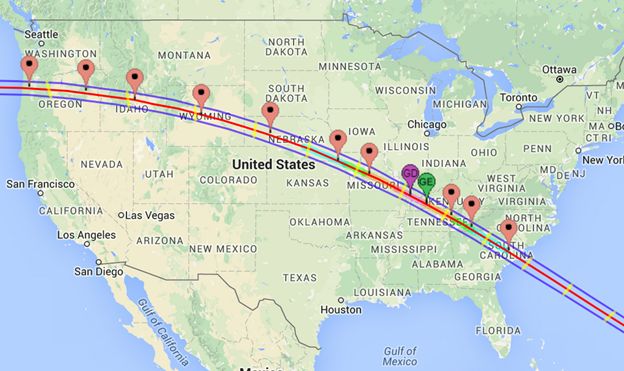
Floating more than 100,000 feet above the clouds, the balloons will have an unobstructed view of the eclipse. From each of a dozen payloads, one camera will point up to record the sun's ghostly corona while another camera points down to record the passage of the Moon's dark shadow across the landscape and cloudtops below. When the eclipse is finished, we will combine the footage to create a unique video portrait of an eclipse sweeping across the American continent. The finished product will be a one-of-a-kind synthesis of art, technology and science.
The payload has already photographed a partial solar eclipse in Oct. 2014: images. To test the payload under conditions of totality, a team of students and parents from Earth to Sky Calculus will travel to Indonesia six weeks from now to observe the March 9, 2016, total eclipse: animated map. Stay tuned for news from their expedition!
Readers, would you like to join the Solar Eclipse Balloon Network? Starting now we are recruiting teams of citizen scientists who we will train in the art of high-altitude ballooning to become members of the solar eclipse launch crews. Schools, scout troops, home school families and others are welcome to apply. This is a great way for novices to learn ballooning and to participate in authentic science. We will also be seeking sponsors for the 12 payloads. Contact Dr. Tony Phillips to register your interest.
Realtime Spaceweather Photo Gallery
SKI HALOS: For people in the northern hemisphere, now is the time to go skiing. Little known fact: Ski resorts are great places to see ice halos. Christian Schartner photographed this specimen on Jan. 18th in the Hochkönig mountain ski area of Austria:
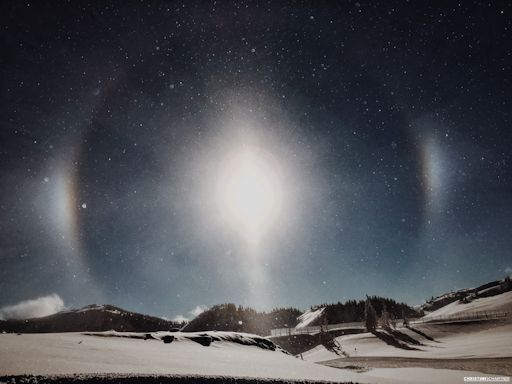
"After days of snowfall and cold temperatures, the sun finally came out again here at Hochkönig," says Schartner. "The temperature was -15 C, and the air was filled with glittering ice crystals. When sunlight hit those crystals, the ski-halos appeared. It was magical."
Snow-making machines at ski resorts can intensify these displays. Diamond dust ice crystals grow slowly downwind of snow blowers and fill the air. These man-made crystals tend to be more optically perfect than crystals in clouds and so they produce bright, sharp and often very rare halos.
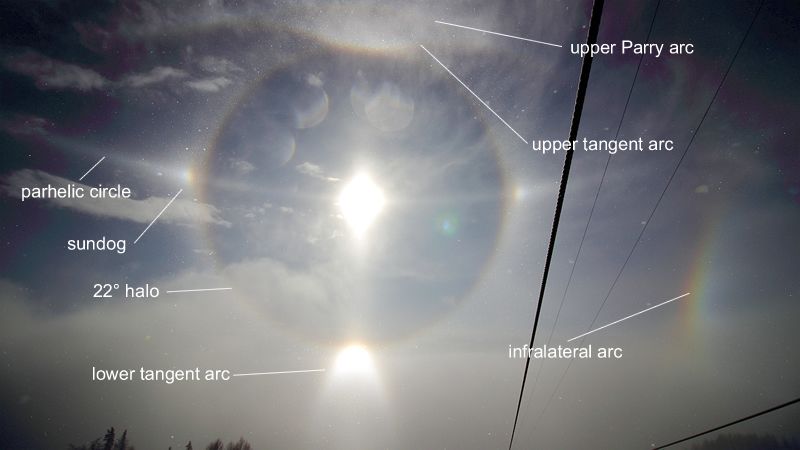
Going skiing? Be alert for halos. More examples may be found in the realtime photo gallery.