SUBSIDING GEOMAGNETIC STORM: A solar wind stream hit Earth's magnetic field on Feb. 16th, sparking more than 24 hours of G1-class geomagnetic storms. Around the Arctic Circle, the light show was fantastic. Asko Aikkila sends this picture from Kuusamo, Finland:

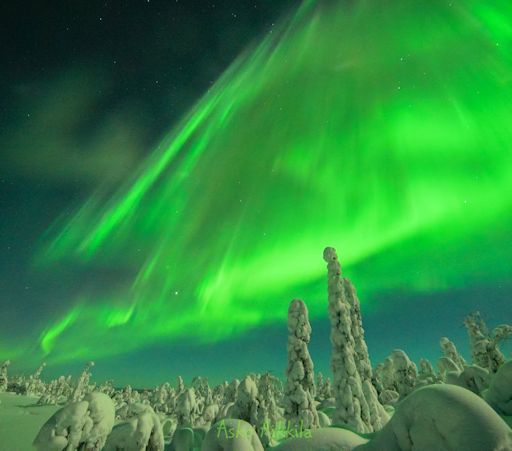
"Last night, I made a skiing trip into the forest to observe the silent, moonlit scenery," says Aikkila. "The auroras blew up about 22 p.m., filling the whole sky."
After peaking during the late hours of Feb. 16th, the storm is subsiding. However, NOAA forecasters say there is a 55% chance of renewed storming on Feb. 17th as Earth continues to move through the solar wind stream. Arctic sky watchers should remain alert for auroras. Aurora alerts: text or voice
RINGS AROUND THE MOON: The Moon is waxing full, and there is a chill in northern places. That means now is a good time to be alert for icy Moon halos. Carl Richards of Northumberland UK photographed this specimen on Feb. 15th:
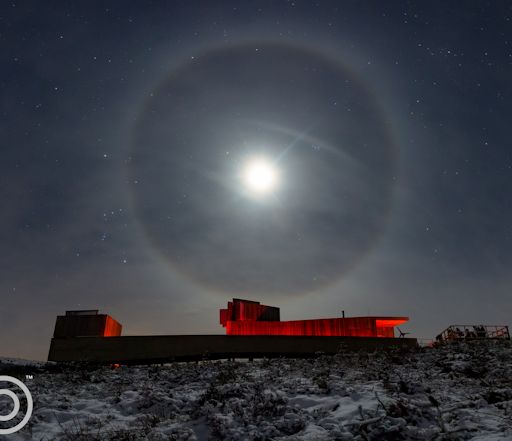
"This beautiful halo appeared above the Kielder observatory during an event we were attending," says Richards. "I created a panorama by stitching together 4 portrait images."
Moon halos are created by ice crystals in high clouds, which catch rays of moonlight and bend them into a 22o ring. Waxing full Moons are great at making these halos--and you don't have to be in a cold place to see them. Most of the ice crystals that create halos float 5 km to 10 km above the ground. Air at those altitudes is always freezing, even in the tropics.
So, no matter where you live, be alert for halos in the nights ahead. The Moon is full on Feb. 22nd.
Realtime Spaceweather Photo Gallery