ALMOST NO CHANCE OF FLARES: Solar activity is very low. There are four sunspots on the solar disk, but not one has the type of unstable magnetic field that poses a threat for explosions. NOAA forecasters say the chance of a strong flare today is no more than 1%. Solar flare alerts: text or voice
PENGUINS SERENADE AURORAS: As the summer sun brings a waxing glow to the night skies of the Arctic Circle, aurora season is shifting from north to south. For the next four months, the velvety-dark skies of Antarctica are the perfect backdrop for geomagnetic storms. On April 16th, penguins on the Brunt Ice Shelf serenaded this display of Southern Lights:

"I camped out in the field, enduring temperatures around -32°C to -34°C to witnessthis fantastic glow of green and purple," says photographer Greig Lawson. "This is at the site of an Emperor penguin colony. The calls of the birds in the background provided the soundtrack to the evening's photography!"
Lawson is a medical doctor working at theBritish Antarctic Survey's Halley Research Station. Located atop the Brunt Ice Shelf, a 130 meter thick slab of frozen water that floats atop the Weddell Sea, Halley is known for its studies of ozone, cosmic rays, and climate change. Lawson will be busy in the months ahead tending to the station's wintertime staff of 16. Hopefully, he'll have time send more pictures as geomagnetic storms paint their colors on Antarctic skies. Aurora alerts: text or voice
ASTEROID FLYBY: Newly-discovered asteroid 2016 FY3 is flying past Earth today about 1.5 million miles away. There's no danger of a collision, but the 310 meter-wide space rock is close enough to see through amateur telescopes. Dennis Simmons photographed it this morning from Brisbane, Qld, Australia:

"Wow, this is quite a large rock for such a close pass, so I set up hoping that the weather conditions would let me record this event," says Simmons. "A hole in the patchy cloud cover allowed me to capture the asteroid glowing like a 14th magnitude star."
2016 FY3 comes from the asteroid belt between Mars and Jupiter, and that is where it will return after today's flyby. Amateur astronomers who wish to track the asteroid as it recedes from Earth can point their GOTO telescopes using this ephemeris.
Realtime Space Weather Photo Gallery
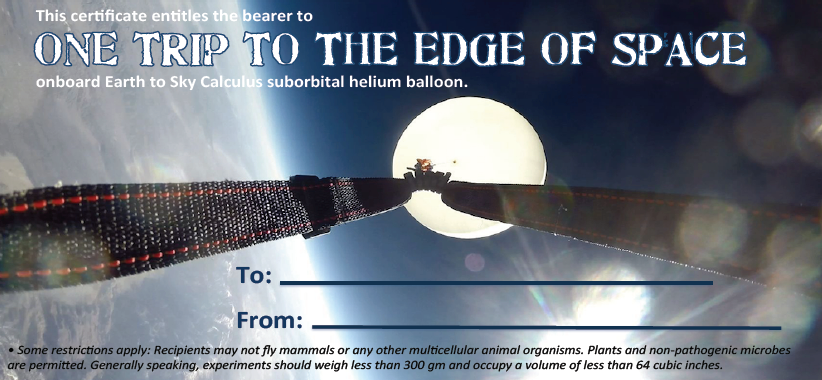
SPACE WEATHER PROBE TAKES SELFIE: Last December, Joyce and Tad Lhamon of Seattle, Washington, bought their 12-year-old grandson Barrett a far-out Christmas gift--that is, a trip to the edge of space. In exchange for this gift certificate, Barrett could fly any experiment he wanted to the stratosphere onboard an Earth to Sky Calculus helium balloon. He thought about it for months and, after discarding many ideas, Barrett decided to fly a convex mirror. The payload's cameras could look into the mirror and take a new kind of "space selfie." Would it work? On April 17th, we flew Barrett's experiment, and the results were better than anyone dreamed:
 .
"Spaceweather.com and the students of Earth to Sky Calculus have flown more than 150 missions to the edge of space monitoring cosmic rays and stress-testing microbes. We've never seen our payload quite like this before.
A particularly interesting sequence of images shows the balloon exploding above the payload 117,100 feet above Earth. The following video frames are separated by only 1/30th of a second: #1, #2, #3, #4. Note how the payload remains motionless during the explosion. It takes more than a second for the shock wave from the explosion to propagate down the long cord connecting the payload to the balloon.
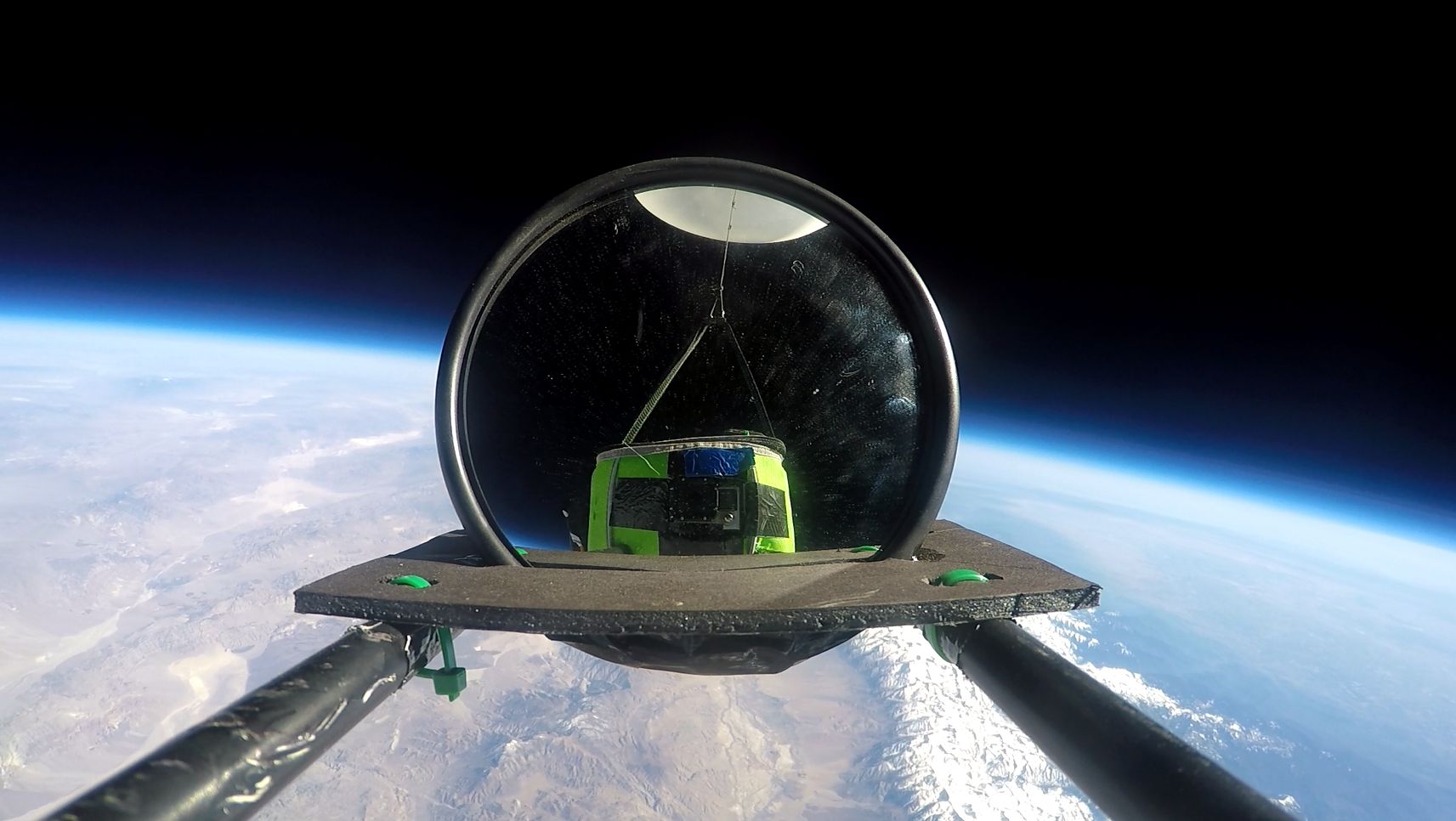
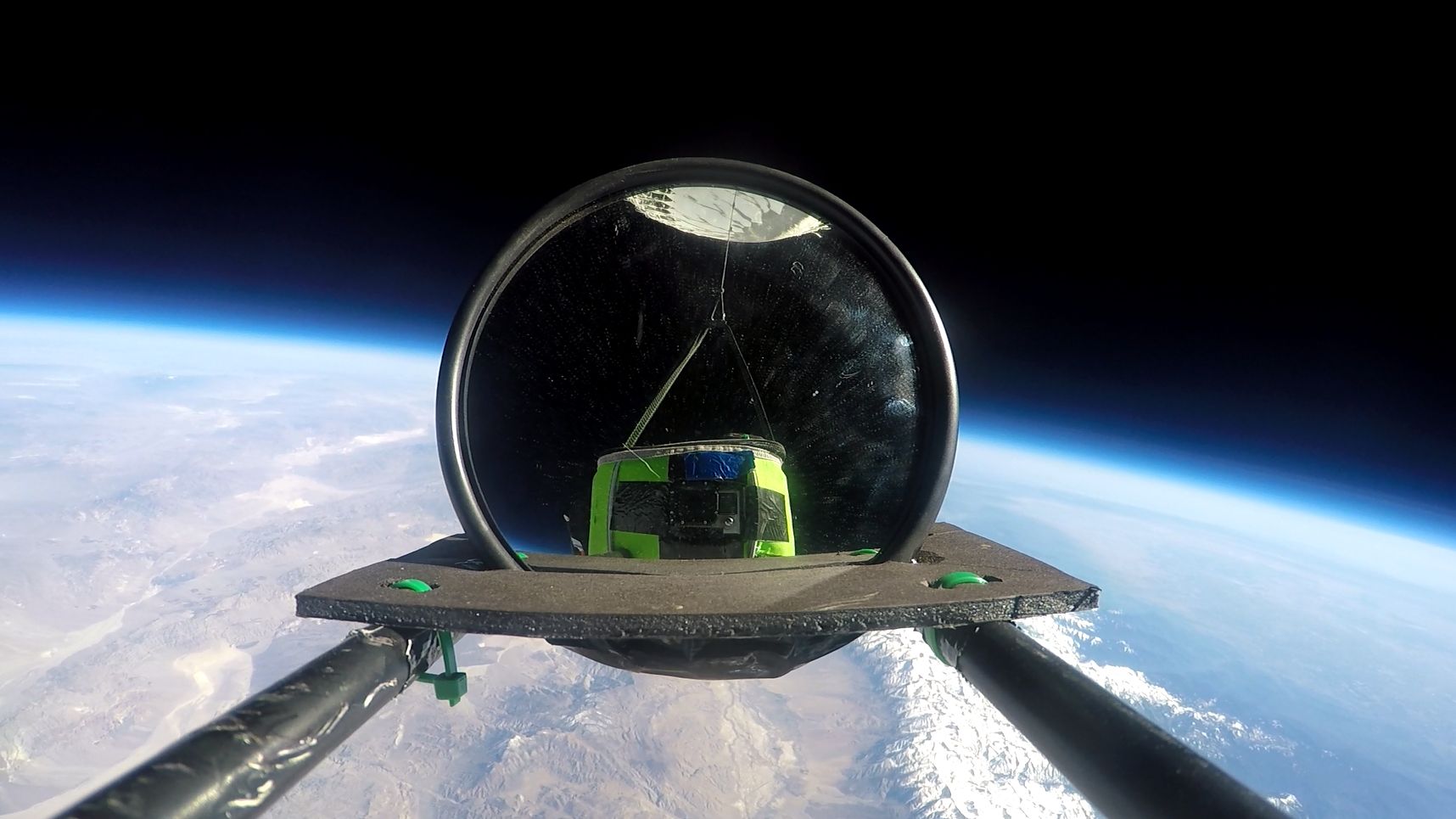

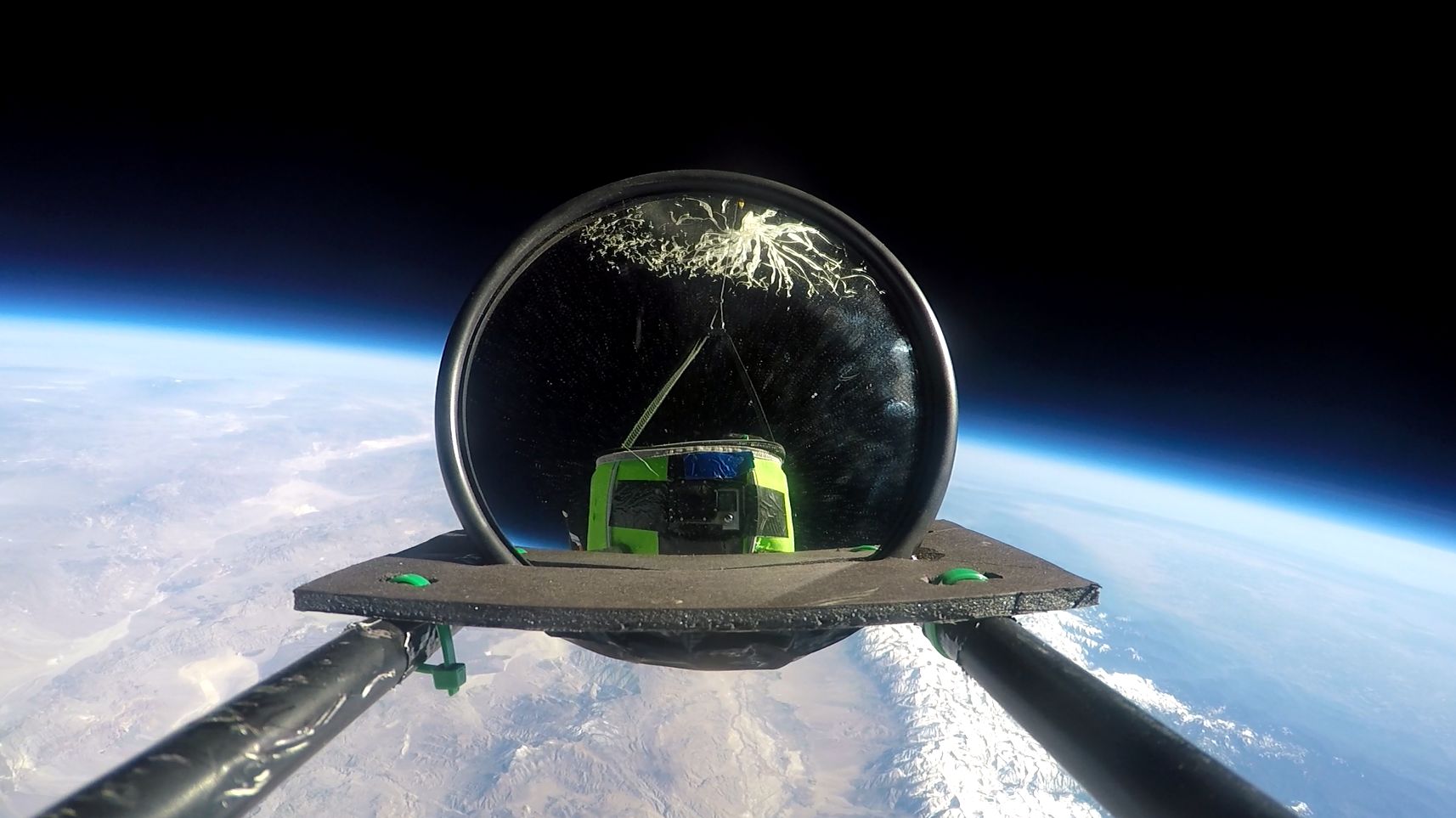
Congratulations, Barrett, on a very successful experiment!
Realtime Space Weather Photo Gallery