WEEKEND STORMS ARE LIKELY: NOAA forecasters estimate a 75% chance of geomagnetic storms on June 4th and 5th when a solar wind stream hits Earth's magnetic field. Deja vu? This stream has been here before. On May 8th (Mother's Day), it sparked the strongest geomagnetic storm of 2016. During that G3-class event, auroras were photographed in the USA as far south as Kansas and Arkansas. This time, analysts expect the storm to peak at G2--not as strong as the Mother's Day Storm, but still worth watching. High-latitude sky watchers should be alert for auroras,especially in the southern hemisphere where darkening autumn skies favor visibility. Aurora alerts: text, voice.


ASTEROID EXPLODES OVER ARIZONA: Early this morning, June 2nd just before 4 a.m. MST, a small asteroid hit Earth's atmosphere and exploded over Arizona. "There was a bright flash and the ground shook from the explosion," reports Chris Schur of Payson AZ, who says the flash of light was about 10x brighter than a full Moon. The explosion actually blinded a NASA camera located at the Fred Lawrence Whipple Observatory on Mount Hopkins, Arizona:
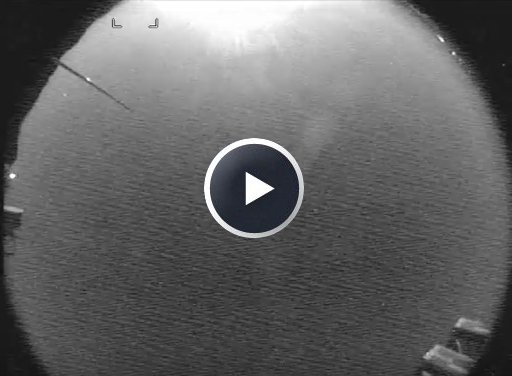
Watch the complete movie to get a sense of how bright the fireball was. The fact that the explosion saturated most cameras that saw it initially complicated analysts' efforts to pinpoint its nature and origin.
Schur missed photographing the explosion itself, but "we were able to get images soon after of the smoke train from this object." Here it is, twisting in the winds of the upper atmosphere before sunrise:
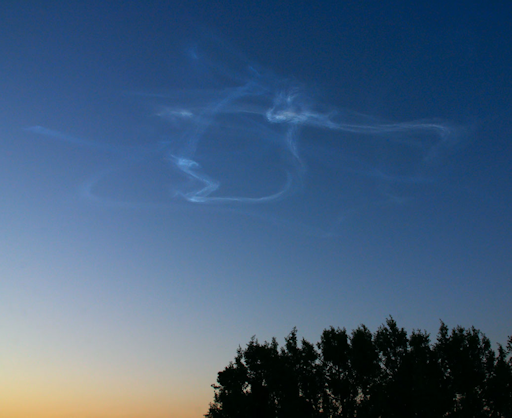
Bill Cooke of NASA's Meteoroid Environment Office says this is the brightest fireball detected in the 8-year history of the NASA's All Sky Fireball Network, an array of cameras that monitors fireball activity across the USA. According to NASA analysts, the asteroid was ~10 feet (3 meters) in diameter with a mass in the tens of tons and a kinetic energy of approximately 10 kilotons.
Eyewitness reports placed the object at an altitude of 57 miles above the Tonto National Forest east of the town of Payson, moving almost due south. It was last seen at an altitude of 22 miles above that same forest.
"There are no reports of any damage or injuries—just a lot of light and few sonic booms," says Cooke. "If Doppler radar is any indication, there are almost certainly meteorites scattered on the ground north of Tucson."
Realtime Space Weather Photo Gallery
WHERE THE SOLAR WIND COMES FROM.... The incoming solar wind stream, discussed above in the weekend forecast, is flowing from a coronal hole on the sun:
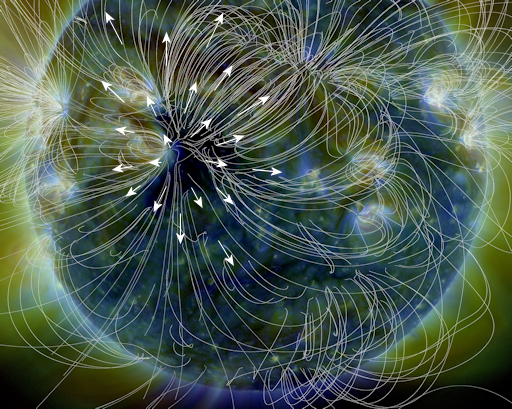
Image credit: NASA's Solar Dynamics Observatory
Coronal holes are places in the sun's atmosphere where the sun's magnetic field opens up and allows solar wind to escape. Coronal holes are akin to a lighthouse. They strobe Earth with streams of solar wind every 27 days, the rotation period of the sun. The last time this particular hole strobed Earth was in early May when it set the stage for the Mother's Day Storm. Will June be as stormy? Monitor the gallery for aurora sightings:
POLLEN CORONAS: It begins with a sneeze. Pollen floating through the air tickles your nose, and your body responds by expelling the allergen. Gesundheit! When the paroxysm subsides, look up at the sky. The same pollen that makes you sneeze can also make beautiful coronas around the sun, like this one photographed on June 1st by Vesa Vauhkonen of Rautalampi, Finland:
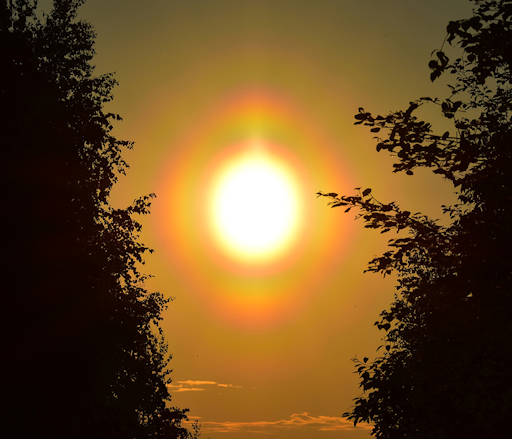
"Pine is strongly flowering now in middle Finland, and the coronas have been quite impressive over the past few days," says Vauhkonen. "Pollen is everywhere--not only in noses and eyes, but also around the setting sun."
Atmospheric optics expert Les Cowley explains the phenonenon: "Coronas are produced when light waves scatter from the outsides of small particles. Tiny droplets of water in clouds make most coronas, but opaque equal-sized pollen grains do even better. They make small but very colorful multi-ringed coronas."
"Unlike water droplets, pollens are non-spherical--and this adds to their magic," he continues. "Many have air sacs to help carry them in the wind. These align the grains to give beautiful elliptical coronas with bright spots." This is why Vauhkonen's pollen corona looks the way it does.
As northern spring turns into summer, pollen coronas become increasingly common. Look for them the next time your nose feels a tickle.
Realtime Space Weather Photo Gallery
SPACE BEARS MAKE GOOD GRADUATION GIFTS: Around the USA, high school seniors are preparing to receive their diplomas. Nothing says "you're on your way up!" better than a graduation gift from the Edge of Space. On May 25th, the students of Earth to Sky Calculus flew a family of "graduation grizzlies" 27 km (90,000 feet) above Earth's surface:
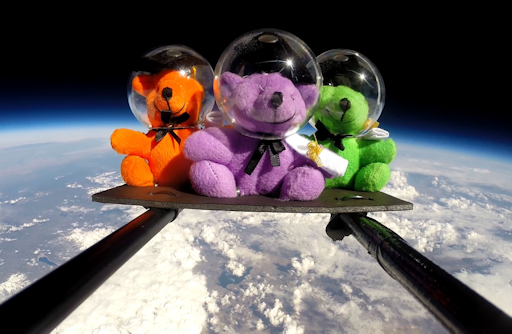
Outfitted with space helmets and a diploma, the intrepid Ursidae survived cosmic rays, ultra-low temperatures, and the near-vacuum of the stratosphere. For $49.95 you can have one of these bears along with a unique Graduation card showing the bears floating at the top of Earth's atmosphere. Buy one now.
Sales of the bears support student space weather research. In fact, the bears pictured above were hitchhiking on a payload equipped with radiation sensors. We send the sensors to the stratosphere every week to monitor increasing levels of cosmic rays. Visit the Earth to Sky store to support this crowd-funded research.
Realtime Noctilucent Cloud Photo Gallery