WEEKEND STORMS ARE LIKELY: NOAA forecasters estimate a 70% chance of geomagnetic storms on June 4th and 5th when a solar wind stream hits Earth's magnetic field. Deja vu? This stream has been here before. On May 8th (Mother's Day), it sparked the strongest geomagnetic storm of 2016. During that G3-class event, auroras were photographed in the USA as far south as Kansas and Arkansas. This time, analysts expect the storm to peak at G2--not as strong as the Mother's Day Storm, but still worth watching. High-latitude sky watchers should be alert for auroras,especially in the southern hemisphere where darkening autumn skies favor visibility. Aurora alerts: text, voice.


ASTEROID EXPLODES OVER ARIZONA: On June 2nd just before 4 a.m. MST, a small asteroid hit Earth's atmosphere and exploded over Arizona. The airburst shook the ground below and produced a flash of light 10x brighter than a full Moon. NASA says it was a 3-meter wide space rock from beyond the orbit of Mars. Shortly after the explosion, Mike Lerch walked out the front door of his house in Phoenix on the way to work, and this is what he saw:

"At first I thought it was a rocket launch," says Lerch. "Now I realize it was debris from the asteroid." Indeed, the smokey remains were widely visible as they twisted in the winds high above Arizona.
The flash itself was so bright, it briefly turned night into day. Marsha Adams sends these before, during, and after shots from Sedona, Arizona:

"The camera was facing NE so it did not record the asteroid itself," says Adams. "However, the flash cast very distinct shadows, and landscape colors were vivid."
Bill Cooke of NASA's Meteoroid Environment Office says this is the brightest fireball detected in the 8-year history of the NASA's All Sky Fireball Network, an array of cameras that monitors fireball activity across the USA. The fact that the explosion blinded most cameras that saw it initially complicated analysts' efforts to pinpoint its nature and origin. Ultimately, however, they were able to draw firm conclusions: The mass of the asteroid was some tens of tons and it exploded with a kinetic energy of approximately 10 kilotons.
"There are no reports of any damage or injuries—just a lot of light and few sonic booms," says Cooke. "If Doppler radar is any indication, there are almost certainly meteorites scattered on the ground north of Tucson."
Realtime Space Weather Photo Gallery
THE EDGE OF SPACE IS TURNING ELECTRIC BLUE: NASA's AIM spacecraft spotted the first noctilucent clouds (NLCs) of the 2016 season on May 24th. Those first clouds were wispy and faint. What a difference a week makes. Last night, June 2nd, a bright display of NLCs wowed observers across the British Isles. Matt Robinson sends this picture from Kielder Observatory in Northumberland, UK:

"The display started at 11pm and we could tell it was going to be a strong one," says Robinson. "It carried on and got brighter for a further 2 hours. If this is a sign of things to come, this NLC season is going to be one to remember."
NLCs are Earth's highest clouds. Seeded by meteoroids, they float at the edge of space more than 80 km above the planet's surface. Typically, NLCs are brightest in late June and July. A bright display in early June is a good omen indeed.
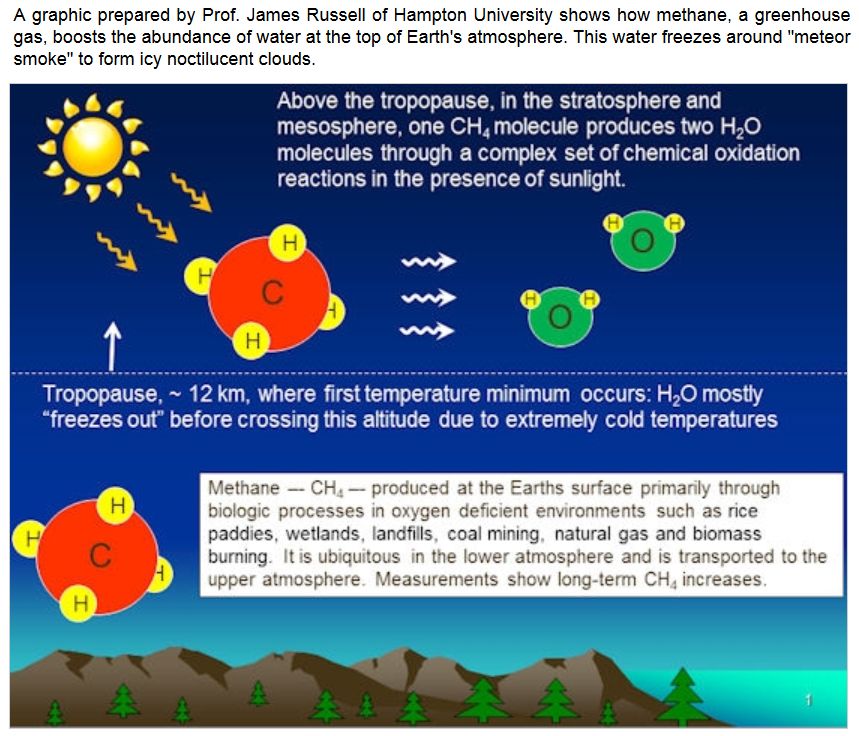
When noctilucent clouds first appeared in the 19th century, they were confined to Arctic latitudes. In recent years, NLCs have intensified and spread with sightings as far south as Utah and Colorado. This could be a sign of increasing greenhouse gases in Earth's atmosphere.
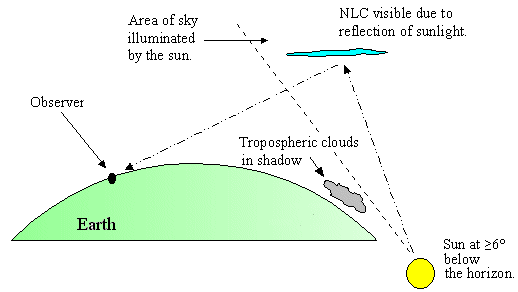
Observing tips: Look west 30 to 60 minutes after sunset when the Sun has dipped 6o to 16o below the horizon. If you see luminous blue-white tendrils spreading across the sky, you may have spotted a noctilucent cloud.
Realtime Noctilucent Cloud Photo Gallery
SPACE BEARS MAKE GOOD GRADUATION GIFTS: Around the USA, high school seniors are preparing to receive their diplomas. Nothing says "you're on your way up!" better than a graduation gift from the Edge of Space. On May 25th, the students of Earth to Sky Calculus flew a family of "graduation grizzlies" 27 km (90,000 feet) above Earth's surface:

Outfitted with space helmets and a diploma, the intrepid Ursidae survived cosmic rays, ultra-low temperatures, and the near-vacuum of the stratosphere. For $49.95 you can have one of these bears along with a unique Graduation card showing the bears floating at the top of Earth's atmosphere. Buy one now.
Sales of the bears support student space weather research. In fact, the bears pictured above were hitchhiking on a payload equipped with radiation sensors. We send the sensors to the stratosphere every week to monitor increasing levels of cosmic rays. Visit the Earth to Sky store to support this crowd-funded research.