NO FIREWORKS ON THE 4TH OF JULY: Sunspots vanished almost two weeks ago and, as a result, solar activity is very low. NOAA forecasters say there is no more than a 1% chance of strong flares on the 4th of July. Solar flare alerts: text or voice
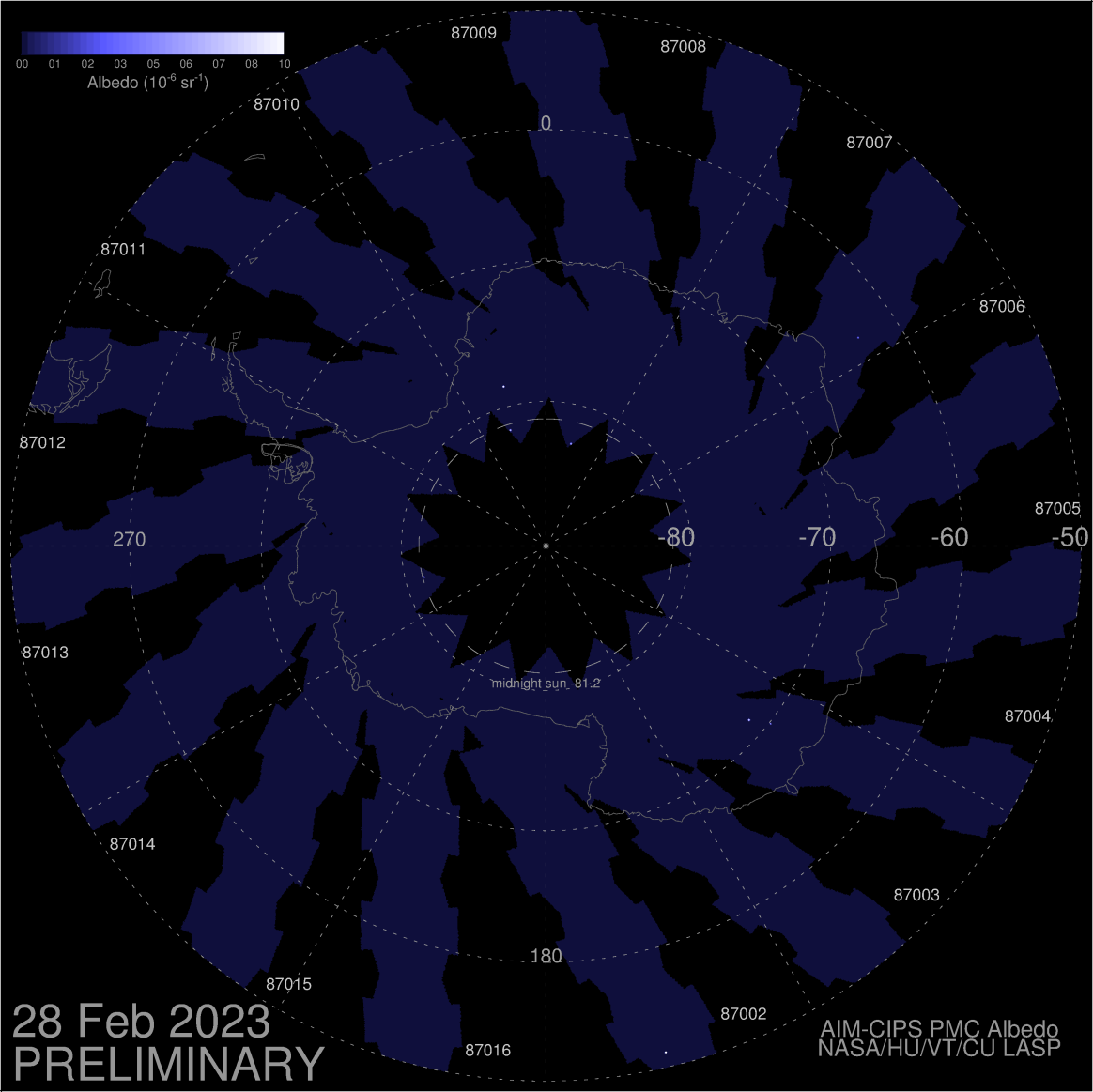
AURORAS AND NOCTILUCENT CLOUDS: Who needs sunspots? Despite a sudden lull in solar activity, July began with a beautiful display of color over Calgary, Alberta. Harlan Thomas photographed the sudden apparition of green auroras and silver noctilucent clouds:

"On the evening of June 30th, I faithfully checked the Spaceweather.com AIM daisy and saw that noctilucent clouds were forming over North America," says Thomas. "So I drove my Jeep to a dark location outside Calgary--and promptly fell asleep."
"About 30 minutes after midnight on July 1st something woke me up," he adds. "The noctilucent clouds had appeared, and they were not alone. I was surprised to see some green auroras as well."
Indeed, the auroras were a surprise. There were no sunspots, no solar flares, and no CMEs on June 30th, yet skies turned green anyway. Here's what happened: Earth passed through a region of space filled with negative-polarity magnetic fields (known to researchers as "negative B sub z"). Such fields can open a crack in Earth's magnetosphere. Solar wind pours in and sparks auroras--no sunspots required.
At the same time, an even brighter display of auroras appeared over Antarctica. Browse the gallery for more sightings:
ASTROARTS AT THE EDGE OF SPACE: Approximately once a week, Spaceweather.com and the students of Earth to Sky Calculus launch helium balloons to the stratosphere. Their purpose is: to monitor cosmic rays, which are intensifying as the solar cycle crashes. All that helium costs money, and our research flights depend on sponsors such as AstroArts--shown here at the edge of space on June 29th:

AstroArts' generous donation of $500 not only propelled their 25th anniversary display to the edge of space, but also added another crucial data point to the growing record of atmospheric radiation. Thank you, AstroArts!
Readers, if you would like to send an item of your own to the top of Earth's atmosphere, you can book a flight with as little as two week's notice. Contact Dr. Tony Phillips to become a sponsor!
:Realtime Space Weather Photo Gallery
GRAND CANYON 'BOW: To see a rainbow, all you need are sunlight and falling rain. Correction: that's all you need to see half a rainbow. Typical rainbows are at least 50% hidden below the horizon. To boost the fraction, add a canyon. David Blanchard saw almost 75% on July 1st:

"Late afternoon thunderstorms gave way to sunlight just moments before sunset, resulting in this three-quarter circle rainbow," says Blanchard, who was standing on the south rim of the Grand Canyon when he took the picture.
His photo shows that rainbows are not just arcs, but actually circles. Moreover, they are double circles. The interior or "primary rainbow" is caused by one reflection inside raindrops. The exterior or "secondary rainbow" is caused by two reflections. Turns out, you can learn a lot about rainbows by standing on a precipice.
Realtime Space Weather Photo Gallery
Realtime Noctilucent Cloud Photo Gallery