GEOMAGNETIC STORM WARNING: Arriving earlier than expected, a CME hit Earth's magnetic field on July 19th at approximately 23:30 UT. The impact could spark geomagnetic storms in the hours ahead. High-latitude sky watchers should be alert for auroras, especially in the southern hemisphere where dark winter skies favor visibility. Aurora alerts: text or voice
STORKS AND NOCTILUCENT CLOUDS: A little-known fact about the natural history of Poland: Many of the country's young storks are born under ripples of electric blue. "Here in Poland, the summer season for noctilucent clouds (NLCs) coincides with the nesting season for storks," explains photographer Marek Nikodem who caught the silhouette of a mother overlooking her chicks on July 18th:

"Thousands of storks arrive in Poland each year just in time for NLCs," says Nikodem. "I've been documenting the coincidence for years."
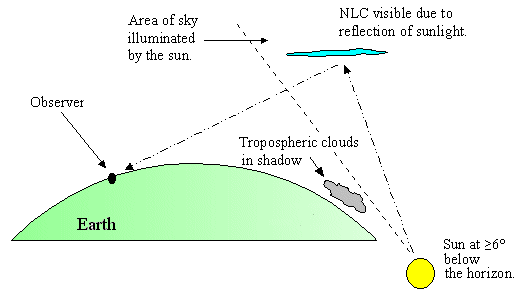
NLCs are Earth's highest clouds. They form at the edge of space more than 80 km above Earth's surface, when wisps of summertime water vapor wrap themselves around meteor smoke. The resulting ice crystals glow electric blue in the night sky.
In the 19th century, you had to travel near Arctic latitudes to see these clouds. In recent years, however, they have been sighted as far south as Colorado and Kansas--a possible result of climate change.
Observing tips: Look west 30 to 60 minutes after sunset when the sun has dipped ~10 degrees below the horizon. If you see luminous blue-white tendrils spreading across the sky, you may have spotted a noctilucent cloud.
Realtime Noctilucent Cloud Photo Gallery
NEW ZEALAND FIREBALL: On July 16, a Russian Soyuz rocket blasted off from the Baikonur Cosmodrome in Kazakhstan carrying 5,300 pounds of fuel and supplies to the International Space Station. Earlier today, July 19th, part of that rocket came crashing back to Earth. Paul Stewart photographed the fireball from Timaru, New Zealand:

Many people in New Zealand's South Island witnessed the slow, bright fireball. At first, observers thought it was a natural meteor, but orbital calculations quickly revealed that it was the upper stage of the Russian Soyuz rocket disintegrating in the atmosphere.
"About 40 seconds before the fireball appeared, the ISS glided overhead," says Stewart. The Progress supply ship, launched by the doomed Soyuz rocket, was with the ISS. It docked on July 18th.
A close look at Stewart's movie reveals a fainter object just above the Soyuz fireball. "I believe that is the CRS-9 Dragon spacecraft, chasing the space station for docking July 20th," adds Stewart.
Apparently, space is a busy place. Browse the gallery for more comings and goings.
Realtime Space Weather Photo Gallery