CME IMPACT SPARKS SUMMERTIME AURORAS: A CME struck Earth's magnetic field during the late hours of July 19th, sparking a G1-class geomagnetic storm. Green auroras were spotted in the northern hemisphere on July 20th despite glaring moonlight and summer thunderstorms. In Edmonton, Alberta, a perfectly-timed shot by photographer Rick Emas caught the auroras alongside a bolt of lightning:


In another case of good timing, "a rainstorm came over the Glacier mountains of Montana just as the geomagnetic storm was peaking," says photographer Ray Stinson. Full moonlight mixed with raindrops to create a moonbow-aurora medley.
According to NOAA there is a 30% chance of more activity tonight. Earth is passing through a high-speed solar wind stream in the wake of the CME that could stir up additional G1-class magnetic storms. High-latitude sky watchers should remain alert for green lights behind the thunderclouds. Aurora alerts: text or voice
A SPACESHIP VISITS THE ISS, DELIVERS DNA SEQUENCER: Earlier today, July 20th, SpaceX's Dragon supply ship docked to the ISS carrying 5000 pounds of supplies and science experiments. Rod Carew witnessed the rendevous from Australia: "They passed right over Melbourne and were amazingly close together. After they passed the zenith they appeared even closer, almost touching." This was the view through his backyard telescope:

"Speeding overhead, the converging spacecraft were very difficult to track," he says, "but it was a very rewarding view."
Among the science experiments the Dragon delivered is a DNA sequencer--the first-ever in space. The Biomolecule Sequencer investigation aims to demonstrate that DNA sequencing is feasible in an orbiting spacecraft. A space-based DNA sequencer could identify microbes, diagnose diseases among deep-space crews, and potentially help detect DNA-based life elsewhere in the solar system.
Dragon is scheduled to depart the space station on Aug. 29th when it will return critical science research back to Earth. It is the second cargo spacecraft to arrive on station this week. On Monday, July 18th, a Russian ISS Progress 64 cargo craft docked to the Pirs docking compartment of the space station where it will remain for about six months.
Apparently, space is a busy place. Browse the gallery for more comings and goings.
Realtime Space Weather Photo Gallery
STORKS AND NOCTILUCENT CLOUDS: A little-known fact about the natural history of Poland: Many of the country's young storks are born under ripples of electric blue. "Here in Poland, the summer season for noctilucent clouds (NLCs) coincides with the nesting season for storks," explains photographer Marek Nikodem who caught the silhouette of a mother overlooking her chicks on July 18th:

"Thousands of storks arrive in Poland each year just in time for NLCs," says Nikodem. "I've been documenting the coincidence for years."
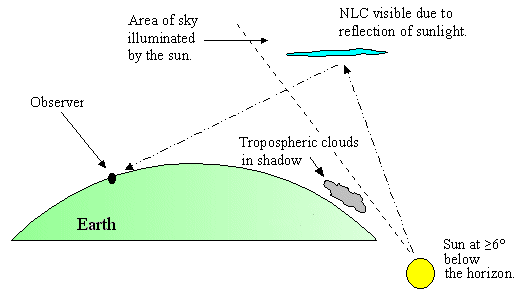
NLCs are Earth's highest clouds. They form at the edge of space more than 80 km above Earth's surface, when wisps of summertime water vapor wrap themselves around meteor smoke. The resulting ice crystals glow electric blue in the night sky.
In the 19th century, you had to travel near Arctic latitudes to see these clouds. In recent years, however, they have been sighted as far south as Colorado and Kansas--a possible result of climate change.
Observing tips: Look west 30 to 60 minutes after sunset when the sun has dipped ~10 degrees below the horizon. If you see luminous blue-white tendrils spreading across the sky, you may have spotted a noctilucent cloud.