THE WHOLE LANDSCAPE TURNED GREEN: A high speed solar wind stream hit Earth's magnetic field on July 28th, and is still blowing around our planet now. The effect in Manitoba, Canada, was to turn the whole landscape green:
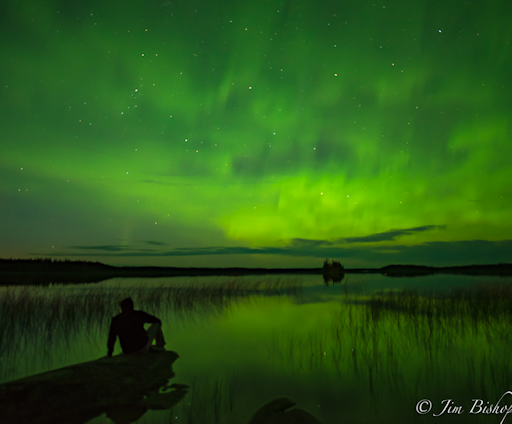
"Auroras were covering most of the sky, and we had a calm wind," says photographer Jim Bishop. "I was able to set up my tripod and dash into the shot for a self-portrait."
Earth's magnetic field should remain active and glowing on July 29th. NOAA forecasters estimate a 35% chance of G1-class geomagnetic storms around both poles as the solar wind continues to blow. Aurora alerts: text or voice

SUNRISE IN ANTARCTICA: After two months of almost total winter darkness, the sun is rising again on the outskirts of Antarctica. B Sudarsan Patro sends this picture from the Bharati Indian Base Station in the Larsemann Hills overlooking Prydz Bay (69o S):
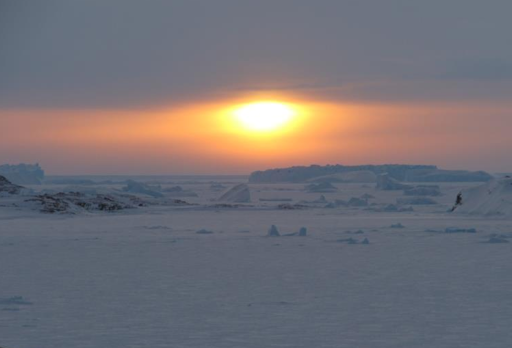
"Today we have observed a colorful sunrise and sunset," says Patro. "After a long wait of 65 days, the polar sun appeared and it was absolutely stunning. We all are happy to see the sun with new rays of hope."
Of course, the return of the Antarctic sun reduces the hours for watching Southern Lights. But daytime has its rewards, too. Stay tuned for more images from the frozen continent.

Realtime Space Weather Photo Gallery
THE PERSEID METEOR SHOWER IS BEGINNING: Earth is entering a broad stream of debris from comet Swift-Tuttle, source of the annual Perseid meteor shower. NASA cameras detected the first Perseid fireballs of 2016 on July 26th. This one, photographed over Mt. Lemmon Observatory in Arizona, was easily visible through the glare of a waning quarter moon:
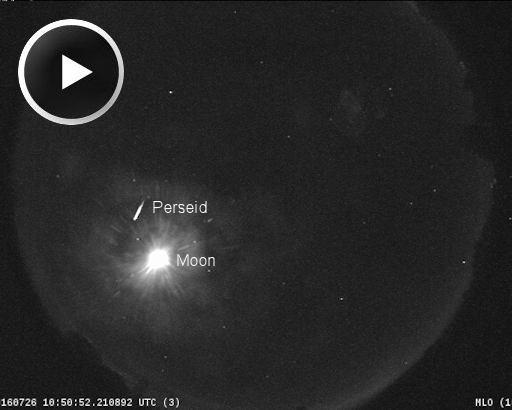
In the 3 nights since that first sighting, NASA's network of all-sky meteor cameras has detected more than a dozen Perseid fireballs over the USA.
These numbers will grow sharply in the weeks ahead. Forecasters expect the shower to peak on August 11-13 with as many as 200 Perseids per hour. On those nights, Earth will pass through a dense thicket of debris from the parent comet, causing a display widely visible across the northern hemisphere. The 2016 Perseids are going to be great. Stay tuned for observing tips and more information.
WHERE NO DUCK HAS GONE BEFORE: Yes, that really is a Vulcan rubber duck! The students of Earth to Sky Calculus flew the pointy-eared water bird to the stratosphere on July 19, 2016, as part of their ongoing program to monitor cosmic rays in the stratosphere. Here he is at the apex of the flight, 109,580 ft:
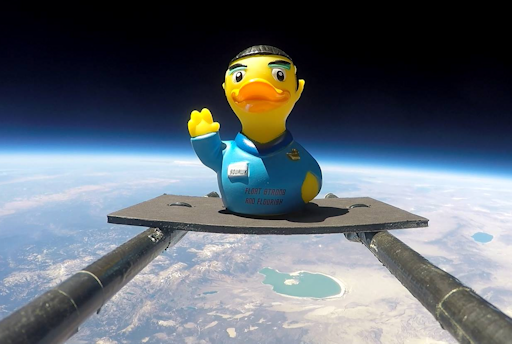
"Mr Squawk" hitchhiked on a helium balloon payload that carried an array of X-ray/gamma-ray sensors. By launching these sensors 3 or 4 times a month, the students have shown that cosmic rays are intensifying--a trend that affects mountain climbers, air travelers, high-altitude drones and astronauts on the International Space Station.
This research is crowd funded. Would you like to support it? Buy a duck! Edge of Space Vulcan Ducks are now available in the Earth to Sky Store.
Realtime Noctilucent Cloud Photo Gallery