THE SOLAR WIND HAS ARRIVED: Earth is inside a stream of solar wind blowing out of a huge hole in the sun's atmosphere. NOAA forecasters estimate a 60% chance of G1-class geomagnetic storms on Dec. 22nd. High-latitude sky watchers should be alert for auroras, especially during the hours around local midnight. Free: Aurora Alerts.

LONG NIGHTS, BRIGHT AURORAS: Talk about perfect timing. On Dec. 21st, the northern winter solstice, a solar wind stream hit Earth's magnetic field, filling the long hours of polar darkness with bright auroras. In northern Sweden, the green glow cut through clouds and stopped traffic:

"The auroras appeared in early evening," says photographer Tim Nordström of Abisko, Sweden, "and they continued shining for most of the night."
This is just the beginning. The solar wind stream is broad and Earth is expected to remain inside it for days. NOAA forecasters estimate a 60% chance of continued polar magnetic storms on Dec. 22nd. These are the longest nights of the year in the northern hemisphere, so Arctic sky watchers will have plenty of darkness for aurora sightings.
HIGH NOON INSIDE THE ARCTIC CIRCLE: With a geomagnetic storm underway, long Arctic nights filled with auroras can be indescribably beautiful. But the short days have something to offer, too. Witness this photo, taken by Chris Hodgson at "high noon" on Dec. 21st more than 250 kilometers inside the Arctic Circle:
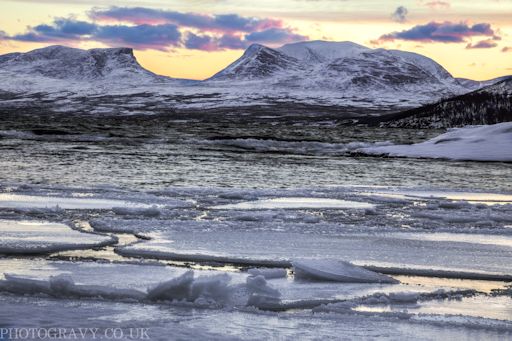
"The sun never made it above the horizon," says Hodgson, "but we could see its twilight glow painting the icy landscape with colors I had never seen before. This lasted for about 4 hours before darkness resumed."
Hodgson, a tour guide for Lights over Lapland, took the picture from the shore of Lake Torneträsk near Björkliden, Sweden. More images of polar noon may be found here and here.
Realtime Space Weather Photo Gallery
STUDENT CHRISTMAS SPECIAL: Is there a young scientist in your life? Give them the gift of exploration. For the holiday season only, we're reducing the cost of payload space on Earth to Sky Calculus balloons from $500 to only $299.95. Buy an edge of space gift certificate before Dec. 25th and you can send an experiment, photo, or keepsake item to the stratosphere, completely supported by an Earth to Sky Calculus launch and recovery team.

This is not only a great Christmas gift, but also a good kickstarter for science fair projects. Experiments will be flown and returned along with video footage, GPS tracking, temperature, pressure, altimetry and radiation data.
To take advantage of the discounted rate, payment must be received before Dec. 25th. However, the flight can take place at any time in the next 12 months. A Skype brainstorming session is included with each certificate. Dr. Tony Phillips and other members of the Earth to Sky team will chat with students to help them craft an experiment that will work in the harsh environment of the stratosphere.
URSID METEOR SHOWER: Earth is passing through a filament of debris from comet 8P/Tuttle, source of the annual Ursid meteor shower. Forecasters expect the shower to peak on Dec. 22nd with 5 to 10 meteors per hour flying out of the constellation Ursa Minor (the Little Dipper). The display is usually mild, but outbursts of Ursids occasionally surprise observers with rates many times normal. Monitor the realtime meteor gallery for sightings.
Realtime Airglow Photo Gallery