THE SOLAR WIND CONTINUES TO BLOW: For the third day in a row, Earth is inside a stream of solar wind blowing out of a large hole in the sun's atmosphere. This is causing magnetic unrest and bright auroras around the poles. NOAA forecasters estimate a 35% chance of G1-class geomagnetic storms on Dec. 24th. Free: Aurora Alerts.


WHITE AURORAS? Auroras are usually green. Occasionally, other colors appear: red, purple, blue. One color that never shows itself, however, is white--that is, not until last night. "I saw white auroras over Tromsø, Norway!" reports veteran observer Markus Varik. He recorded the phenomenon in this photo:
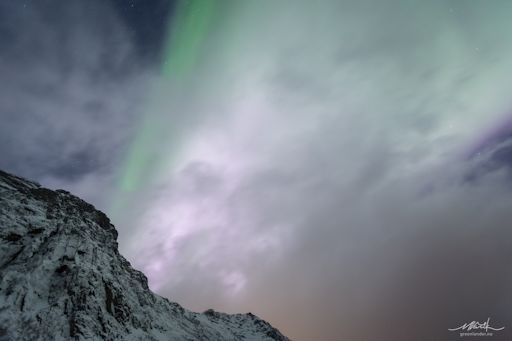
"I've been working more than 400 nights as a Northern Lights guide, and although sometimes I think I've seen it all, never I have witnessed white auroras like that," says Varik. "It was amazing to see it unravel white like that in front of my eyes. Pure magic!"
Auroras get their colors from specific elements in Earth's upper atmosphere. Green auroras, for instance, come from atomic oxygen; blue is associated with molecular nitrogen. No element produces white. So where did it come from?
An important clue: Elsewhere in Scandinavia, intense ribbons of pale pink appeared. Here is a specimen recorded by an automated auroracam in Abisko, Sweden:

Sarah Skinner, a tour guide with Lights over Lapland, saw the display: "OMG, it was the pinkest aurora ever!"
The 'white auroras' Varik photographed might actually be pink auroras filtered and paled by low-hanging clouds. Indeed, there is a strong hint of pink in Varik's photo.
Pink auroras are somewhat rare, but hardly unprecedented. They appear when energetic particles from space descend lower than usual, striking nitrogen molecules at the 100 km level and below. Look for more in the aurora photo gallery:
STUDENT CHRISTMAS SPECIAL: Is there a young scientist in your life? Give them the gift of exploration. For the holiday season only, we're reducing the cost of payload space on Earth to Sky Calculus balloons from $500 to only $299.95. Buy an edge of space gift certificate before Dec. 25th and you can send an experiment, photo, or keepsake item to the stratosphere, completely supported by an Earth to Sky Calculus launch and recovery team.
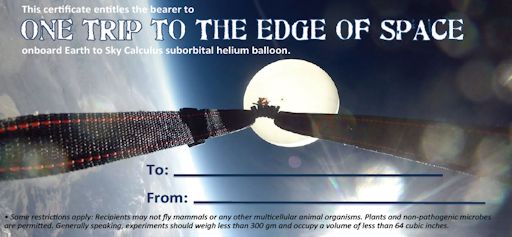
This is not only a great Christmas gift, but also a good kickstarter for science fair projects. Experiments will be flown and returned along with video footage, GPS tracking, temperature, pressure, altimetry and radiation data.
To take advantage of the discounted rate, payment must be received before Dec. 25th. However, the flight can take place at any time in the next 12 months. A Skype brainstorming session is included with each certificate. Dr. Tony Phillips and other members of the Earth to Sky team will chat with students to help them craft an experiment that will work in the harsh environment of the stratosphere.
Realtime Space Weather Photo Gallery
Realtime Airglow Photo Gallery