THE SOLAR WIND HAS ARRIVED: As predicted, a high-speed stream of solar wind hit Earth's magnetic field during the early hours of Feb. 1st. The impact literally rattled Earth's magnetic field (more on this below) and sparked bright auroras around the Arctic Circle. "Light night was bonkers," reports photographer Oliver Wright, who took this picture while leading an aurora photo tour in Abisko, Sweden:

The solar wind stream that sparked this display is flowing from a large canyon-shaped hole in the the sun's atmosphere. It's a wide hole, and Earth should remain in the emerging stream for at least two more days. NOAA forecasters estimate a 40% to 60% chance of continued geomagnetic storms on Feb. 1-2. Free: Aurora alerts.
What happens, exactly, when a solar wind stream hits Earth's magnetic field? Imagine yourself opening the door of your kitchen refigerator and finding a bowl of jello inside. Go ahead. Thump the surface. The jello vibrates. Earth's magnetic field behaves a bit like that jello when thumped by a solar wind disturbance. In the UK, Spaceweather.com reader Stuart Green operates a magnetometer that measures unrest in his local magnetic field. This plot from Jan. 31-Feb. 1 clearly shows the arrival of today's solar wind stream:

"The predicted solar storm has arrived in the form of fast flowing solar wind, the result of which is twitching magnetometers around the globe, including my own here in the north-west of England," says Green. "There is no doubt from the data when exactly Earth entered the fast flowing wind stream."
Vibrations in the magnetic field allow particles normally trapped in our planet's magnetosphere to rain down around the poles, igniting auroras. Magnetic unrest should continue tonight as Earth moves deeper into the gusty stream of solar wind.
FAR-OUT VALENTINE'S GIFT: Did you know that cosmic rays are intensifying? That's just one of many results from the space weather ballooning program of Earth to Sky Calculus. The students receive no support from corporate sponsors or government grants. Instead, they are crowd-funded. Or rather ... bear-funded:
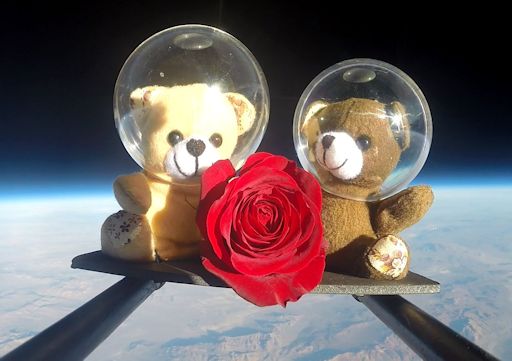
Sales of Valentine's gifts like these space bears support our research. All proceeds support cosmic ray balloon launches and STEM education.
Get a pair for yourself. They're only $79.95--including the rose, which has been pressed for safekeeping. Each adorable duo comes with Valentine's card showing the bears in flight and certifying their trip to the stratosphere. More out of this world gifts may be found in the Earth to Sky store.
Realtime Space Weather Photo Gallery
Realtime Airglow Photo Gallery