LONG RANGE FORECAST: A hole in the sun's atmosphere that sprayed Earth with solar wind in late March is due to return next week. NOAA forecasters say there is a chance of G1-class geomagnetic storms on April 22nd intensifying to G2 storms on April 23rd in response to a repeat encounter with the solar wind stream. Free: Aurora Alerts.


SOLAR FILAMENT EXPLODES, HURLS CME: On April 9th, a dark filament of magnetism on the sun rose up and hurled a portion of itself into space. NASA's Solar Dynamics Observatory recorded the eruption:
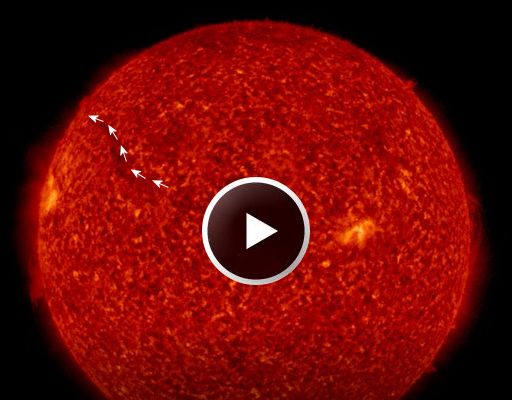
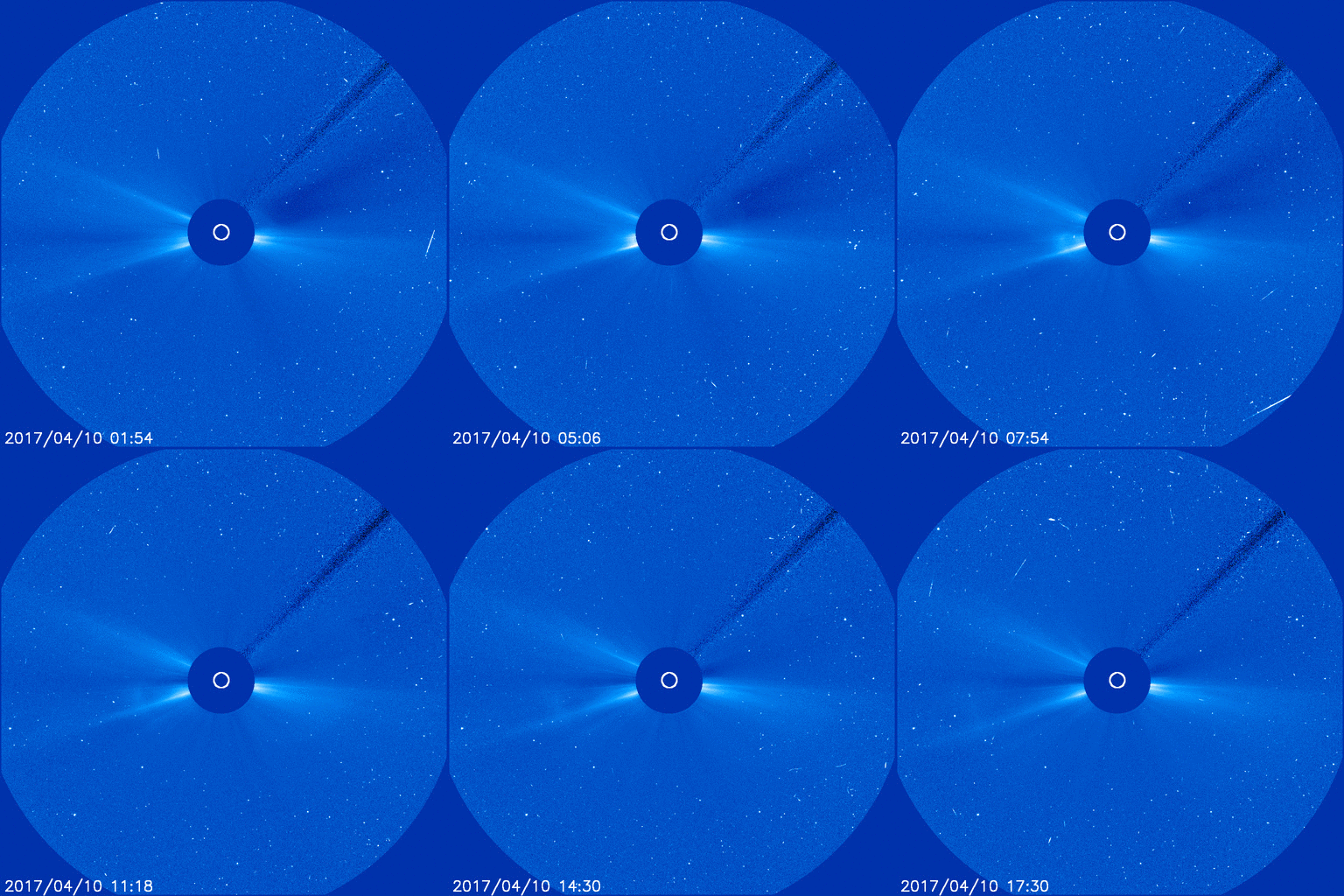
Flying debris from the filament formed the core of a coronal mass ejection (CME). A movie from the Solar and Heliospheric Observatory (SOHO) shows the cloud leaving the sun. At first it appeared that the CME would miss Earth, but a new analysis by NOAA forecasters suggests that a glancing glow is possible on April 15th. G1-class geomagnetic storms are possible when the CME arrives this weekend. Free: Aurora Alerts.
INCREDIBLE COMET TAIL: More than 180 million km from Earth, something is happening to Comet PanSTARRS (C/2015 ER61). On April 4th and 5th, the comet brightened more than 6-fold, from magnitude +8.5 to +6.5, suddenly reaching the verge of naked-eye visibility despite its great distance from our planet. Now amateur astronomers are photographing an incredible tail. Gerald Rhemann sends this picture from his private observatory in Farm Tivoli, Namibia:
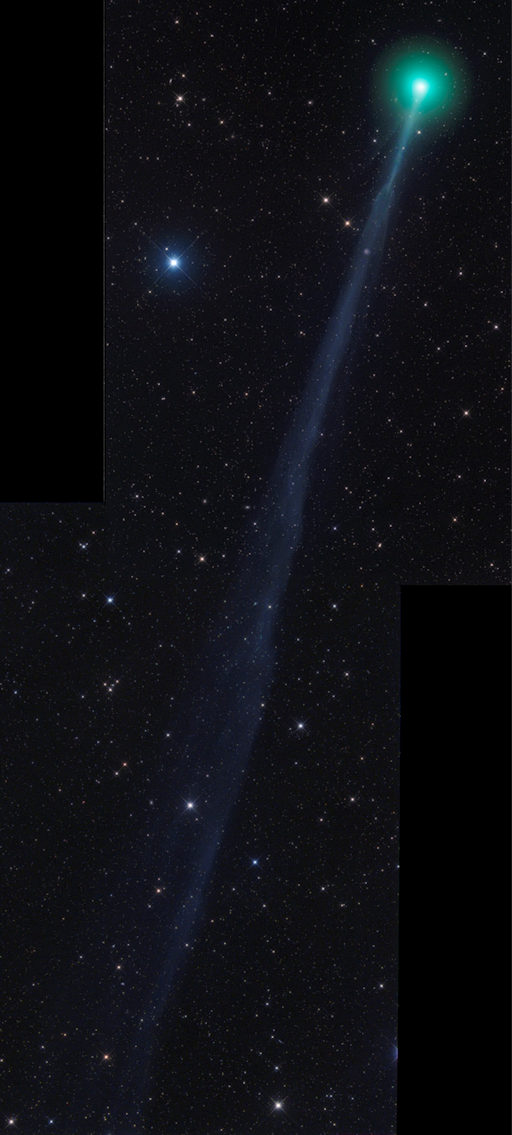
"The comet's tail is about 2.5 degrees long," says Rhemann.
That means it spans more than 8 million km. For comparison, the entire sun is 1.4 million km wide; you could wrap the comet's tail around the sun's equator twice. Another way of putting it: The distance from Earth to the Moon is only 5% of the length of the gaseous lane behind Comet PanSTARRS.
The comet's outburst is probably caused by a fresh vein of icy material in the comet's nucleus exposing itself to solar radiation. Furiously vaporizing, the comet's core is spewing jets of dust and gas into space--a tail-building process that should intensify as the comet approaches the sun between now and early May.
The comet's closest approach to Earth will be 176 million km (1.18 AU) on April 19th. Even at that distance, the comet might be a beautiful sight in backyard telescopes if current trends continue. Stay tuned!