FACT CHECK: 2017 PERSEIDS THE GREATEST EVER? A viral news item is spreading around the Internet. It claims that the 2017 Perseid meteor shower will be the brightest in recorded human history. FALSE. This year's Perseid shower will be beautiful, but not the greatest ever. Get the full story from Snopes.com.
IT'S BACK: Old sunspot AR2665 has returned, and it is a much-decayed version of its former self. NASA's Solar Dynamics Observatory photographed AR2665 emerging over the sun's eastern limb on Aug. 2nd:
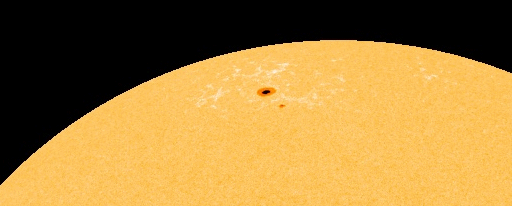
The sunspot's primary dark core is only about 1/5th the size of the entire sunspot group in its early-July heyday. In fact, the region's dominant feature now is a sprawl of bright magnetic froth known as "plage." This type of magnetic structure does not typically give rise to flares.
Despite the sunspot's apparent decline, it is notable that only 5 days ago AR2665 produced a significant farside CME. So there may be some explosive potential remaining in the sunspot's magnetic field.

Note: Per longstanding tradition, sunspots that travel around the backside of the sun receive a new name when they reappear. Old sunspot AR2665 is therefore provisionally re-numbered AR2670.
Realtime Space Weather Photo Gallery
THE PERSEID METEOR SHOWER IS BEGINNING: This week, Earth is entering a stream of debris from huge comet 109P/Swift-Tuttle, source of the annual Perseid meteor shower. Specks of dusty debris hitting the top of Earth's atmosphere at 110,000 mph are burning up in the night sky, producing a spray of shooting stars from the constellation Perseus. On July 31st James W. Young photographed a green Perseid fireball skimming the coast off Cannon Beach in western Oregon:
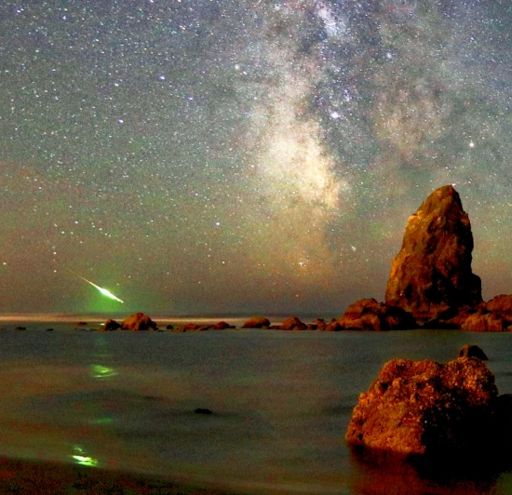
"The Needles (rock outcroppings) to the right are just south of Haystack Rock," says Young. "The fireball was a pleasant surprise!"
In the last three nights (July 30-Aug. 1), NASA cameras have detected more than 2 dozen Perseid fireballs streaking over the USA. These numbers are small, however, compared to what is in store. Forecasters expect Perseid meteor rates to increase 10-fold as Earth plunges deeper into the comet debris stream. By the time the shower peaks on Aug. 11th-13th, sky watchers could see dozens of Perseids per hour despite the interfering glare of a bright gibbous Moon. Sprawl out in a moon shadow between midnight and dawn and enjoy the show! Sky maps: Aug. 11, 12, 13. Free: Meteor Alerts


SOLAR ECLIPSE VIEWING GLASSES: Get ready for the Great American Solar Eclipse on Aug. 21st! Earth to Sky's safe solar glasses will allow you to view any phase of the upcoming eclipse without fear of damage to your eyes. The Family Pack includes 3 pairs of glasses and costs only $29.95. And there's a bonus. They have all been to the edge of space:
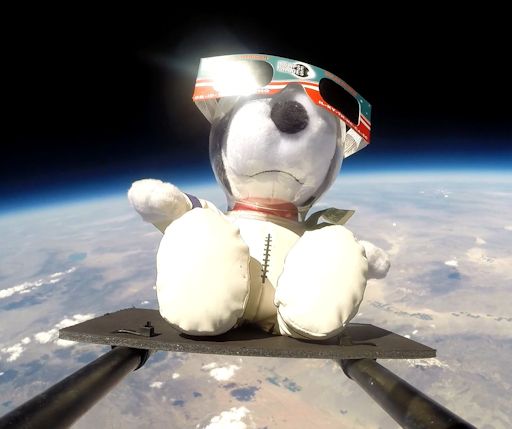
On June 23, 2017, the students of Earth to Sky Calculus flew a payload-full of solar glasses to the stratosphere onboard a high-altitude space weather balloon. The glasses ascended more than 95,000 feet above the Sierra Nevada mountains of central California before parachuting back to Earth.
Each Family Pack of solar eclipse glasses comes with a unique gift card showing the glasses floating at the top of Earth's atmosphere. The interior of the card tells the story of the flight and confirms that these items have been to the edge of space and back again.
More items from the edge of space may be found in the Earth to Sky Store. All proceeds support our Solar Eclipse Balloon Network and hands-on STEM education.
Far Out Gifts: Earth to Sky Store
All proceeds support hands-on STEM education
Realtime Noctilucent Cloud Photo Gallery